
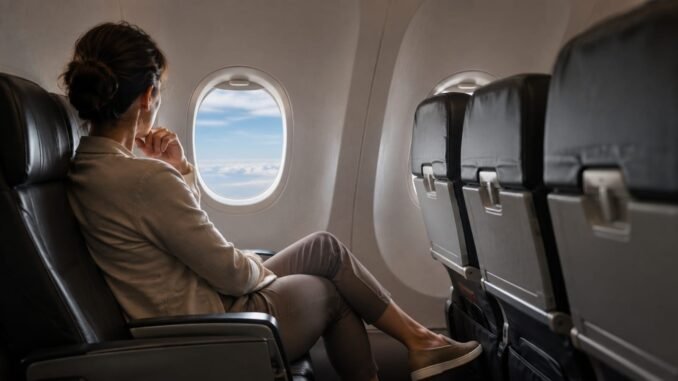
Ten hours in a metal tube with recycled air, temperature swings, and seats designed by someone who’s never met a human spine. How can I dress comfortably for a long flight and still look good? The old choice was binary: suffer in style or look like you gave up. But “athleisure” grew up, fabrics got smarter, and there’s now a whole category of clothes engineered for exactly this — comfortable enough to sleep in, polished enough to walk straight into a meeting or dinner on landing. I’ve flown long-haul dozens of times and refined the formula to a science.
Here’s the complete system: the outfit formula, fabric rules, shoe strategy, and the carry-on kit that makes it all work.
How Can I Dress Comfortably for a Long Flight and Still Look Good? The Formula
Soft structured top + stretch bottoms + layering piece + slip-on shoes. Every piece earns its place:
- Top: a quality knit — merino sweater, soft long-sleeve tee, or a knit blazer. Looks intentional, feels like pajamas. Avoid: stiff button-downs (wrinkle, restrict), anything dry-clean-only.
- Bottoms: the make-or-break piece. Ponte pants (the thick, structured knit that looks like trousers), stretch chinos, dark joggers in a tailored cut, or a knit midi dress. The rule: looks like real pants, feels like sweats. Leggings work only with a long top covering the hips — full-length tunic, oversized sweater, or dress.
- Layering piece: cabin temperatures swing 20 degrees. A big scarf/pashmina (doubles as blanket and pillow), a soft blazer, or a zip hoodie in a refined fabric. Layers > one heavy piece, always.
- Shoes: slip-on, always. Security lines, swelling feet, bathroom trips at 35,000 feet — laces are the enemy. Clean minimal sneakers, loafers, or supportive flats. Never new shoes on a long flight. And wear socks — for everyone’s sake.
Fabric Rules for 10 Hours in a Seat
- Stretch is mandatory: 3–5% elastane in pants. You’ll be sitting, curling, shifting — non-stretch fabrics become torture devices by hour 4.
- Breathable and moisture-wicking: merino wool (temperature-regulating, odor-resistant for days — the frequent flyer’s secret), cotton-modal blends, technical knits. Avoid 100% polyester cheapies (swamp effect) unless they’re quality wicking fabrics.
- Wrinkle-resistant: knits, ponte, merino — fabrics that bounce back. Linen looks amazing for 20 minutes then surrenders. Save it for after landing.
- Dark colors: hide travel grime, spilled coffee, and 10 hours of wear. Black, navy, charcoal — the travel palette.
The Carry-On Comfort Kit
What you wear is half the equation; what you bring is the other half:
- Compression socks ($15–$25) — non-negotiable for flights over 4 hours. Prevent swelling, reduce DVT risk, make your legs feel human on landing. Put them on before boarding.
- Big scarf/pashmina — blanket, pillow, lumbar support, shoulder cover for cold cabins.
- Eye mask + earplugs/noise-canceling earbuds — sleep is the real luxury on long flights.
- Skincare minis: cabin air is ~10% humidity (drier than the Sahara). Moisturizer, lip balm, hydrating mist, hand cream. Your skin will thank you.
- Water bottle (empty through security) — flight attendants will refill it; staying hydrated fights jet lag and that mummified feeling. This pairs with knowing dehydration’s warning signs.
- Fresh top in your personal item — changing your shirt before landing is a $0 reset that makes you feel (and look) like a new person.
- Minimal, useful accessories: crossbody bag (keeps essentials on you), simple jewelry that won’t set off security.
Landing Polished: The 15-Minute Reset
- Change into the fresh top (or full fresh layer if you packed one).
- Splash face with water, reapply moisturizer, fix hair (dry shampoo is magic here).
- Swap sneakers for the nicer shoes packed in your carry-on, if the occasion demands.
- Stand up straight — 10 hours of hunching reads as exhaustion more than any outfit does. Two minutes of stretching in the jet bridge works wonders.
- Sunglasses on — the right frames hide everything.
What NOT to Wear
- Anything brand new (untested comfort, unknown behavior)
- Complicated outfits (jumpsuits with tricky bathroom logistics — you know the ones)
- Strong fragrance (recycled air + 300 people + your perfume = everyone’s problem)
- Excessive jewelry (security hassle, uncomfortable to sleep in)
- White or very light colors (one turbulence coffee incident ruins them)
- Anything you can’t walk a mile in (delays happen; terminals are long)
If the trip is business, this system feeds directly into carry-on business packing — the flight outfit doubles as a casual meeting outfit on arrival. And for the destination’s weather, hot-weather fabrics or fall layering take over.
For product recommendations, Travel + Leisure’s gear reviews test travel clothing rigorously, and Wirecutter covers the comfort kit essentials.
Beating Jet Lag Through Clothing Strategy
Your outfit can actually fight jet lag — indirectly but really. Temperature regulation: layers let you stay comfortable as cabin temps swing, and thermal comfort is a prerequisite for sleep — you can’t nap shivering or sweating. The “destination outfit” trick: changing into fresh clothes on arrival (or before landing) signals to your brain that a new day phase has started — it’s a psychological reset button that complements light exposure and meal timing, the two primary jet-lag fighters. Compression socks (already in your kit) reduce the leg fatigue that makes you feel generally wrecked. Sunglasses on arrival: if landing in morning light when your body thinks it’s midnight, sunglasses for the first couple hours help ease the transition (light is the strongest circadian signal — manage it deliberately). Combine the clothing strategy with the standard protocol — hydrate aggressively, eat on destination time, get sunlight at the right hours — and you’ll feel human a full day earlier than the passengers who just “tough it out.”
The Return Flight: Packing Worn Clothes
The trip home has its own packing challenge: everything’s worn, possibly wrinkled, and mixed with souvenirs. The laundry bag: pack a lightweight compressible laundry bag ($8) — worn clothes go in, clean stay clean, no mixing. Re-wear the plane outfit: the outfit you wore over is usually the bulkiest — wear it home and save the space. Souvenirs: pack them in the center, cushioned by soft clothes — and if you bought liquids, remember the 3-1-1 rule applies on the way home too. The wrinkle triage: hang everything immediately when you get home; most travel wrinkles release within 24 hours on a hanger. Anything stubborn gets the steamer. And unpack within 24 hours — the suitcase that sits packed for a week becomes a wrinkle-and-odor time capsule. The trip isn’t over until you’re unpacked.
The practical takeaway: knit top + ponte/stretch bottoms + pashmina layer + slip-on shoes, all dark and wrinkle-resistant. Compression socks on before boarding, skincare and water in the personal item, fresh top for landing. Comfort and polish aren’t opposites on long flights — they’re both just good planning.
Leave a Reply