
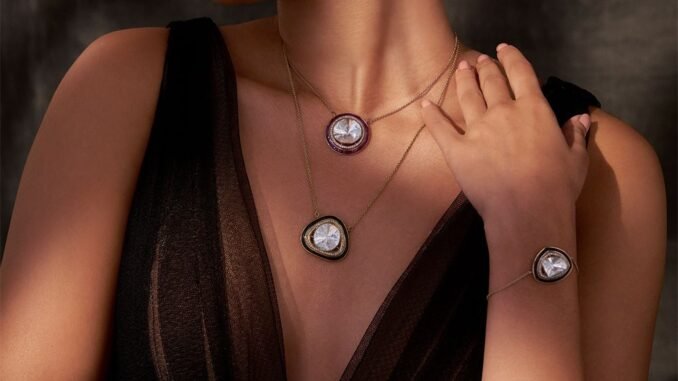
A black dress is the ultimate blank canvas — which is both its superpower and its challenge. With no color to clash with, every jewelry choice works technically, so the question becomes: what mood are you creating? What jewelry goes best with a black dress? The answer depends on the neckline, the occasion, and the statement you want to make — from boardroom pearls to red-carpet drama. I’ve styled black dresses for everything from funerals to galas, and the jewelry is what transforms the same dress into completely different outfits.
Here’s the complete pairing guide: by metal, by style, by neckline, and by occasion.
What Jewelry Goes Best With a Black Dress? Start With Metal
- Gold: the classic pairing — warm gold against black is timeless luxury. Yellow gold reads traditional-luxe; rose gold reads modern-romantic. Gold is the default answer for a reason.
- Silver/platinum/white gold: cool, modern, sleek — stunning on cool skin tones, dramatic against black. Silver + black = edgy elegance.
- Pearls: the Audrey Hepburn answer — classic, refined, appropriate everywhere from the office to weddings. Real or quality faux, pearls + black dress never fails.
- Diamonds/cubic zirconia: black makes sparkle pop harder than any other background. Even simple studs look red-carpet against black.
- Colored gemstones: black is the perfect backdrop for color — emerald, ruby, sapphire, turquoise all electrify against black. This is where you wear the bold pieces.
- Mixed metals: modern and intentional when done deliberately (a mixed-metal cuff, layered gold + silver necklaces). Avoid looking accidental — commit to the mix.
Match metals to your skin tone for maximum effect: warm skin glows in gold (warm-tone color guide), cool skin shines in silver — but honestly, black is forgiving enough that either works.
Match Jewelry to the Neckline
- Strapless/bandeau: the open canvas — statement necklace, choker, or layered necklaces all work. This neckline begs for a necklace; don’t leave it bare.
- V-neck: pendant necklace following the V’s line, or a delicate Y-necklace. Match the pendant’s drop to the V’s depth.
- Scoop/crew neck: shorter necklaces (16–18″) that sit on the collarbone, or a collar necklace. Avoid long pendants that compete with the neckline.
- Halter/high neck: skip the necklace entirely — the neckline IS the jewelry. Go bold on earrings instead (statement drops or chandeliers).
- One-shoulder: asymmetric earring or single statement earring on the bare-shoulder side; skip the necklace.
- Off-shoulder: choker or short statement necklace sitting in the open space; earrings can be bold too.
The One-Statement Rule
The golden rule of accessorizing: one statement piece per outfit. Statement necklace + stud earrings. Statement earrings + delicate necklace (or none). Cocktail ring + everything else quiet. Two statement pieces compete; one statement piece commands. (The exception: a matched set designed to be worn together — but even then, keep it to the set.)
By Occasion
- Office/work: pearls or simple gold — studs, delicate necklace, classic watch. Understated and polished. Pairs with the budget professional wardrobe.
- Wedding guest: elegant but not bridal-outshining — gold drops, pearl strands, refined sparkle. (And review the guest etiquette guide — jewelry shouldn’t upstage either.)
- Date night: this is the statement moment — bold earrings, layered gold, a cocktail ring. Black dress + great jewelry + red lip = unstoppable.
- Evening formal/gala: go dramatic — chandelier earrings, statement cuff, or a bib necklace. Black tie is the one place “too much” barely exists.
- Funeral: simple, subdued — small studs, plain watch, maybe a simple pendant. Respectful restraint.
- Everyday: the black dress as a daily piece (sheath or casual) takes simple gold hoops, a delicate layered necklace, and your everyday watch.
Building a Jewelry Wardrobe (Affordably)
You don’t need fine jewelry for every look. The smart collection:
- Everyday base: gold hoops, delicate necklace, simple studs, classic watch — affordable watches that look luxe included. Mejuri, Gorjana, and Amazon’s quality basics cover this for $30–$80/piece.
- Statement pieces: 2–3 bold items (a bib necklace, chandelier earrings, a cuff) from Zara, Anthropologie, or vintage/thrift stores — thrift jewelry is incredible value.
- Care: store pieces separately (pouches or a jewelry organizer — tangling and scratching age jewelry fast), wipe with a soft cloth after wearing, keep costume jewelry dry (moisture kills plating).
Complete the black-dress look with the right shoes and an expensive-looking bag — the dress is the canvas, but the accessories are the painting.
For seasonal jewelry inspiration, Who What Wear’s jewelry edits track what’s current without the fast-fashion churn.
Jewelry Care: Protecting the Investment
Even affordable jewelry lasts years with basic care — and neglected pieces look cheap fast. Storage: separate compartments or pouches for each piece — tangled chains kink, gemstones scratch each other, and silver tarnishes faster in jumbled piles. Anti-tarnish strips ($5 for a pack) in your jewelry box work quietly for months. Cleaning: warm water + mild dish soap + soft toothbrush for most pieces; silver polishing cloth for tarnish; never harsh chemicals on pearls or costume jewelry (they destroy coatings and glue). The last-on, first-off rule: jewelry goes on after perfume, hairspray, and lotion (chemicals damage finishes) and comes off first when you get home. Rotation: daily-wear pieces need occasional rest — constant wear grinds down plating. With these habits, your $40 gold hoops and $30 pendant necklace look new for years, and your statement pieces survive dozens of black-dress outings. Jewelry is one of the highest cost-per-wear categories in fashion — a $60 necklace worn 50 times costs $1.20 per wear. Care for it accordingly.
Mixing Metals: The Modern Rules
The old rule — never mix gold and silver — is dead. Modern mixing works when it’s deliberate: a two-tone watch, layered gold and silver necklaces at different lengths, or a mixed-metal cuff as the bridge piece. What looks accidental: one random silver ring with an otherwise all-gold outfit, or clashing yellow gold with white gold in the same sightline. The trick is distribution — mixed metals should appear in at least two places (necklace + bracelet, earrings + ring) so it reads as intentional. Against a black dress, mixed metals are particularly striking — the black background unifies everything. Start with a mixed-metal statement piece (designed to be worn as-is), then echo it once elsewhere. Done right, it’s the most fashion-forward jewelry choice you can make — and it frees you from ever matching metals again.
The practical takeaway: match jewelry to neckline first (statement necklace for strapless, earrings for halters), follow the one-statement rule, choose metal by mood and skin tone (gold = warm classic, silver = cool modern, pearls = always appropriate), and scale the drama to the occasion. The black dress does the work — the jewelry tells the story.
Leave a Reply