
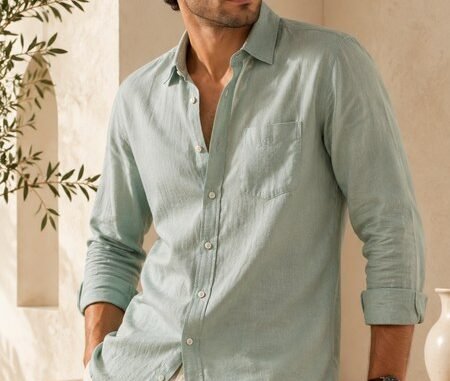
It’s 95°F with 90% humidity, and your “breathable” polyester shirt has become a personal sauna. What are the best fabrics for hot and humid weather? Fabric choice matters more than style when the heat index climbs — the wrong material traps heat and moisture against your skin, while the right one can make brutal weather genuinely bearable. I’ve survived Gulf Coast summers and tropical trips, and the difference between the right and wrong fabrics is the difference between enjoying the day and counting minutes until air conditioning.
Here’s the definitive fabric guide: what works, what fails, and how to build a heat-proof wardrobe.
What Are the Best Fabrics for Hot and Humid Weather? The Winners
1. Linen — The King of Hot Weather
Linen (made from flax) is the gold standard: highly breathable, moisture-absorbent, quick-drying, and naturally cool to the touch. Its loose weave allows maximum airflow. Yes, it wrinkles — embrace it (that’s the beloved lived-in linen look) or choose linen blends. A linen shirt or pair of linen pants is the single best hot-weather clothing investment. Look for 100% linen or linen-cotton blends; avoid “linen-look” polyester, which has none of linen’s properties.
2. Cotton — The Reliable Classic
Breathable, absorbent, soft, and affordable. Lightweight cottons (voile, lawn, seersucker, chambray) are the summer MVPs — seersucker’s puckered texture holds fabric off the skin, creating airflow channels. Caveat: cotton absorbs moisture but dries slowly, so in extreme humidity it can get soggy. For casual heat, it’s unbeatable; for athletic-level sweating, synthetics win.
3. Moisture-Wicking Synthetics — The Performance Option
Modern performance fabrics (polyester/nylon engineered for wicking) pull sweat off skin and dry fast — superior to cotton for active use in humidity. Look for “moisture-wicking,” “quick-dry,” or specific technologies (Dri-FIT, CoolMax). The tradeoff: they can retain odor (wash with sport detergent or vinegar), and cheap ones feel plasticky. Worth it for travel, hiking, and genuinely sweaty days.
4. Honorable Mentions
- Rayon/viscose (including Tencel/lyocell): plant-derived, silky, breathable, drapes beautifully. Tencel is the premium version — moisture-managing and eco-friendly. Great for dressier hot-weather pieces.
- Chambray: the lightweight denim look without denim’s heat — a summer staple.
- Merino wool (lightweight): sounds insane for summer, but ultralight merino (150gsm) regulates temperature, resists odor for days, and wicks moisture. The travel and hiking secret weapon.
Fabrics to Avoid in Heat and Humidity
- Standard polyester/nylon (non-wicking): traps heat and moisture, the personal-sauna effect. The #1 offender in “summer” clothes that aren’t.
- Heavy denim: hot, slow to dry, miserable in humidity. Save jeans for air-conditioned days.
- Silk: beautiful but shows every drop of sweat and water-spots permanently. High-risk in humidity.
- Leather/faux leather: zero breathability. Obvious, but worth stating.
- Velvet, corduroy, flannel: winter fabrics. Just no.
How to Read Labels Like a Pro
Check the fabric content tag — it’s the truth serum of clothing. “100% linen” or “100% cotton” means what it says. “Linen-blend” could be 10% linen / 90% polyester — check the percentages. For heat, prioritize: high natural-fiber content, lightweight weaves (voile, lawn, seersucker over twill, sateen), and light colors (reflect heat; dark colors absorb it — a white linen shirt vs. black polyester is a 10-degree difference in feel).
Building the Heat-Proof Outfit
- Loose over tight. Airflow is cooling — loose linen pants beat skinny jeans by miles in 95°F heat. Flowy dresses and wide-leg pants are heat strategies, not just style choices.
- Light colors, always. White, cream, pastels, light neutrals. Save the black for evening AC.
- Less is more (coverage-wise). Short sleeves, open necklines, cropped pants — more skin exposed to breeze = more cooling. But balance with sun protection: sunscreen and UPF clothing for extended exposure.
- One heat outfit formula: linen or cotton-lawn top + loose linen pants or flowy skirt + breathable sandals. Simple, cool, polished.
- Undergarments matter. Cotton or moisture-wicking underwear and breathable bras (unlined, cotton-lined) prevent the worst of the swamp effect. This unglamorous detail makes an outsized difference.
- Carry the kit: blotting papers or a handkerchief, travel deodorant, a spare top for long days. Veterans of humid climates all carry these.
For humid-weather travel, these principles pair with comfortable travel dressing — and if you’re deciding between fast fashion and sustainable options, natural fibers like linen and organic cotton are the sustainable choice that also happens to perform best in heat.
For fabric science in depth, Textile School’s fiber guides explain breathability and moisture management technically, and Good Housekeeping’s breathable fabric roundups test real garments.
The Sweat Management System
Fabric is half the battle; the other half is managing sweat itself. Undershirts: moisture-wicking undershirts (Uniqlo Airism, ~$15) create a barrier between you and your outer shirt — they absorb sweat before it shows, keeping dress shirts presentable through hot commutes. Antiperspirant strategy: apply at night (it needs hours to block sweat ducts effectively — morning application is far less effective), and consider clinical-strength for heat waves. Blotting papers: $5 for 100 sheets — dab, don’t wipe, to remove shine without disturbing makeup. Backup shirt: for important hot-weather days, pack a fresh shirt and change before the event — 2 minutes, total reset. Cooling towels: evaporative cooling towels ($10) around the neck drop perceived temperature dramatically during outdoor exposure. Hydration: sweating more means drinking more — dehydration sneaks up fast in humid heat because sweat doesn’t evaporate (so you don’t feel how much you’re losing). The right fabrics plus this system make 95°F genuinely manageable instead of miserable.
Fabric Blends: Reading Between the Lines
Pure fabrics are rare in modern clothing — blends are the reality, and some blends work brilliantly in heat. Linen-cotton: the best of both — linen’s breathability with cotton’s softness and less wrinkling. Cotton-modal: modal (a beech-tree fiber) adds silkiness and moisture management to cotton’s comfort. Merino-synthetic blends: wool’s odor resistance and temperature regulation with synthetic durability — the hiking and travel sweet spot. What to watch: “linen-look” that’s 90% polyester, “cotton-feel” synthetics, and any blend where the synthetic dominates but the natural fiber gets the marketing. The rule: the majority fiber determines the performance. A 55% linen / 45% cotton shirt behaves like linen; a 15% linen / 85% polyester shirt behaves like polyester with better PR. Read the percentages, not the product name.
The practical takeaway: linen first, lightweight cotton second, wicking synthetics for active days; avoid standard polyester, heavy denim, and silk in humidity. Check labels for actual fiber content, wear loose and light-colored, and remember: in brutal heat, fabric choice matters more than fashion — but with linen, you get both.
Leave a Reply