
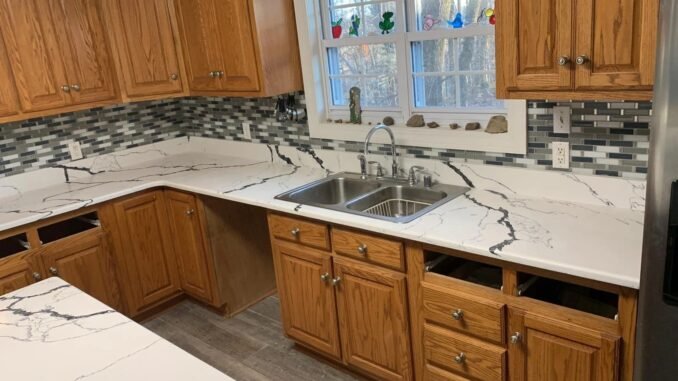
How much does it cost to replace kitchen countertops? For a typical kitchen (30–40 square feet of counter), expect $1,500–$5,000 installed in 2026, with most homeowners landing around $2,500–$3,500 for quartz or granite. Countertops are one of the highest-visual-impact kitchen upgrades — they define the whole room — and the price spread between materials is enormous: $800 laminate vs. $8,000 marble for the same kitchen. Here’s the material-by-material breakdown.
Cost by Material (Installed, Per Square Foot)
- Laminate: $20–$50/sq. ft. installed → $800–$1,800 total. Modern laminates (Wilsonart, Formica) convincingly mimic stone now. The budget king — looks 3x its price from three feet away.
- Butcher block: $40–$100/sq. ft. → $1,200–$3,500. Warm, beautiful, but needs mineral-oil maintenance every few months and hates standing water near sinks.
- Solid surface (Corian): $50–$120/sq. ft. → $1,800–$4,000. Seamless, repairable, non-porous — but scratches and scorches more easily than stone.
- Granite: $50–$120/sq. ft. → $1,800–$4,500. Each slab is unique; needs annual sealing. Still the “premium” perception king with buyers.
- Quartz (engineered stone): $60–$150/sq. ft. → $2,200–$5,500. Non-porous, no sealing, consistent patterns, hardest-wearing mainstream option. The default recommendation for most kitchens in 2026 — brands like Caesarstone, Silestone, Cambria.
- Marble: $75–$200+/sq. ft. → $3,000–$8,000+. Stunning, and it etches and stains — lemon juice leaves marks. For people who love patina, not for the anxious.
What Drives the Price Beyond Material
- Edge profiles: standard eased edge is included; ogee or waterfall edges add $10–$30/linear foot.
- Cutouts: sink and cooktop cutouts run $100–$250 each; farmhouse sink cutouts cost more.
- Backsplash: a 4-inch matching backsplash is often included; full-height slab backsplashes add $500–$1,500.
- Removal of old counters: $200–$500 — sometimes included, always ask.
- Plumbing disconnect/reconnect: $150–$300 if the sink moves.
- Slab waste: L-shaped kitchens and islands need more slab — fabrication shops charge for the full slabs used, not just your square footage.
Quartz vs. Granite: The 2026 Verdict
This is the decision 70% of buyers face. Honest comparison:
- Durability: quartz wins — harder, non-porous, no sealing, resists stains better.
- Heat: granite wins slightly — both can be damaged by screaming-hot pans; use trivets either way.
- Looks: subjective — granite has natural variation; quartz has consistency (a plus for large kitchens).
- Maintenance: quartz wins — wipe and done, forever.
- Resale: tie — buyers respond equally to both in most markets.
- Price: roughly comparable installed.
For busy families who cook daily: quartz. For the natural-stone romantic who’ll seal annually: granite. You won’t go wrong with either.
How Much Does It Cost to Replace Kitchen Countertops? Saving Strategies
- Remnant pieces: for small kitchens or bathroom vanities, fabricators sell leftover slab remnants at 30–50% off. Ask what’s in the yard.
- Keep the layout: not moving the sink or cooktop avoids plumbing charges entirely.
- Bundle with the backsplash: some shops discount when you order counters + full-height backsplash together.
- Big-box vs. local fabricator: Home Depot/Lowe’s offer convenience and financing; local fabricators often beat them 10–20% on price with better edge options. Get quotes from both.
- Timing: late fall/winter is slower for fabricators — ask about off-season pricing.
Get 3 itemized quotes specifying material brand, thickness (3cm for kitchens — don’t accept 2cm on a kitchen), edge profile, and what’s included. And measure twice: a $3,000 quartz install that transforms your kitchen daily for 20 years costs about 40 cents a day. That’s the cheapest luxury in the house.
Countertop Replacement Mistakes to Avoid
- Choosing marble for a busy family kitchen: marble etches from lemon juice and stains from red wine — beautiful, but it patinas whether you want it to or not. Quartz gives the look with zero anxiety for most households.
- Not getting the sink cutout details in writing: undermount vs. drop-in, farmhouse cutout charges ($100–$250 each) — verbal agreements on cutouts cause the most common countertop disputes. Itemize everything in the quote.
- Measuring once: countertop fabrication is unforgiving — walls aren’t square, and a 1/4-inch error means a re-cut or a gap. Let the fabricator template (most include digital templating) rather than DIY-measuring to save $100.
- Forgetting the backsplash plan: decide before counter install whether you’re doing a 4-inch matching splash or full-height tile — the counter height and wall prep differ, and retrofitting later costs more.
Kitchen Countertop FAQs
Quartz vs. granite — which should I choose?
Quartz for most kitchens: non-porous, no sealing ever, consistent patterns, superior stain resistance. Granite for natural-stone lovers who’ll seal annually — each slab is unique. Installed prices are comparable ($60–$150/sq. ft.); durability and maintenance favor quartz.
How long do countertops last?
Quartz/granite: 25+ years (essentially lifetime). Laminate: 10–20 years. Butcher block: 20+ years with oiling maintenance. Marble: lifetime structurally, but shows wear (etching, staining) — it’s a living finish.
Can I put hot pans directly on quartz?
Don’t — thermal shock can crack or discolor quartz (and granite, though it’s more tolerant). Trivets always — a $10 habit that protects a $3,000 investment. No countertop material loves screaming-hot cast iron except maybe soapstone.
What’s the cheapest countertop that still looks good?
Laminate ($20–$50/sq. ft. installed) — modern patterns convincingly mimic stone from normal viewing distance. Butcher block ($40–$100/sq. ft.) is the next step up with genuine warmth. Both beat dated tile counters (grout maintenance nightmare) at any price.
Countertop Edge Profiles: The Hidden Cost
Quotes often list a standard eased edge — but the edge you want may cost extra: ogee, bullnose, and waterfall edges add $10–$30 per linear foot, which is $200–$600 on a typical kitchen. Waterfall island sides (slab continuing to the floor) are gorgeous and add $800–$1,500+. Decide the edge before getting quotes so you’re comparing apples to apples — and know that the eased edge (simple, modern, included) is genuinely attractive on quartz. The National Kitchen & Bath Association design guidelines are worth reviewing before finalizing — their clearance and overhang specs (e.g., 15-inch knee space for island seating) prevent expensive layout mistakes that no edge profile can fix.
Leave a Reply