
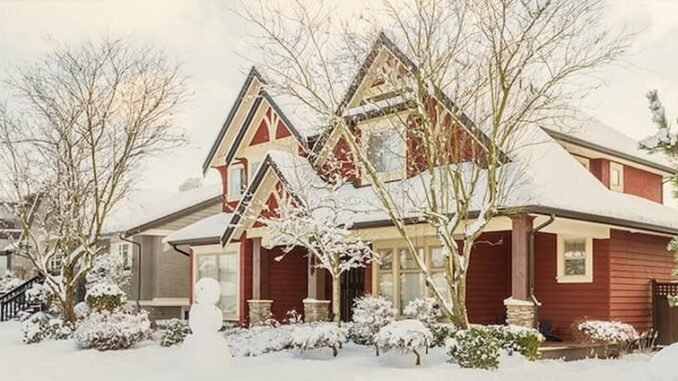
Every fall, the same story: the first hard freeze bursts a pipe, kills a sprinkler system, or reveals the furnace hasn’t been serviced since 2019. Learning how to winterize your home before cold weather hits is a single October weekend that prevents the most expensive seasonal disasters in homeownership. A burst pipe averages $5,000–$15,000 in water damage; winterizing costs under $100 and a Saturday. Here’s the complete checklist, in priority order.
Priority 1: Water (Where the Big Money Disasters Live)
- Shut off and drain exterior faucets: close the interior shutoff valve, open the outside spigot to drain, leave it open all winter. Install $5 foam faucet covers as backup. This prevents the #1 freeze-burst in American homes.
- Blow out sprinklers: hire it out ($75–$150) or DIY with a rented compressor — residual water in lines freezes, expands, and cracks pipes and heads. Non-negotiable in freezing climates.
- Insulate exposed pipes: foam pipe sleeves ($3–$6 per 6-foot section) on any plumbing in unheated spaces — crawl spaces, attics, garages, exterior walls.
- Know your main shutoff: locate it now, make sure it turns, and show every adult in the house. In a burst-pipe emergency, minutes matter.
- Set the thermostat floor: never below 55°F, even when traveling. The heating bill for an empty house is infinitely cheaper than flood remediation.
Priority 2: Heating System
- Replace the furnace filter ($5–$20) — do it now and monthly through winter. A clogged filter is the #1 cause of furnace breakdowns.
- Schedule a furnace tune-up ($80–$150): a tech cleans burners, checks the heat exchanger for cracks (carbon monoxide risk), and tests safety controls. Book in September — October slots vanish.
- Bleed radiators if you have hot-water heat — trapped air means cold rooms and wasted fuel.
- Reverse ceiling fans to clockwise on low — pushes warm air down from the ceiling.
- Test carbon monoxide detectors and replace batteries. Heating season is CO season — the CDC attributes hundreds of deaths yearly to unintentional CO poisoning, peaking in winter.
Priority 3: The Building Envelope (Stop Heat From Escaping)
- Seal air leaks: caulk around windows and doors, weatherstrip drafty entries. The Department of Energy estimates air sealing + insulation can cut heating bills 15%. A $20 incense-stick test (watch the smoke waver near windows/outlets on a windy day) finds every leak.
- Check attic insulation: you want 12–15 inches (R-38 to R-49 in most climates). If joists are visible, you’re under-insulated — blown-in cellulose top-up runs $1–$2/sq. ft. and pays back fast.
- Storm windows / window film: install storms, or apply $15–$25 window insulation film kits to drafty single-pane windows — surprisingly effective.
- Chimney: close the damper when not in use (an open damper is a hole in your roof leaking heated air 24/7). Consider a $40 chimney balloon for unused fireplaces.
Priority 4: Roof, Gutters, and Exterior
- Clean gutters after leaves fall — clogged gutters cause ice dams, which force water under shingles and into walls. $0 DIY, $100–$250 hired.
- Trim branches overhanging the roof — ice-loaded limbs snap onto shingles.
- Check the roof from the ground with binoculars: missing shingles, damaged flashing — fix now, not under snow.
- Disconnect and store hoses; drain and store patio furniture; cover the AC condenser (top only — full covers trap moisture).
- Stock up: ice melt ($10–$15/bag), a working snow shovel, emergency kit (blankets, flashlight, phone battery) in case of outages.
How Do I Winterize My Home Before Cold Weather Hits? The One-Weekend Plan
Saturday morning: exterior water (faucets, sprinklers, hoses), gutters, yard. Saturday afternoon: furnace filter, detectors, fan direction, thermostat programming. Sunday: air sealing, window film, attic check, stock supplies. Total cost: $75–$150 in materials. Total value: not spending your January arguing with an insurance adjuster about a burst pipe. Do it the weekend after the leaves peak — future you, warm and dry, says thanks.
Winterizing Mistakes to Avoid
- Forgetting the exterior faucets: the #1 freeze-burst in American homes — a $5 foam cover and 2 minutes per spigot prevents $5,000–$15,000 in water damage. Do it before the first hard freeze, not after.
- Setting the thermostat below 55°F when traveling: the heating savings are trivial compared to burst-pipe risk. 55°F minimum, always — and have someone check in during extreme cold.
- Skipping the furnace tune-up: a $80–$150 tune-up catches cracked heat exchangers (carbon monoxide risk) and prevents the mid-January breakdown that costs 3x in emergency rates. Book in September.
- Sealing the house but ignoring the attic: air sealing without adequate attic insulation (R-38 to R-49) just moves the heat-loss problem upward. Envelope as a system — seal and insulate.
Winterizing FAQs
When should I winterize my home?
October in most climates — after the leaves peak but before the first hard freeze. Sprinkler blowouts and faucet shutoffs are the time-critical tasks; heating tune-ups should be booked in September (October slots vanish).
How much does winterizing cost?
$75–$150 DIY (faucet covers, pipe insulation, caulk, filters, ice melt) + $80–$150 for a furnace tune-up + $75–$150 for sprinkler blowout if hired. Under $400 all-in to prevent five-figure disasters.
Do I really need to drip faucets in cold snaps?
Only for at-risk pipes (exterior walls, unheated spaces) during extreme cold (teens and below) — and it’s backup protection, not the primary strategy. Insulation + 55°F minimum + sealed drafts are the real defenses; dripping is the belt-and-suspenders.
What temperature should I keep the house in winter?
68°F occupied (DOE recommendation), 60–62°F sleeping/away setbacks, 55°F absolute minimum (pipes). Each degree lowered over 8 hours saves 1–3% on heating — the setback strategy saves ~10% annually.
The Often-Forgotten: Detectors and Documents
While winterizing, handle two 5-minute safety tasks everyone postpones: test every smoke and CO detector (press the button; replace batteries yearly; replace the units themselves every 10 years — they expire), and photograph your winterized shutoffs (main water valve, exterior faucet valves, sprinkler controls) so anyone in the house can find them in an emergency. Also confirm your homeowner’s insurance is current — burst pipes are typically covered, but gradual leaks (the slow drip you ignored all fall) often aren’t. The $0 tasks — knowing where the shutoff is, having working detectors — are the ones that matter most when something actually goes wrong at 2 a.m. in January.
Leave a Reply