
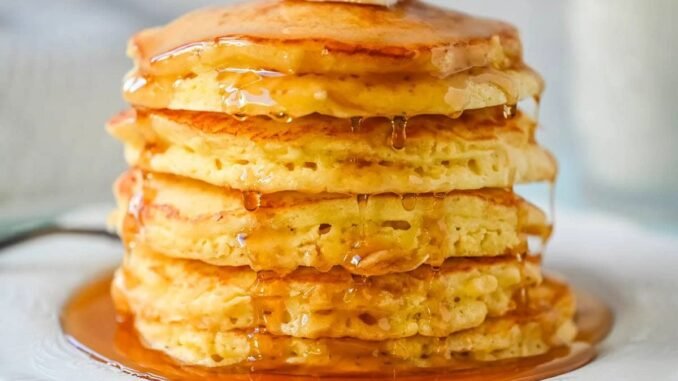
Flat, rubbery pancakes are almost always a technique problem, not a recipe problem. Learning how to make fluffy pancakes from scratch every time comes down to three things: acid + leavening, rested batter, and the right heat. I’ve made pancakes most weekends for years — for kids, for brunch guests, for myself at midnight — and the method below produces tall, tender, golden pancakes with the kind of consistency that makes people ask for your “secret.” There isn’t one. There’s just chemistry, done right.
The Recipe (Makes ~12 Pancakes)
- 2 cups all-purpose flour
- 2 tablespoons sugar
- 2 teaspoons baking powder + 1/2 teaspoon baking soda (both — here’s why below)
- 1/2 teaspoon salt
- 2 cups buttermilk (the #1 fluffiness factor — see below)
- 2 large eggs
- 1/4 cup melted butter (plus more for the pan)
- 1 teaspoon vanilla extract
The Three Fluffiness Rules
1. Buttermilk + double leavening = lift
Fluffiness is gas bubbles trapped in batter. Baking powder provides lift; baking soda needs acid to activate — and buttermilk is acidic. Together they produce dramatically more rise than either alone. No buttermilk? 2 cups milk + 2 tablespoons white vinegar or lemon juice, rested 5 minutes — nearly identical results. This acid-base reaction is also why the batter should hit the pan soon after mixing (within 10–15 minutes) — the bubbles are temporary.
2. Rest the batter (but mix it lumpy)
Mix until just combined — lumps are mandatory. Overmixing develops gluten, and gluten makes pancakes tough and flat instead of tender and tall. Stir 10–12 strokes max, walk away for 5–10 minutes. The rest hydrates the flour (thicker batter = taller pancakes) and lets the leavening start working. The batter should be thick enough to mound slightly off the spoon — if it’s runny, your pancakes will be too.
3. Medium-low heat, and wait for bubbles
The #1 beginner error is too-hot pan — burnt outside, raw inside, no rise. Heat the pan over medium-low, test with a water drop (it should sizzle gently, not explode). Butter the pan lightly between batches (oil works too, but butter tastes better). Pour 1/4-cup scoops, and flip exactly once — when bubbles pop on the surface and stay open (2–3 minutes), flip and cook 1–2 minutes more. Every extra flip deflates them.
How Do I Make Fluffy Pancakes From Scratch Every Time? Troubleshooting
- Flat pancakes: expired leavening (test baking powder in hot water — it should fizz vigorously; replace every 6–12 months), overmixed batter, or batter sat too long.
- Rubbery texture: overmixed. Lumps are your friends.
- Burnt outside, raw inside: heat too high. Lower it and be patient.
- Uneven browning: pan has hot spots — rotate the pan or move pancakes around; cast iron evens out with preheating.
- Sticking: pan wasn’t hot enough before batter went in, or not enough fat.
Level-Up Variations
- Blueberry: fold in 1 cup fresh blueberries after mixing (folding into the pan works too — drop berries onto each pancake right after pouring).
- Chocolate chip: 3/4 cup chips; sprinkle on after pouring for even distribution.
- Whole wheat: swap 1 cup flour for white whole wheat — slightly denser but nuttier; add 2 extra tablespoons buttermilk.
- Keeping warm: 200°F oven on a wire rack over a sheet pan — keeps them crisp, never soggy (a plate traps steam).
- Freezing: cool completely, freeze in a single layer, then bag — toaster reheating from frozen gives near-fresh results.
According to King Arthur Baking‘s testing, the buttermilk-double-leavening-rest combination is the most reliable path to tall pancakes across flour types. Total cost per batch: under $3 for a stack that beats any $14 brunch plate. Mix it lumpy, rest it briefly, keep the heat moderate, flip once — do that and “fluffy pancakes from scratch” stops being an aspiration and becomes just what Saturday tastes like.
Pancake Mistakes to Avoid
- Overmixing the batter: the #1 pancake sin — overmixing develops gluten, producing tough, flat, rubbery pancakes. 10–12 strokes max; lumps are mandatory.
- Too-hot pan: burnt outside, raw inside, no rise. Medium-low heat, water-drop test (gentle sizzle), and patience — the pan should never smoke.
- Flipping more than once: every flip deflates the pancakes. Flip exactly once — when bubbles pop on the surface and stay open (2–3 minutes), flip, cook 1–2 minutes more, done.
- Old baking powder: dead leavening = flat pancakes regardless of technique. Test in hot water (vigorous fizz = alive); replace every 6–12 months; write the open date on the box.
Fluffy Pancake FAQs
What’s the secret to really fluffy pancakes?
Three things: buttermilk + double leavening (baking powder and soda — the acid-base reaction produces maximum lift), rested, lumpy batter (5–10 min rest hydrates flour for thickness), and medium-low heat (lets the rise happen before the outside sets). No single ingredient — it’s the combination.
Can I make pancake batter the night before?
Not ideally — the leavening reaction starts immediately and fades overnight (flat pancakes by morning). Better: mix dry ingredients the night before; add wet ingredients in the morning (2 minutes). Or make extra pancakes and freeze them — toaster reheating beats overnight batter.
Why are my pancakes raw in the middle?
Heat too high (outside sets before inside cooks), batter too thick (thin slightly with buttermilk), or too-large pancakes (1/4-cup scoops cook through; dinner-plate pancakes don’t). Lower heat + smaller pancakes solves it.
How do I keep pancakes warm for a crowd?
200°F oven on a wire rack over a sheet pan — the rack prevents steam-sogginess (a plate traps steam and ruins the texture). Holds perfectly for 30–45 minutes while you cook batches.
Scaling Up: Pancakes for a Crowd
Feeding 12+ people? The griddle strategy: a $30–$40 electric griddle (or two large skillets) cooks 6–8 pancakes simultaneously — the only way to serve everyone hot. Mix a double batch of dry ingredients ahead; add wet ingredients in two separate bowls (batter #2 mixed when #1 hits the griddle — leavening fades, so stagger it). 200°F oven + wire rack holding system for finished batches. Topping bar (berries, chocolate chips, whipped cream, maple syrup, nutella) lets guests customize — and kids assemble their own, which is half the entertainment. Cost per person: under $2 — the cheapest crowd-pleaser in breakfast, and the griddle pays for itself the first brunch.
Leave a Reply