
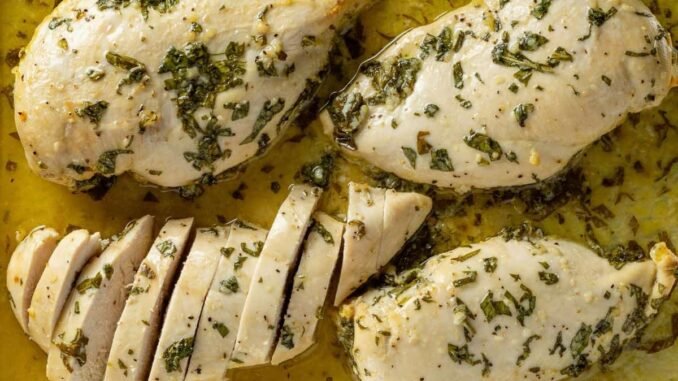
Dry, chalky meal-prep chicken is the #1 reason people quit meal prepping. Learning how to meal prep chicken so it doesn’t get dry isn’t about one trick — it’s a chain of small decisions from purchase to reheating, and breaking any link dries it out. I’ve meal-prepped chicken weekly for years, and my Friday chicken is now as juicy as my Monday chicken. Here’s the complete chain.
Link 1: Choose Thighs (The Honest Answer)
Chicken thighs have more fat and connective tissue than breasts, which means they’re dramatically more forgiving — overcook a thigh by 10 degrees and it’s still juicy; overcook a breast by 10 degrees and it’s sawdust. Boneless, skinless thighs run $1.50–$2.50/lb (often cheaper than breasts) and reheat beautifully. If you’re committed to breasts for macro reasons, the rest of this guide is your lifeline — but know that thighs are the easy mode.
Link 2: Brine It (30 Minutes, Huge Payoff)
A quick wet brine — 1 quart water + 1/4 cup salt + 2 tablespoons sugar, 30–60 minutes — increases the meat’s moisture capacity by 10%+. That margin is the difference between juicy and dry after 4 days in the fridge. No time? Even a 15-minute salt sprinkle (kosher salt on all sides, rest at room temp) helps via dry-brining. Rinse wet-brined chicken and pat very dry before cooking (moisture is the enemy of browning).
Link 3: Cook to Temperature, Not Time
Recipes say “bake 25 minutes at 400°F.” Your oven, your chicken thickness, and your pan all vary — time is a guess, temperature is a fact. A $15 instant-read thermometer (ThermoPro, ThermoWorks ThermoPop) is the single most impactful cooking purchase you’ll ever make.
- Chicken breast: pull at 150–155°F (carryover cooking brings it to a safe 160°F+ during rest). The old 165°F-everywhere guidance overcooks breasts — the USDA time-temperature tables confirm 150°F held for ~3 minutes is equally safe.
- Chicken thighs: cook to 175–185°F — higher than breasts, because the extra connective tissue needs heat to convert to gelatin (that’s what makes thighs succulent, not dry).
- Rest 5–10 minutes before slicing — cutting immediately lets juices flood the board instead of staying in the meat.
- Slice against the grain for tenderness, and slice just before eating if possible — pre-sliced chicken dries faster (more surface area).
Link 4: Store It Right
- Cool quickly, refrigerate within 2 hours (food safety non-negotiable).
- Store in airtight containers with any pan juices poured over — those juices are liquid insurance.
- Don’t slice until serving if you can manage it — whole pieces retain moisture far better.
- 4-day rule: cooked chicken keeps 3–4 days refrigerated. Planning 5 days? Freeze day 4–5 portions and thaw overnight.
- A shallow pool of broth in the container (2–3 tablespoons) works wonders for breasts specifically.
How Can I Meal Prep Chicken So It Doesn’t Get Dry? The Reheating (Where Most People Fail)
Microwaving chicken on full power is how juicy Monday chicken becomes rubbery Wednesday chicken. Instead:
- Microwave at 50% power for 2–3 minutes, with a damp paper towel over the chicken — gentle heat + steam = juicy.
- Sprinkle water or broth (1–2 teaspoons) over the chicken before reheating — replaces lost surface moisture.
- Stovetop: slice and warm in a covered skillet with a splash of broth over medium-low — the best method, 5 minutes.
- Don’t reheat twice. Portion what you’ll eat; reheat once.
- Eat some cold: honestly, well-prepped chicken sliced over salads or in wraps cold is delicious and zero-risk. Not everything needs reheating.
The chain again: thighs (or brined breasts) → thermometer → rest → airtight with juices → gentle reheat. Break no links and your Friday lunch tastes like Monday dinner. A $15 thermometer and a $2 brine are the cheapest cooking upgrades in existence — your meal prep will never be dry again.
Meal Prep Chicken Mistakes to Avoid
- Cooking by time instead of temperature: “25 minutes at 400°F” is a guess — ovens, thickness, and pans all vary. A $15 instant-read thermometer is the single most impactful cooking purchase: breasts to 150–155°F (carryover finishes the job), thighs to 175–185°F.
- Skipping the rest: cutting immediately lets juices flood the board instead of staying in the meat. Rest 5–10 minutes — the hardest step is waiting.
- Microwaving on full power: full-power microwaving turns juicy chicken rubbery. 50% power + damp paper towel, 2–3 minutes — gentle heat + steam preserves texture.
- Pre-slicing everything: sliced chicken dries faster (more surface area). Store whole pieces with pan juices; slice just before eating.
Meal Prep Chicken FAQs
How long does meal-prepped chicken last?
3–4 days refrigerated (USDA). Planning 5 days? Freeze day 4–5 portions and thaw overnight in the fridge. Cool within 2 hours of cooking, store airtight with pan juices poured over.
Chicken breast or thighs for meal prep?
Thighs — more fat and connective tissue means dramatically more forgiving: overcook by 10°F and still juicy, reheats beautifully, often cheaper ($1.50–$2.50/lb). Committed to breasts? Brine 30 minutes and pull at 150–155°F — the lifeline protocol.
Why is my reheated chicken always dry?
Full-power microwaving is the usual killer — it blasts moisture out. Fix: 50% power, damp paper towel over the top, splash of broth before heating. Or stovetop: sliced chicken in a covered skillet with broth, medium-low, 5 minutes — the best method.
Can I freeze meal-prepped chicken?
Yes — 2–3 months at best quality. Freeze in portion containers with pan juices, thaw overnight in the fridge (never on the counter). Shredded chicken freezes and reheats best of all — maximum surface area for sauce absorption.
The Freezer Stash Strategy
Level up meal prep with a freezer stash: every time you cook chicken, make double and freeze half in portion containers with pan juices (label + date). After a month, you own a rotating library of proteins — shredded chicken, sliced thighs, diced breast — ready to thaw overnight for zero-cook assembly (salads, wraps, grain bowls, quesadillas). Frozen cooked chicken: 2–3 months at best quality. The stash decouples cooking from eating — cook when you have time and energy, eat well when you don’t. Combined with the 4-day fridge rotation, you’re never more than a thaw away from a real meal — the meal-prep endgame.
Leave a Reply