
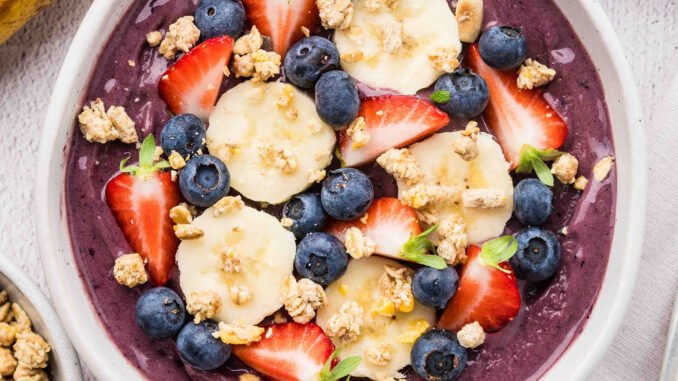
Most smoothies are just fruit-flavored sugar water in a virtuous disguise — delicious for twenty minutes, then you’re raiding the snack drawer by 10 a.m. If you’re asking how can I make healthy smoothies that keep me full until lunch, the missing ingredients aren’t exotic. They’re protein, fiber, and fat.
I drink a smoothie almost every morning, and the difference between the ones that carry me to lunch and the ones that don’t comes down to a simple formula I’ve refined over years. Here’s exactly how to build a smoothie that actually satisfies.
How can I make healthy smoothies that keep me full until lunch: The Short Answer
A filling healthy smoothie needs four components: 20–30g protein (Greek yogurt, protein powder, or silken tofu), 5–10g fiber (oats, chia seeds, flax, or berries), healthy fat (nut butter, avocado, or a tablespoon of nuts), and liquid plus fruit for flavor. Blend in this order: liquid first, then greens and powders, then fruit and ice last. Avoid juice as the base — it spikes blood sugar without adding fullness.
Why This Matters More Than You Think
Satiety — the feeling of fullness — comes from nutrients that slow digestion: protein triggers fullness hormones, fiber slows stomach emptying, and fat delays the whole process. Healthline’s nutrition guides A fruit-and-juice smoothie delivers fast-digesting sugars with almost none of these brakes, so your blood sugar spikes and crashes within an hour. Adding protein, fiber, and fat transforms the same drink into something with the staying power of a real meal. The research on protein and satiety is genuinely robust — it’s the highest-leverage change you can make.
5 Tips That Actually Work
Hit 20–30 grams of protein
This is the non-negotiable. One cup of plain Greek yogurt (Fage or Chobani, ~$1 per cup) gives you 15–20g. Add a scoop of protein powder (Optimum Nutrition or Orgain, ~$1 per serving) and you’re at 30g+. Silken tofu is the secret weapon for dairy-free — 1/2 cup adds 8g with zero taste.
Add fiber that you can’t taste
A tablespoon of chia seeds (5g fiber) or ground flax (3g fiber) disappears into any smoothie while dramatically improving fullness. Rolled oats (1/4 cup = 2g fiber plus thickness) make smoothies creamy and sustaining. Raspberries and blackberries beat bananas for fiber per calorie.
Include a real fat source
A tablespoon of peanut or almond butter, a quarter avocado, or a small handful of walnuts adds the fat that keeps hunger away for hours. Don’t fear the calories — a 400-calorie smoothie that holds you until lunch beats a 200-calorie one followed by a 300-calorie vending machine run.
Ditch the juice base
Orange juice adds 20+ grams of sugar with no fiber. Use water, unsweetened almond milk (~$4/half gallon), or plain kefir instead. Frozen fruit provides all the sweetness you need — and frozen fruit blends thicker and colder than fresh, which also improves satisfaction.
Prep freezer packs for busy mornings
Portion fruit, greens, oats, and seeds into zip-top bags and freeze. In the morning: dump a pack in the blender, add liquid and protein, blend 60 seconds. Five minutes of Sunday prep removes every excuse for skipping breakfast all week.
My Favorite Tools and Brands
I only recommend gear I’ve actually used or that’s widely vetted by testing labs — Academy of Nutrition and Dietetics is worth checking before you buy.
- NutriBullet Pro — ~$90 — Handles frozen fruit and seeds without complaint; perfect single-serve size.
- Orgain Organic Protein Powder — ~$27 — Clean ingredient list, 21g protein per scoop, blends smoothly.
- Chia seeds (bulk bag) — ~$10 — The easiest fiber upgrade in the smoothie world.
- Freezer zip-top bags — ~$5 — For make-ahead smoothie packs that save your mornings.
Common Mistakes to Avoid
- Making it all fruit. A banana-mango-juice smoothie is dessert. Without protein and fat, you’ll be hungry in an hour no matter how ‘healthy’ it feels.
- Skipping the greens out of fear. A handful of spinach is undetectable in a berry smoothie but adds fiber, iron, and volume. Start with spinach; graduate to kale.
- Using flavored yogurt. It adds 15–20g of sugar. Plain Greek yogurt plus your own fruit gives you control over sweetness.
- Drinking it in 30 seconds. Satiety signals take ~20 minutes to register. Sip your smoothie over 15–20 minutes rather than chugging — you’ll feel fuller on the same drink.
Frequently Asked Questions
Are smoothies actually healthy?
They can be — it depends entirely on construction. A protein-fiber-fat smoothie is a genuinely nutritious meal. A juice-and-fruit smoothie is essentially soda with vitamins. Build yours with the formula above and you’re in great shape.
Can smoothies help with weight loss?
A well-built smoothie works well as a meal replacement because protein and fiber control hunger. But liquid calories are easy to overdo — measure calorie-dense add-ins like nut butter and honey rather than free-pouring.
What’s the best liquid for smoothies?
Unsweetened almond milk for low calories, dairy milk or soy milk for extra protein (8g per cup), coconut water for electrolytes after workouts. Plain water works fine too — the other ingredients carry the flavor.
My Daily Recipe
For the curious, here’s exactly what I blend every morning: a cup of unsweetened almond milk, a cup of frozen mixed berries, a banana, a scoop of vanilla protein powder, a tablespoon of almond butter, a tablespoon of ground flax, and a handful of spinach. It comes to about 420 calories, 30g protein, and 12g fiber — and it genuinely holds me until lunch. I’ve drunk some version of this over a thousand times and I’m still not tired of it. If you want to rotate flavors without rebuilding the formula, swap the berries for mango and the almond butter for coconut butter, or go chocolate with cocoa powder and peanut butter. The protein-fiber-fat skeleton stays the same; only the costume changes. I keep three variations in rotation so breakfast never gets boring, and the freezer packs make switching effortless.
Protein, fiber, fat, no juice — that’s the formula for a smoothie that keeps you full until lunch. Build it once, prep freezer packs, and breakfast is solved. For more healthy kitchen habits, check out make fluffy pancakes from scratch every time, when pasta is perfectly cooked al dente, and cook salmon so it stays juicy.
Leave a Reply