
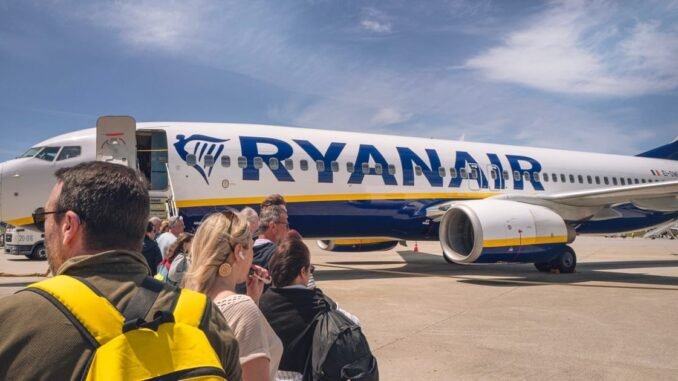
Budget airline math is a trap: the $49 fare becomes $129 after the carry-on fee, seat selection, and boarding pass printing fee. Baggage fees are where budget carriers make their real money — Spirit and Frontier charge $60–$80+ for a carry-on at the gate. If you’re asking how do I avoid baggage fees on budget airlines, here’s the complete playbook: 12 tactics ranging from “pack smarter” to fare-class arbitrage, plus the fee tables so you know exactly what you’re dodging.
Know the enemy first — typical one-way fees (2026, purchased online in advance; gate prices run $15–$25 higher):
- Spirit: carry-on $65–$80, checked $60–$75 (1st bag)
- Frontier: carry-on $60–$75, checked $55–$70
- Southwest: 2 checked bags FREE (the glorious exception — often cheapest all-in)
- Allegiant: carry-on $45–$60, checked $40–$55
- Ryanair (Europe): carry-on (10kg) €20–€35, checked €25–€45
- easyJet: large cabin bag £8–£48, checked £24–£48
The pattern: fees punish the unprepared and reward planners. Every tactic below exploits that.
How Do I Avoid Baggage Fees on Budget Airlines? The 12 Tactics
Pack within the free allowance
1. Master the personal item. Every budget airline allows one free personal item (Spirit: 18″x14″x8″; Frontier: 18″x14″x8″; Ryanair: 40x20x25cm). A well-chosen personal-item bag (Nomatic, CabinZero, or a 20L backpack) fits 3–5 days of stuff with disciplined packing. This is the #1 fee-avoidance skill — learn it and most fees vanish.
2. Wear your luggage. The coat trick is real: wear your bulkiest shoes, heaviest jacket, and layer clothes on travel day. A Scottevest-style travel vest ($100+) with 20+ pockets legally carries pounds of gear as “clothing.” It looks dorky; it saves $65.
3. Compression is free space. Packing cubes + compression bags ($15–$25) shrink clothes 30–40%. Roll, don’t fold. Wear merino wool (odor-resistant for multiple wears). Our packing strategy guide covers the capsule-wardrobe method that makes personal-item travel possible.
Buy smart
4. Prepay bags online — always. If you must bring a bag, buying during booking is 30–50% cheaper than at the airport. Gate fees are the maximum punishment tier — never pay at the gate if you can avoid it.
5. Compare all-in prices, not fares. A $49 Spirit fare + $70 carry-on = $119. A $99 Southwest fare with 2 free bags = $99. The “expensive” airline is often cheaper. Always price the trip with your actual bags before booking.
6. Check the bundle fares. Spirit’s “Boost It” / Frontier’s “UpFront Plus” / “Premium” bundles often include bags + seats for less than à la carte. Do the arithmetic per trip.
7. Credit card free bags. Airline cards (Frontier Mastercard, Spirit cards) include free checked bags — one round trip can justify the annual fee. General travel cards don’t usually cover budget-airline bags, so check benefits specifically.
Fly the fee-free exceptions
8. Southwest when it works. Two free checked bags, no change fees, free carry-on. On routes Southwest serves, it’s frequently the cheapest all-in option despite higher headline fares. (Note: Southwest has announced coming changes to its bags-fly-free policy — verify current terms when booking.)
9. Status and memberships. Frontier’s Discount Den ($60/year) cuts bag fees; Spirit’s Saver$ Club similar. Worth it if you fly the airline 2+ times yearly.
Creative workarounds
10. Ship it. For longer trips, shipping a box via UPS/FedEx Ground ($20–$40) beats $140 in round-trip bag fees — and your stuff meets you there. Especially smart for skis, golf clubs, and baby gear.
11. Buy there, donate back. For beach trips: buy sunscreen, cheap clothes, and gear at destination (Target/Walmart), donate or discard before returning. Sounds wasteful; the math often wins vs. $140 in fees. (Better: thrift stores at the destination.)
12. The gate-check gamble (use cautiously). On full flights, airlines solicit free gate-check volunteers for carry-ons. If your bag is within carry-on size but you didn’t pay the fee… this is not reliable and can backfire into the maximum fee. Mentioned for completeness; don’t plan on it.
The Personal-Item Packing List (3–5 Days)
An 18″x14″x8″ bag fits: 4 tops, 2 bottoms, 1 layer, underwear/socks (sink-washable), minimal toiletries (3-1-1 compliant), phone charger, documents. Wear: bulkiest shoes, jacket, jeans. Laundry: sink-wash mid-trip (detergent sheets, $5). It’s spartan but liberating — and the cheap flight strategies that found the $49 fare pair perfectly with $0 in bag fees for the true ultra-budget trip.
The Fee Math: When Budget Airlines Aren’t (Full Comparison)
The “$49 fare” needs honest accounting. Let’s price a real round trip for one person with a carry-on, booked 3 weeks out, NYC to Miami: Spirit: $49 fare × 2 = $98 + carry-on $65 × 2 = $130 + seat selection $15 × 2 = $30. Total: $258. Frontier: $55 × 2 = $110 + carry-on $60 × 2 = $120 + seat $12 × 2 = $24. Total: $254. Southwest: $119 × 2 = $238 + bags $0 + seats $0 (open seating). Total: $238. JetBlue: $129 × 2 = $258 + carry-on $0 + seat $0 (standard). Total: $258.
The “budget” airlines cost the same or more once bags enter the picture — and Southwest/JetBlue include free changes, better legroom, and actual customer service. When budget airlines DO win: personal-item-only travel (the $98 Spirit round trip is real if you pack in a backpack), short hops where the fare gap is huge ($39 vs $149), and routes where legacies don’t compete. The decision rule: always price three options — the budget fare with your actual bags and seats, Southwest, and one legacy carrier — before booking. The DOT’s air consumer resources also document baggage fee disclosure rules: airlines must show fee information clearly during booking, so if the fees surprise you at checkout, something’s wrong — back up and re-price. The cheapest fare is the cheapest total, not the cheapest headline.
The Bottom Line
Avoid budget-airline baggage fees by: mastering the free personal item (the #1 skill), prepaying any needed bags online, comparing all-in prices (Southwest often wins), using airline cards or bundle fares, and shipping bulky items. The $49 fare is real — but only for travelers who refuse to pay the $70 bag tax. Pack light, plan ahead, and keep the fare you were promised.
Leave a Reply