
We’ve all seen them: the too-good-to-be-true fares on websites with names like SuperCheapFlights4U.biz, promising 70% off. Then comes the “service fee” at checkout, the ticket that never gets issued, or the customer service line that goes to voicemail forever. If you’re asking how do I find cheap flights without using sketchy websites, good news: the best flight deals come from legitimate tools and smart strategies, not shady third parties. Here’s the complete trustworthy playbook.
Rule zero: search everywhere, book with the airline. Third-party sites are fine for finding fares; the actual purchase should almost always happen on the airline’s own website. Direct bookings mean easier changes, real customer service, and full frequent-flyer credit.
How Do I Find Cheap Flights Without Using Sketchy Websites? Master Google Flights
Google Flights is the single most powerful free flight tool, and most travelers use 10% of it:
- Price tracking: enter your route and dates, toggle “Track prices.” Google emails you when fares drop. This alone saves the average traveler $100+ per trip.
- Date grid: shows fares across a range of dates — shifting departure by 2 days often saves $80–$150.
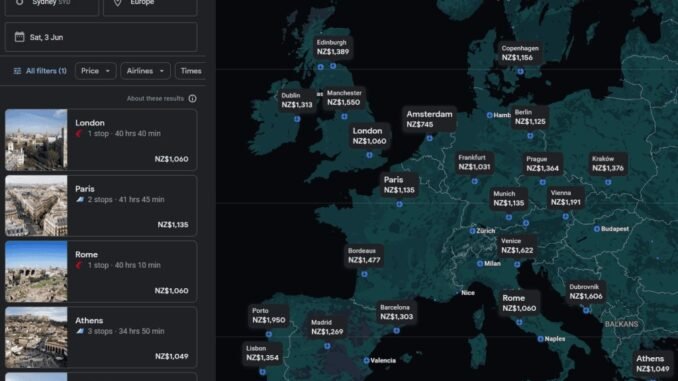
- Explore map: enter your home airport and dates, zoom out, and see the cheapest destinations worldwide. Perfect for “I want to go somewhere cheap in March” trips.
- Price insights: Google tells you if current fares are low, typical, or high for the route — and predicts whether they’ll rise. Trust the “low” label; book.
- Nearby airports: always check the “include nearby airports” box. Flying out of an alternate airport routinely saves $50–$200.
Complement with Skyscanner (excellent “cheapest month” view) and Kayak (good fare forecasts) for searching — then book direct with the airline. All three are established, legitimate aggregators. For mistake fares and flash sales, Going (formerly Scott’s Cheap Flights, free tier available) sends alerts for genuinely exceptional deals from your home airport.
The Strategies That Actually Lower Fares
- Be flexible on dates: the #1 lever. A 3-day shift can halve the fare. If your schedule allows, search with flexible dates first, then lock plans around cheap flights — not the reverse.
- Fly midweek: Tuesday and Wednesday departures are consistently cheapest; Friday and Sunday the priciest. On a $400 fare, the weekend premium is often $80–$120.
- Book at the right time: domestic: 1–3 months ahead; international: 2–6 months ahead. Last-minute is almost never cheaper (the “last-minute deal” is largely a myth in the algorithm era). Seasonal timing matters enormously for international routes.
- Clear cookies / use incognito: the evidence for price-tracking cookies is debated, but incognito searching costs nothing and removes all doubt.
- Check one-way combinations: sometimes two one-ways on different airlines beat a round-trip. Also check nearby destination airports — flying into Oakland vs. SFO, or Fort Lauderdale vs. Miami.
- Consider budget airlines honestly: Southwest (2 free checked bags — often cheapest all-in), JetBlue, Alaska for domestic; Norse, PLAY, French Bee for transatlantic. Compare total cost including bags and seats, not just the headline fare.
Points and Miles: The Advanced Discount
You don’t need to be a travel hacker to benefit. One travel rewards credit card (Chase Sapphire Preferred, Capital One Venture, or similar — $95 annual fee) with a 60,000-point signup bonus equals $600–$750 in free travel after meeting the minimum spend. Use it for normal spending, pay in full monthly, and you’ve funded a flight or two per year. Rules: never carry a balance (interest obliterates the rewards), never buy points speculatively, and use Google Flights to find the fare before deciding whether points or cash is the better deal.
Red Flags: Spotting the Sketchy Sites
Even when searching legitimately, you’ll encounter dubious sellers. Walk away when you see:
- Prices dramatically lower than everywhere else (25%+ below Google Flights) — it’s a scam or an error that won’t be honored
- No physical address, no customer service phone number, or only a contact form
- Pressure tactics: countdown timers, “only 1 seat left at this price!” on every search
- Requiring wire transfers, Zelle, or gift cards — legitimate sellers take credit cards
- Reviews mentioning tickets canceled, hidden fees at checkout, or nonexistent refunds (check Trustpilot/BBB before booking with any unfamiliar site)
- “Too good” business/first class fares from consolidators you’ve never heard of
If a deal appears only on an unfamiliar site, verify it exists on the airline’s site or a known aggregator before paying a cent. And always pay with a credit card — chargeback rights are your ultimate protection.
The Mistake Fare Playbook
Mistake fares — when an airline accidentally prices a $900 ticket at $180 — are the unicorns of flight deals. They exist (a few per month globally), they get honored more often than you’d think (DOT rules generally protect tickets bought in good faith), and catching them is a skill. How to catch them: follow deal alert services (Going’s free tier, Jack’s Flight Club) with notifications ON — mistake fares die in hours, sometimes minutes. Have your passport details and payment ready; hesitation kills.
The rules: book immediately, don’t call the airline to ask about it (attention gets fares pulled), wait 1–2 weeks before booking nonrefundable hotels (in the rare case it’s cancelled), and never book positioning flights you can’t use otherwise. Beyond mistakes: “hidden city” ticketing (booking A→B→C and getting off at B) can save money but violates most airlines’ terms — bags won’t transfer, and doing it repeatedly risks your frequent-flyer account. Safer gray-area tactics: positioning flights to cheap-departure hubs, and open-jaw tickets that eliminate backtracking. The DOT’s air consumer protection pages are worth bookmarking — knowing your rights on refunds and cancellations is the foundation every deal-hunting strategy rests on. And when a fare looks too good on an unfamiliar site, cross-check it against the true all-in cost including baggage fees — the “$180 fare” with $140 in fees isn’t the deal it appears to be.
The Bottom Line
Find cheap flights safely with: Google Flights price tracking + date grid, Skyscanner/Kayak for searching, Going for deal alerts, midweek flexible-date travel, booking direct with airlines, and one good rewards card for points. Skip every site that looks sketchy — the legitimate tools find the same fares without the risk. Set up price tracking for your next trip today; it’s five minutes that routinely saves hundreds.
Leave a Reply