
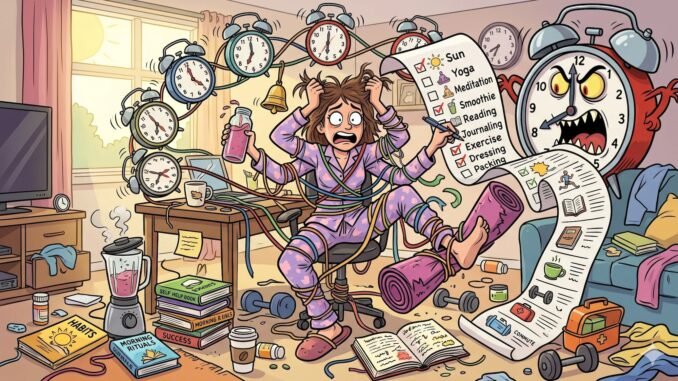
My old mornings were a contact sport: alarm snoozed four times, shower at lightning speed, toast eaten over the sink, keys missing, out the door already defeated. By 9 AM I’d burned through all my patience and the day hadn’t even started. If you’re asking how can I make my mornings less rushed and stressful, here’s the secret I wish someone had told me sooner: calm mornings are built the night before. The morning itself is just the performance; the evening is the rehearsal.
This isn’t about becoming a 5 AM person or adding a 12-step routine to an already packed day. It’s about removing decisions and friction so the morning runs on rails. Most of these changes take five minutes the night before and save twenty chaotic minutes in the morning.
How Can I Make My Mornings Less Rushed and Stressful? Win the Night Before
Decision fatigue is real, and mornings are when your decision battery is at its lowest. Every choice you eliminate tonight is calm you buy tomorrow:
- Lay out clothes — full outfit, down to shoes. Check the weather first so there’s no 7 AM wardrobe crisis. Parents: lay out the kids’ clothes too; it ends the morning outfit negotiations before they start.
- Pack bags and prep food. Work bag packed, lunch made or components ready, coffee maker loaded (a $30 programmable coffee maker means waking up to brewed coffee — small luxury, massive mood upgrade). Kids’ backpacks by the door, permission slips signed.
- Do a 10-minute reset. Dishes in the dishwasher, counters wiped, living room quick-tidy. Waking up to yesterday’s mess starts the day in a deficit.
- Set out the launch pad. Keys, wallet, phone, sunglasses in one spot by the door. The average person spends 10 minutes a day looking for things — the launch pad kills that entirely.
- Write tomorrow’s top 3. Three priorities on a sticky note. Your morning brain doesn’t have to figure out what matters; last night’s calmer brain already decided.
Design a 30-Minute Morning That Actually Works
You don’t need an hour. You need 30 protected minutes before the chaos starts — which means getting up 30 minutes earlier, not snoozing 30 minutes later. The snooze button is the enemy: those fragmented 9-minute dozes don’t restore anything and just compress your morning further. Put the phone/alarm across the room so getting up is non-negotiable.
A realistic template
- 0–5 min: Up, water, light. Drink a full glass of water (you’re dehydrated), open the curtains or step outside for 60 seconds. Light tells your brain the day started.
- 5–15 min: Bathroom routine, dressed in the pre-laid clothes. No decisions, just execution.
- 15–25 min: Breakfast sitting down — even 10 minutes with actual food (not a granola bar in the car) changes the day’s texture. Overnight oats or egg muffins from a weekly meal prep make this effortless.
- 25–30 min: Buffer. Review the top-3 list, grab the launch-pad items, out the door with five minutes to spare instead of five minutes late.
The buffer is sacred. Rushed mornings aren’t caused by too little time — they’re caused by zero margin. One slow elevator or lost shoe detonates a schedule with no slack. Build in 10 minutes of nothing and watch the panic evaporate.
Fix the Energy Side
Half of morning stress is actually morning exhaustion. If you’re consistently wrecked at wake-up, the morning routine isn’t the problem — the sleep is. A bedroom optimized for sleep (dark, cool, screen-free wind-down) does more for your mornings than any alarm hack. Consistent wake times — even on weekends, within an hour — stabilize your rhythm faster than anything else.
And go easy on the snooze-cycle caffeine trap: chugging coffee the second you wake up interferes with your natural cortisol wake-up response. Waiting 60 to 90 minutes after waking for that first cup gives you steadier energy and a better afternoon. Sleep hygiene basics from the Sleep Foundation cover the evening habits that make mornings possible.
For Parents: The Special Chaos
Kid mornings multiply every friction point. Beyond laying out clothes and packing bags: wake up 30 minutes before the kids (non-negotiable — you need to be a calm human before managing small ones), simplify breakfast to two rotating options, and create a visual morning checklist for kids old enough to follow one (pictures for pre-readers). Shoes live by the door, always. And build in the buffer times two — kids operate on their own mysterious timeline.
The Night-Before Checklist (15 Minutes That Change Mornings)
Rushed mornings are manufactured the night before. Fifteen minutes before bed, run this checklist: Clothes: full outfit laid out, including shoes and accessories. Decision fatigue is real — choosing at 10 PM costs nothing; choosing at 7 AM costs your calm. Bag: packed and by the door. Laptop, gym bag, kids’ backpacks — everything staged at the launch pad. Kitchen: coffee programmed, breakfast prepped or decided, lunches packed, water bottle filled.
Keys/wallet/phone: in the launch zone. Every morning spent hunting keys is a night-before failure. Tomorrow’s top 3: glance at the calendar, note the three must-dos. Your sleeping brain will actually pre-process them — you’ll wake up with a plan instead of a fog. Dishes and counters: a 5-minute reset means you wake to calm, not chaos. That’s it. Fifteen minutes, six items. The first week feels fussy; by week three it’s automatic. And the payoff is enormous: mornings stop being a daily emergency and start being — dare I say — almost pleasant. Your future self, sipping coffee instead of sprinting, thanks you.
When the Morning Still Goes Sideways
Even perfect systems fail sometimes — the alarm doesn’t go off, a kid gets sick, traffic doubles. Have a minimum viable morning: the 3 things that must happen no matter what (for most people: dressed, fed, out the door with essentials). Everything else is bonus. Knowing your minimum in advance turns a chaotic morning from a catastrophe into a minor deviation. The goal was never perfection — it was fewer emergencies.
The Bottom Line
Calm mornings aren’t a personality trait — they’re an evening-prep system plus 30 protected minutes plus a buffer. Start tonight: lay out clothes, pack the bag, set up coffee, clear the launch pad. Tomorrow morning will feel 30 percent easier, and you’ll wonder why you ever did it the hard way. The day still brings its chaos — but at least it won’t start before you’ve had breakfast.
Leave a Reply