
Every January I’d vow to meal prep, buy $80 of groceries and matching containers, then watch it all rot while I ordered takeout. The problem wasn’t discipline — it was the influencer version of meal prep: six hours, 21 identical containers, zero joy. When I finally figured out how do I plan a simple weekly meal prep routine that fits a real schedule, the whole thing shrank to under two hours and my weekday lunches fixed themselves.
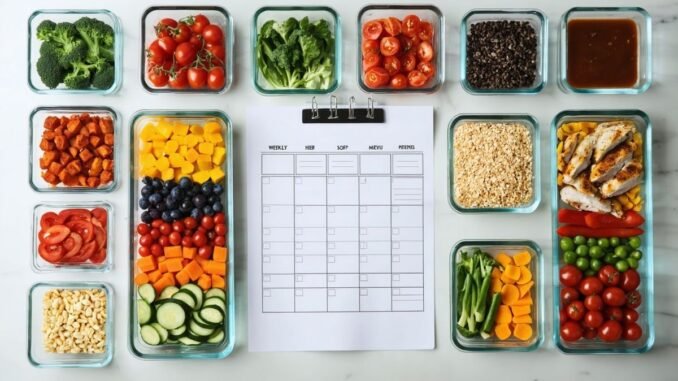
The reframe that changed everything: you’re not prepping meals, you’re prepping components. Cook a few versatile building blocks, and assemble different meals all week. No one gets bored, nothing takes all Sunday, and you still save the money — which pairs perfectly with a plan for saving money on groceries each month.
How Do I Plan a Simple Weekly Meal Prep Routine? Use the Template Method
Instead of planning seven unique dinners, use a weekly template. Here’s mine — steal it outright or adapt it:
- Monday: Bowl night (grain + protein + roasted veg + sauce)
- Tuesday: Tacos / wraps (uses Monday’s leftover protein)
- Wednesday: Pasta or stir-fry (whatever veg needs using)
- Thursday: Soup or sheet-pan dinner (clean-out-the-fridge night)
- Friday: Takeout or freezer meal (planned, not a failure)
Lunches are even simpler: pick one big-batch lunch for Monday through Wednesday and another for Thursday and Friday, or just make extra dinner every night. Breakfasts can be fully automatic — overnight oats, Greek yogurt, or egg muffins made in one batch.
The 2-Hour Sunday Session (Step by Step)
Here’s the actual workflow. Total active time: about 90 minutes to 2 hours, with the oven and stove doing parallel work.
- Pick your components (10 min): Choose 1 grain, 2 proteins, 2 to 3 vegetables, and 1 to 2 sauces. Example: brown rice, shredded chicken + black beans, roasted broccoli + bell peppers, tahini dressing + salsa verde.
- Start the long-cook items first: Get rice or quinoa going in a pot or rice cooker. Put a sheet pan of chopped vegetables in a 425°F oven with olive oil and salt (25 to 30 minutes, hands-off).
- Cook proteins while veg roasts: Season chicken breasts or thighs and bake on a second sheet pan, or brown ground turkey in a skillet. Hard-boil a half-dozen eggs for snacks. Simmer a pot of lentils or black beans if using dried (or just open cans — no shame).
- Prep fresh stuff: While everything cooks, wash and chop raw veg, make one sauce in a jar (tahini + lemon + garlic + water, shaken, lasts all week), portion snacks like nuts or cut fruit.
- Cool, portion, store: Let everything cool to room temp (no more than 2 hours), then portion into containers. Label with masking tape and the date if you’re fancy. Fridge immediately.
Containers and Gear (Keep It Minimal)
You need far less than the internet suggests. A set of glass containers with locking lids ($25 to $35 for a 10-pack on Amazon) handles nearly everything — glass reheats better and doesn’t stain like plastic. Add a couple of mason jars for sauces and overnight oats, and you’re equipped. A sheet pan, a big pot, and a skillet are the only cookware the system requires. If you want to level up later, a $30 rice cooker with a timer is the best meal-prep appliance per dollar.
Food Safety: The Rules That Actually Matter
Meal prep lives or dies on food safety, so here are the non-negotiables from FDA guidance:
- The 4-day rule: Cooked meat, poultry, and mixed dishes keep 3 to 4 days refrigerated. Plan Mon–Thu from Sunday’s cook; prep a small fresh batch Wednesday night or plan Friday as freezer/takeout night.
- Cool it fast: Get food from oven to fridge within 2 hours. Spread hot food on sheet pans to cool quickly if you’re in a hurry.
- Fridge at 40°F or below. If your fridge runs warm, everything spoils faster — a $5 fridge thermometer removes the guesswork.
- Reheat to 165°F. Microwaves have cold spots, so stir halfway through.
- When in doubt, throw it out. Off smell, slimy texture, or “how long has this been here?” — the $3 of food isn’t worth the sick day.
The FDA’s food storage guidance has the full charts if you want to check specific items.
Make It Stick: The Boredom Problem
The number one meal-prep killer is eating identical containers five days straight. The component method solves most of it — same chicken becomes tacos Tuesday, a grain bowl Wednesday, and a wrap Thursday just by changing the sauce and format. Rotate your proteins and grains weekly (chicken + rice one week, turkey + quinoa the next), keep two or three sauces in rotation, and give yourself full permission for Friday takeout. A system you enjoy 80 percent of the time beats a perfect system you abandon.
Once the routine is humming, it plugs into everything else: cheaper grocery bills, healthier default lunches, and weeknights where dinner is assembly, not cooking. That’s the real payoff — not the Instagram containers, but the 6 PM version of you who doesn’t have to think.
Meal Prep for Picky Eaters and Special Diets
The standard meal-prep advice assumes everyone eats the same thing. Real families don’t. The fix is component prepping: instead of five identical containers, prep mix-and-match building blocks. Cook a big batch of grains (rice, quinoa), two proteins (shredded chicken, seasoned ground turkey or tofu), roasted vegetables, and two sauces. Each person assembles their own combos through the week — the picky eater gets plain chicken and rice, you get the full bowl. Same effort, zero complaints.
For special diets, the component system shines: keep the base naturally adaptable (most components are already gluten-free; swap tamari for soy sauce), and prep one diet-specific item rather than a whole separate menu. Label everything with contents and date — mystery containers get thrown out, labeled ones get eaten. And if you’re trying to make the whole routine cheaper, pairing meal prep with smart grocery saving strategies multiplies the payoff: planned meals plus planned shopping is where the real money stays in your pocket.
The Bottom Line
Pick a weekly template, cook components (not full meals) in one 2-hour session, store them safely, and assemble different dinners all week. Start this Sunday with just lunches if the full week feels like too much — even that saves you $40 to $60 and five stressful midday decisions. Simple beats perfect, every single week.
Leave a Reply