
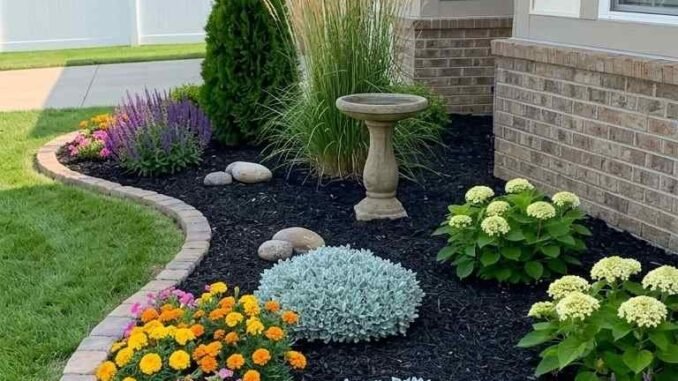
The dream front yard looks intentional year-round and demands almost nothing from you. These low-maintenance landscaping ideas for a front yard are built on one principle: right plant, right place, then leave it alone. Most high-maintenance yards fail because someone planted fussy plants in the wrong conditions and has been fighting them ever since. I’ve converted two yards to low-maintenance designs, and both now need about 2–3 hours of work per month in growing season. Here’s how.
The Foundation: Kill the High-Maintenance Stuff First
Before planting anything, subtract:
- Shrink the lawn. Turf is the most maintenance-intensive “plant” in your yard — mowing, watering, fertilizing, weeding. Replace strips and awkward corners with mulch beds ($3–$5/bag). Every square foot of lawn you eliminate is weekly work you’ll never do again.
- Remove fussy plants — roses that need spraying, hedges that need shearing four times a year, annuals you replant every spring. Thank them for their service and compost them.
- Fix drainage if water pools anywhere — no plant thrives with wet feet, and fighting drainage with plant choices never works.
The Plant Palette: What Actually Thrives on Neglect
Choose native plants for your region — they evolved for your soil, rainfall, and pests, which means no babying. General all-stars across most US zones:
- Ornamental grasses (Karl Foerster feather reed grass, blue fescue, muhly grass): one annual cut-back in late winter, otherwise untouchable. Muhly grass’s pink fall plumes are stunning.
- Evergreen structure: boxwood alternatives like inkberry holly (disease-resistant, native), dwarf yaupon holly, or juniper — year-round form with zero pruning if you buy the right mature size.
- Perennial workhorses: black-eyed Susan, coneflower, salvia, daylily (the Stella d’Oro reblooms all summer), hosta for shade. Plant in drifts of 5–7, not onesies — massing looks designed and suppresses weeds.
- Groundcovers instead of mulch-only beds: creeping juniper, liriope, or native sedges fill in and choke out weeds permanently.
Buy plants at their mature size in mind — the #1 landscaping mistake is planting a shrub that wants to be 6 feet wide in a 3-foot space, then shearing it forever. Read the tag. Believe the tag.
What Are the Best Low-Maintenance Landscaping Ideas for a Front Yard? Design Tricks
Mulch deeply, edge crisply
3 inches of mulch suppresses weeds, retains moisture, and looks finished. Replenish every 1–2 years ($50–$100 for a typical front yard). Crisp bed edges (re-cut each spring, 20 minutes with a spade) are what separate “landscaped” from “overgrown” — more than any plant choice.
Hardscape the problem areas
That slope you can’t mow, the strip between sidewalk and street, the deep-shade corner where nothing grows — stop fighting them. Dry creek beds of river rock ($40–$80 for the hellstrip), a simple gravel pad with a bench, or stepping stones through groundcover turn problem spots into features.
Irrigation: drip or nothing
If you water, install drip irrigation ($50–$100 for a starter kit) on a $30 timer. It waters roots, not weeds; uses 50% less water than sprinklers; and runs itself. Hand-watering is a maintenance task — automate it or design to not need it.
The Seasonal Calendar (2–3 Hours/Month)
- Spring: cut back grasses, refresh mulch, edge beds. One solid Saturday.
- Summer: deadhead spent blooms occasionally (or don’t — many natives look fine), pull the few weeds that brave the mulch. 30 minutes every other week.
- Fall: leave seed heads standing for birds and winter interest — don’t “clean up” everything. Less work, better ecology.
- Winter: nothing. Enjoy the evergreen structure you planted.
Your state’s cooperative extension service (find it via the USDA NIFA directory) publishes free native-plant lists for your exact county — the single best resource for “what will thrive here with no help.” Design once with the right plants, mulch deeply, automate the water, and your front yard becomes the one neighbors assume you pay someone to maintain.
Low-Maintenance Landscaping Mistakes to Avoid
- Planting fussy plants in the wrong conditions: the #1 source of yard work is fighting nature — sun-lovers in shade, thirsty plants in dry soil. Right plant, right place eliminates 80% of maintenance before you begin.
- Ignoring mature size: that cute 1-gallon shrub wants to be 6 feet wide. Planting it in a 3-foot space guarantees years of shearing. Read the tag. Believe the tag. Space accordingly.
- Keeping too much lawn: turf is the highest-maintenance “plant” in the yard — weekly mowing, watering, fertilizing. Shrink it with mulch beds and groundcovers; keep lawn only where you actually use it.
- Skipping the edge: crisp bed edges are what separate “landscaped” from “overgrown” — more than any plant choice. Re-cut edges each spring (20 minutes with a spade).
Low-Maintenance Landscaping FAQs
What are the easiest plants for a front yard?
Native ornamental grasses (one annual cut-back), evergreen shrubs bought at mature size (inkberry holly, dwarf yaupon — zero pruning), and perennial workhorses (black-eyed Susan, coneflower, daylily, hosta for shade). Your state’s cooperative extension service publishes free native lists for your exact county.
How do I get rid of weeds permanently?
3 inches of mulch + dense plantings (drifts of 5–7, groundcovers) — weeds can’t compete with shade and coverage. Landscape fabric under mulch is controversial (it degrades and weeds root through it); deep mulch alone, replenished every 1–2 years, works better long-term.
Should I install irrigation?
Drip irrigation on a timer ($50–$100 kit + $30 timer) if you water at all — 50% less water than sprinklers, waters roots not weeds, runs itself. Or design with natives that need no supplemental water after establishment (1–2 years).
How much does low-maintenance landscaping cost?
FAQs
How much does low-maintenance landscaping actually cost upfront?
Expect to pay more upfront than a basic sod-and-mulch job — typically a few thousand dollars for a professionally designed low-maintenance front yard, versus less for simple plantings. The payoff comes over years: less watering, less mowing, fewer plant replacements, and less of your weekend spent on yard work. Think of it as buying back your Saturdays. DIY installation with nursery plants can cut the cost dramatically if you’re willing to do the digging.
Will low-maintenance landscaping hurt my home’s curb appeal?
Not if it’s designed well — in fact, a clean, intentional low-maintenance yard usually looks better than a high-maintenance one that’s been neglected. The key is structure: defined beds, a clear focal point, and plants chosen for your climate so they always look healthy. A yard full of struggling plants you don’t have time to tend looks far worse than ornamental grasses and mulch done right. Realtors consistently say tidy and intentional beats elaborate and overgrown.
What’s the lowest-maintenance ground cover option?
For most climates, it’s a tie between quality mulch and stone/gravel beds — both need almost nothing once installed. Mulch needs topping up every year or two; gravel needs occasional weed-pulling but lasts indefinitely. Living ground covers like creeping thyme or clover look softer but need some establishment time and occasional attention. Avoid the temptation of artificial turf: it gets hot, looks increasingly fake, and creates drainage headaches.
Do native plants really need less care?
Generally, yes — and that’s their whole selling point. Native plants evolved for your local rainfall, soil, and temperature swings, so once established they need far less water, fertilizer, and pest control than exotic ornamentals. The catch is the establishment period: most natives need regular watering for their first year or two while roots develop. After that, many thrive on neglect. Check with a local native plant nursery for species that genuinely suit your specific area.
$500–$2,000 DIY for a typical front yard (plants, mulch, edging, drip kit) — the work is a few weekends. Professional design + install runs $3,000–$8,000. The ongoing savings (2–3 hrs/month vs. 6–8) pay back the effort within a season.
Leave a Reply