
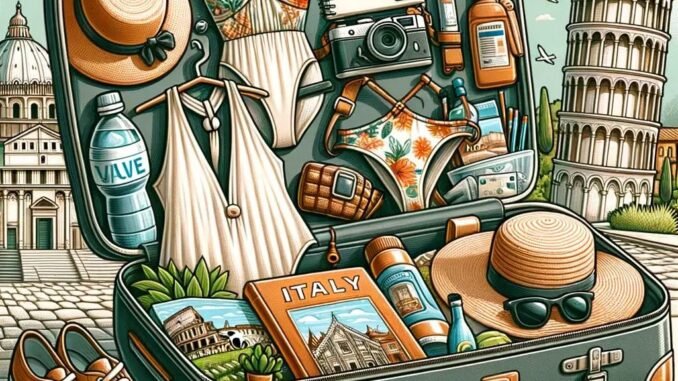
Two weeks in Italy means cobblestones, church dress codes, regional weather swings, and the eternal question: how do I look effortlessly stylish without checking a 50-pound bag? I’ve done this trip with both an overstuffed suitcase (regret) and a carry-on (triumph). If you’re asking what should I pack for a two week trip to Italy, here’s the truth: you need about half what you think, chosen strategically. Italy rewards the light packer — with ancient elevators, 4th-floor walk-ups, and trains you must hustle to catch.
The philosophy: pack for one week, do laundry once. Every Italian town has a lavanderia (laundromat), many B&Bs offer laundry, and a $10 wash halfway through beats dragging 14 days of outfits across the country.
What Should I Pack for a Two Week Trip to Italy? The Carry-On Wardrobe
Build around a neutral color palette (navy, black, white, beige + one accent) where everything mixes and matches. For most seasons:
Clothing (one week, mix-and-match)
- Tops (5–6): breathable blouses/shirts or polos. Italians dress slightly smarter than Americans — a collared shirt or nice blouse goes everywhere; gym clothes stay at the gym.
- Bottoms (3): dark jeans, chinos or linen pants, and shorts or a skirt depending on season. Dark colors hide travel grime and look dressier.
- Dresses (1–2, if applicable): one versatile day-to-night dress covers dinners, churches, and evenings.
- Layers (2): a light sweater or cardigan + a packable rain jacket or travel blazer. Churches, museums, and mountain towns run cool even in summer.
- Sleepwear + underwear for 7 days (or fewer if you’ll do laundry twice).
- Swimsuit (1–2): coastal towns, hotel pools, Lake Como — you’ll want it even on non-beach trips.
- A scarf: the Italy MVP — covers shoulders for churches, adds warmth, dresses up any outfit, weighs nothing.
Shoes (3 pairs max — this is where people overpack)
- Broken-in walking shoes: the single most important item. You’ll walk 15,000–25,000 steps daily on uneven cobblestones. Stylish-but-supportive (think Cole Haan, Ecco, or clean white sneakers — sneakers are now fully normal in Italy). Break them in before the trip.
- Dressier option: loafers, ballet flats, or low block heels that handle cobblestones. One pair that works for nice dinners.
- Sandals or flip-flops: for beaches, showers in hostels, hotel use.
Wear the bulkiest shoes on the plane. Never bring brand-new shoes to Italy — the cobblestones will punish you and your blisters will punish your itinerary.
Essentials Beyond Clothes
- Documents: passport (valid 6+ months beyond travel), copies stored separately + digital scans, travel insurance info, hotel confirmations. US citizens: check current State Department guidance for Italy entry requirements.
- Money: debit card for ATMs (best exchange rates — decline “conversion” offers), one backup card, ~€100 in cash for small towns and markets. Notify banks of travel dates.
- Tech: phone, universal power adapter (Italy uses Type L plugs — bring 2), portable charger, earbuds. A transit app downloaded offline.
- Toiletries: travel sizes only — Italian farmacie (pharmacies) are excellent for anything you forget, and they exist everywhere. Sunscreen is expensive in Italy; bring your own.
- Day bag: a crossbody or small backpack with zipper for daily sightseeing — required for pickpocket defense in Rome, Naples, and Milan.
- Laundry kit: a few detergent sheets or travel packets + a sink stopper (universal, $5) for emergency hand-washing.
- Medications: prescriptions in original bottles + a small kit (pain reliever, anti-diarrheal, motion sickness, band-aids). See traveling with medications internationally for the full rules.
What to Leave Home
- Too many “just in case” outfits: Italy has shops. If you truly need something, buying it there is a souvenir.
- Valuable jewelry: pickpockets target tourists; leave the irreplaceable pieces home.
- Hair dryer: every hotel/B&B has one. (Americans’ high-wattage dryers can fry on 220V anyway.)
- Beach towels: hotels provide them; coastal towns sell cheap ones.
- Guidebooks (physical): download offline maps and guides instead. The weight savings are real.
- White sneakers you love: kidding — but know that Rome’s dust will age them. Embrace it.
Season Tweaks
- Summer (Jun–Aug): linen everything, sun hat, stronger sunscreen, refillable water bottle (Rome’s nasoni fountains have free cold water everywhere). Churches still require covered shoulders/knees — carry the scarf.
- Spring/Fall (Apr–May, Sep–Oct): the best packing seasons — layers, light jacket, one warmer sweater for northern cities and evenings.
- Winter (Nov–Mar): real coat, warm layers, waterproof shoes. Southern Italy stays mild; Milan and Venice get genuinely cold and foggy.
The “Buy It There” List
Some things are better bought in Italy — cheaper, better, or part of the experience. Sunscreen and toiletries: bring enough for the first days, then buy at Italian farmacie — the selection is excellent and pharmacists give great advice. An extra bag: you will shop. Pack a foldable duffel ($15) for the return — it weighs nothing going over and saves you from a $60 airport bag purchase. Stylish basics: if you underpacked, Italy is the place to fix it — H&M and Zara are cheaper than in the US, and local boutiques in smaller towns have finds you’ll never see at home.
What not to buy there: prescription meds (bring from home with documentation), specialty electronics (voltage and warranty headaches), and anything you need on day one (you’ll be jet-lagged, not shopping). The souvenir strategy: buy consumables — olive oil, balsamic from Modena, wine, ceramics you can actually use. They pack flat-ish, they don’t gather dust, and every use is a memory. Skip the leaning-tower snow globes. The departure-day rule: lay out everything you’re bringing home the night before your flight. If it doesn’t fit in your bags plus the foldable duffel, something stays — and “something” should never be the thing you actually need. Pack for the trip you’re taking, buy for the person Italy turns you into.
The Bottom Line
Pack for one week in a neutral mix-and-match palette, do laundry once mid-trip, prioritize broken-in walking shoes above all, and bring the scarf. Leave the “just in case” items home — Italy’s shops have you covered. A carry-on isn’t just possible for two weeks in Italy; it’s the superior strategy. Your shoulders (and the 4th-floor walk-up in Trastevere) will thank you.
Leave a Reply