
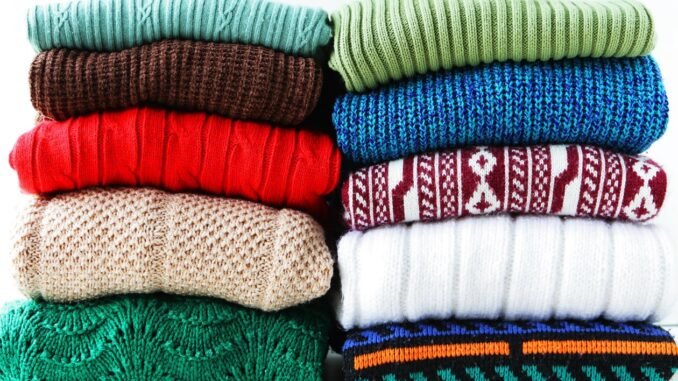
You pull your favorite sweater from the closet and the shoulders have pointy hanger nipples, the body has stretched into a tunic, and it smells faintly of regret. What is the best way to store sweaters so they keep their shape? Knitwear is the most storage-sensitive category in your wardrobe — gravity, hangers, moths, and bad folding all conspire against it. But proper storage is simple, cheap, and adds years to every sweater you own. I’ve kept cashmere sweaters perfect for a decade with the system below, while friends replace theirs every two seasons.
What Is the Best Way to Store Sweaters So They Keep Their Shape? Rule #1: Fold, Never Hang
Hanging is the #1 sweater killer. Gravity pulls knit fabric downward, stretching the shoulders (the dreaded hanger bumps), elongating the body, and distorting the neckline. The heavier the knit, the faster the damage — a chunky cable-knit can deform in a single season on a hanger. Always fold sweaters. No exceptions, not even “just for a day.”
How to Fold a Sweater Properly
- Lay the sweater face-down on a flat surface, smoothing out wrinkles.
- Fold one side in to the center (sleeve included), then fold the sleeve back along the fold line.
- Repeat on the other side — you now have a long rectangle.
- Fold in half (or thirds for long sweaters) from the bottom up.
- The result: a neat rectangle with no stretched edges. For drawer storage, the KonMari file-fold (folding into a packet that stands upright) lets you see every sweater at a glance.
For travel, roll instead of folding — rolling prevents creases better in a suitcase. (Same principle as packing efficiently for trips.)
Where to Store Them
- Shelves: the ideal — folded stacks with breathing room. Don’t stack more than 4–5 high (weight compresses the bottom ones). Shelf dividers ($12) keep stacks from toppling.
- Drawers: excellent — file-folded sweaters in drawers are visible, accessible, and protected. Cedar drawer liners add moth protection.
- Bins for off-season: breathable cotton or canvas storage bags/boxes — NOT airtight plastic bins or vacuum bags for natural fibers (wool and cashmere need air circulation; sealed plastic traps moisture and invites mildew). One exception: vacuum bags are fine for synthetic knits short-term.
- Never: hangers (stretching), wire shelving without a liner (leaves marks), damp basements or hot attics (mildew and fiber damage), or crammed spaces where knits get compressed and wrinkled.
Moth Prevention (Non-Negotiable for Wool/Cashmere)
Clothes moths don’t eat clean wool — they eat the body oils, food, and sweat on wool. So:
- Always store sweaters clean. This is the #1 moth prevention. A “worn once, looks fine” sweater is a moth buffet.
- Cedar blocks, rings, or sachets ($10 for a multi-pack) — replace or sand yearly, as the oils evaporate. Cedar repels; it doesn’t kill existing larvae.
- Lavender sachets as a pleasant-smelling supplement.
- Check seasonally. Small holes appearing in knits = active moths. Isolate affected items (freeze for 72 hours to kill larvae/eggs), clean everything nearby, and consider pheromone moth traps ($12) to monitor.
Between Wears: The Maintenance That Prevents Damage
- Rest between wears. Knit fibers need 24–48 hours to bounce back. Wearing the same sweater daily stretches it permanently — rotate.
- Air out instead of washing. Wool and cashmere rarely need washing — hang (briefly, on a padded hanger, just for airing) near an open window or outside for a few hours. Spot-clean stains. Wash only when actually dirty — overwashing is the #2 sweater killer after hanging.
- Depill regularly. A $12 electric fabric shaver keeps knits looking new — pilling is normal friction, not damage. (Part of the clothing revival routine.)
- Wash correctly when you do: cold water, gentle/delicate cycle or hand wash, wool-safe detergent (The Laundress Wool & Cashmere, or even baby shampoo in a pinch), never wring (press water out in a towel), reshape and dry flat on a towel away from heat. Heat + agitation = felted, shrunken tragedy.
- Fix hanger bumps: if damage is done, wash and reshape while damp, or steam the shoulders and reshape by hand — most bumps release with moisture and reshaping.
Off-Season Storage Checklist
- Wash or dry-clean every sweater (moth prevention).
- Fold neatly; place cedar blocks/sachets in the storage container.
- Store in breathable cotton bags or lidded canvas boxes in a cool, dry, dark place.
- Skip the vacuum-seal for wool/cashmere (okay for acrylics).
- Check once mid-summer for any moth signs.
Proper storage is part of the bigger small-closet organization system — folded knits on shelves are the backbone of an efficient closet. And when sweaters do need refreshing after storage, styling them well starts with them holding their shape.
For fiber-specific care details, The Spruce’s sweater storage guide and Good Housekeeping’s knitwear care cover the nuances.
Cashmere and Delicates: The VIP Treatment
Cashmere, merino, and other luxury knits deserve one extra step: individual breathable bags (cotton or muslin, not plastic) for your most precious pieces. This prevents friction pilling between garments, blocks dust, and adds a moth barrier. Fold with acid-free tissue in the creases to prevent hard fold lines on fine knits. And wash cashmere even less than wool — 4–5 wears between washes is normal; cashmere’s natural fibers resist odor remarkably. When you do wash: baby shampoo or dedicated cashmere wash, cool water, 5-minute soak, no agitation, press (never wring) in a towel, dry flat. A $200 cashmere sweater maintained this way lasts 10+ years — $20/year for daily luxury. The cheap acrylic sweater needs no such care, which tells you everything about why the good stuff is worth it.
Dealing With Stretched-Out Knits
Already have a stretched sweater? Most stretching is reversible. The wash-and-reshape method: wash the sweater (properly — cool water, gentle), then while damp, gently push the fabric back into shape — scrunch the body upward, reshape the neckline, even out the sleeves — and dry flat on a towel, reshaping once more halfway through. For baggy elbows or seats: a targeted approach — dampen just the stretched area, reshape, and dry flat. For necklines: run the ribbing under warm water, reshape it smaller than you want (it relaxes slightly as it dries), and dry flat. Prevention reminder: fold, don’t hang; rest between wears; wash gently. Wool has remarkable memory — it wants to return to its knitted shape. You just have to give it the chance with moisture, reshaping, and patience.
The practical takeaway: fold every sweater, every time — never hang. Store clean knits on shelves or in drawers with cedar, in breathable containers off-season. Rest between wears, wash rarely and gently, dry flat, depill regularly. Do this and your sweaters won’t just keep their shape — they’ll outlast trends by a decade.
Leave a Reply