
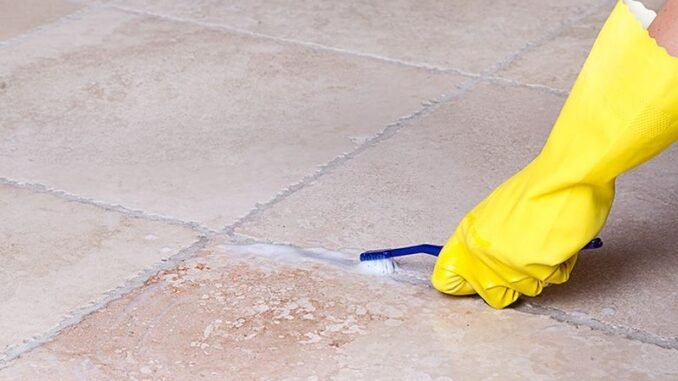
Dirty grout makes an entire tile floor look old, even when the tile itself is fine. The best way to clean grout between tiles depends on how bad things are — surface grime and deep-set staining need different weapons. I’ve restored grout in two rental properties and my own kitchen, and I can tell you the method that actually works is almost never the first one people try. Let’s skip the wasted effort.
Level 1: Steam Cleaning (Start Here)
A handheld steam cleaner ($40–$80 — Bissell and Dupray make good ones) blasts grime out of grout pores with zero chemicals. Fill, heat, and run the brush attachment slowly along grout lines. It’s oddly satisfying — you’ll see the original grout color reappear like a magic trick. For maintenance cleaning (grout that’s just dull, not black), steam alone is often enough. No fumes, safe for kids and pets, and the machine pays for itself after two uses versus hiring a pro ($0.75–$1.50/sq. ft.).
Level 2: Baking Soda Paste + Scrubbing
For grout that’s visibly discolored:
- Mix baking soda with water into a thick paste (peanut-butter consistency).
- Apply to grout lines, let sit 10–15 minutes.
- Scrub with a stiff grout brush ($8 — the narrow ones, not a toothbrush; your knuckles will thank you) or an old electric toothbrush for small areas.
- For extra power, spray white vinegar over the paste before scrubbing — the fizzing helps lift grime. (Don’t use vinegar on natural stone tile — it etches marble and travertine.)
- Mop up with clean water, changing the water frequently.
This handles 80% of residential grout. Elbow grease is the active ingredient — there’s no shortcut around the scrubbing.
Level 3: Oxygen Bleach (The Heavy Artillery)
For grout that’s dark brown or black — years of neglect, rental-property specials:
- Mix oxygen bleach (OxiClean Versatile Stain Remover, ~$12/tub) with hot water per the package ratio.
- Pour onto the grout, let it sit 30–60 minutes (keep it wet — lay damp towels over it if needed).
- Scrub with the grout brush, mop clean.
Oxygen bleach is color-safe, fume-free, and dramatically more effective than chlorine bleach on grout — and unlike chlorine bleach, it won’t weaken grout over time or discolor colored grout. This is the method professional tile cleaners use most.
What NOT to Use
- Chlorine bleach: whitens temporarily but degrades grout and can yellow it long-term. Also brutal on lungs in small bathrooms.
- Muriatic acid: yes, it works — and yes, it can eat grout, burn skin, and ruin fixtures. Leave acids to professionals.
- Wire brushes / steel wool: scratch grout and tile glaze, creating grooves that trap more dirt afterward.
- Dark oils or “grout colorants” as cleaners: those are cover-ups, not cleaning — fine as a last resort, not a first step.
The Best Way to Clean Grout Between Tiles — Then Keep It Clean
Cleaning is half the battle; sealing is the other half. Once grout is clean and fully dry (wait 48–72 hours):
- Apply penetrating grout sealer ($15–$25/bottle — Miracle Sealants 511 or Aqua Mix Sealer’s Choice Gold) with a small brush or applicator bottle. Wipe excess off tile faces immediately.
- Reseal every 1–2 years in showers, every 2–3 years on floors. Test by dripping water on grout — if it beads, the seal holds; if it soaks in dark, reseal.
- Squeegee shower walls after use ($10 tool, 30 seconds) — prevents the soap-scum buildup that stains grout in the first place.
- Mop tile floors with pH-neutral cleaner (not vinegar long-term on stone, not harsh detergents that strip sealer).
If the grout is cracked, crumbling, or missing in spots, no cleaning will save it — that’s a regrouting job ($1–$3/sq. ft. DIY with premixed grout, $5–$10/sq. ft. pro). But for grout that’s just dirty, the steam-to-oxygen-bleach progression above will take most floors from embarrassing to “did you replace the tile?” Clean it, seal it, squeegee the shower — and you’ll only do the deep clean once.
Grout Cleaning Mistakes to Avoid
- Using chlorine bleach as the first resort: bleach whitens temporarily but degrades grout over time and can yellow it. Oxygen bleach (OxiClean) cleans deeper without the damage — and it’s fume-free.
- Scrubbing with wire brushes: steel wool and wire brushes scratch grout and tile glaze, creating grooves that trap more dirt afterward. Stiff nylon grout brushes ($8) are the right tool.
- Cleaning without sealing after: you just deep-cleaned porous grout — seal it within 48–72 hours or it re-stains in months. Penetrating sealer ($15–$25) is the step that makes the cleaning last.
- Using vinegar on natural stone: vinegar etches marble, travertine, and limestone — permanently dulling the finish. On stone tile, use pH-neutral cleaners only.
Cleaning Grout FAQs
How often should I deep-clean grout?
Every 6–12 months for floors, every 3–6 months for showers (they soil faster). Weekly damp-mopping with pH-neutral cleaner maintains it between deep cleans. Sealed grout stretches these intervals significantly.
Can I whiten grout permanently?
Grout colorant/sealer (Aquamix Grout Colorant, $15–$20) both recolors and seals in one step — it’s essentially paint for grout, and it lasts years. For grout that’s clean but permanently discolored, this beats endless re-cleaning.
Why does my grout get dirty again so fast?
It’s unsealed (absorbs everything), you’re mopping with dirty water (spreads grime into grout lines — change the water frequently), or the cleaner residue itself attracts dirt (rinse thoroughly after mopping).
Should I hire a professional grout cleaner?
For large areas or severe neglect, yes — pros with truck-mounted steam/rotary equipment ($0.75–$1.50/sq. ft.) achieve in hours what takes homeowners days. For maintenance cleaning, DIY with a $50 steam cleaner handles it.
When Grout Is Beyond Saving
Sometimes grout isn’t dirty — it’s done. Signs: grout that’s cracked, crumbling, or powdering when touched; missing chunks; or staining so deep that oxygen bleach + steam barely dent it. At that point, stop cleaning and regrout: rake out the old grout with a grout saw ($10–$15) or oscillating tool, vacuum the joints, and apply premixed grout ($15–$25/quart). DIY regrouting runs $1–$3/sq. ft.; pros charge $5–$10/sq. ft. The Tile Council of North America publishes the industry handbook standards for grout installation — the pro reference for joint widths, cure times, and sealer specs. Regrouting a shower floor is a weekend project that makes the tile look brand new — often better than the original install, since you’ll seal it properly this time.
Leave a Reply