
Chemical drain cleaners are terrible for your pipes, terrible for septic systems, and honestly not that effective. Learning how to unclog a drain without harsh chemicals isn’t just the eco-friendly choice — it’s the more effective choice. Caustic cleaners can corrode older pipes, and if they fail, you’re left with a sink full of caustic water that a plumber now has to deal with (they charge extra for that). I’ve cleared dozens of drains with the methods below and haven’t bought a bottle of drain cleaner in a decade. Here’s the progression, from easiest to most serious.
Method 1: Boiling Water (5 Minutes)
For slow bathroom sinks and grease-clogged kitchen drains, start here. Boil a kettle, pour it down in 2–3 stages, pausing between each. Hot water melts soap scum and grease buildup. Caution: don’t use boiling water on PVC pipes (it can soften joints) or porcelain sinks (thermal shock can crack them) — use very hot tap water instead. This alone fixes maybe 30% of slow drains.
Method 2: Baking Soda + Vinegar + Hot Water (20 Minutes)
The classic for a reason — it works on mild organic clogs:
- Pour 1/2 cup baking soda down the drain.
- Follow with 1/2 cup white vinegar. Let it fizz for 15 minutes.
- Flush with hot (not boiling, for PVC) water for 2–3 minutes.
Be honest about expectations: this handles soap scum and light grease. It will not dissolve a hairball the size of a hamster. For that, keep reading.
Method 3: The Plunger — Used Correctly (10 Minutes)
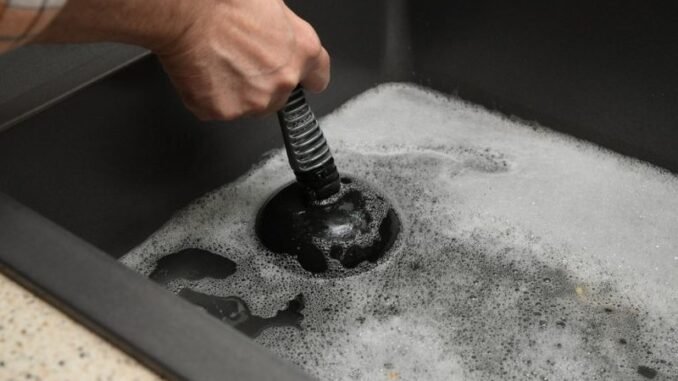
Most people plunge wrong. For sinks:
- Use a cup plunger (the simple suction-cup kind), not a flange plunger (that’s for toilets).
- Seal the overflow drain with a wet rag — otherwise pressure escapes and plunging does nothing. This is the step everyone misses.
- Fill the sink with 2–3 inches of water to create a seal.
- Plunge vigorously 15–20 times, then release. Repeat 2–3 rounds.
A $12 plunger used correctly clears more clogs than a $15 bottle of chemicals. Every home should own one for sinks and one for toilets.
How to Unclog a Drain Without Harsh Chemicals: The Drain Snake (The Real Fix)
A hand-crank drain auger ($25–$35 at Home Depot) is the tool that actually resolves stubborn clogs. Hair, the #1 bathroom drain killer, laughs at baking soda — but a snake grabs it physically.
- Remove the drain stopper or cover (most pop-up stoppers unscrew or pull out — this alone often reveals the clog).
- Feed the snake cable in slowly, cranking clockwise as you push.
- When you feel resistance, crank through it — you’re either breaking up or hooking the clog.
- Pull back slowly. Prepare yourself: what comes out is disgusting. That’s how you know it worked.
- Flush with hot water for several minutes.
For tub/shower drains, a $5 plastic Zip-It tool (barbed plastic strip) pulls out shocking amounts of hair in 60 seconds. Buy a 3-pack. You’ll use them.
Method 5: Clean the P-Trap (30 Minutes)
If the clog is in a bathroom sink and the snake didn’t reach it, the P-trap (the U-bend under the sink) is the likely culprit:
- Place a bucket underneath. Put on gloves.
- Unscrew the slip nuts on both ends of the U-bend (usually hand-tight or lightly wrenched).
- Dump the contents, scrub the trap clean, check both pipe ends for gunk.
- Reassemble — hand-tight plus a quarter turn. Run water and check for leaks.
This is a 30-minute job that plumbers charge $150–$250 for. The only skill required is not being squeamish.
Prevention: Never Deal With This Again
- Mesh drain screens ($8 for a multi-pack): catch hair before it enters. The highest-ROI plumbing purchase in existence.
- Never pour grease down the kitchen sink. Pour it into a can, let it solidify, trash it. Grease is the #1 kitchen clog cause.
- Weekly hot-water flush: run the hottest tap water for 60 seconds in each drain weekly.
- Enzyme cleaners (Bio-Clean, ~$50/tub lasts a year): monthly maintenance that eats organic buildup without harming pipes or septic systems. The EPA recognizes enzyme treatments as the septic-safe alternative to caustic cleaners.
Call a plumber only if multiple drains back up simultaneously (that’s a main-line issue, $200–$500 for snaking) or water backs up into other fixtures. For single-fixture clogs, the snake-and-plunger combo handles 95% of cases — no chemicals, no pipe damage, no $200 service call.
Drain Cleaning Mistakes to Avoid
- Reaching for chemical cleaner first: caustic cleaners corrode older pipes, kill septic systems, and if they fail, leave you with a sink full of caustic water that’s dangerous to plunge or snake. Mechanical methods work better with zero risk.
- Plunging without sealing the overflow: the overflow drain vents your plunging pressure into the air — seal it with a wet rag or plunging does literally nothing. The most-skipped step in drain clearing.
- Pouring grease down the drain “with hot water”: hot water just moves the grease further down the pipe where it solidifies into a worse clog. Grease goes in a can, then the trash — always.
- Ignoring slow drains until they’re stopped: a slow drain is a warning — clear it with hot water + enzyme cleaner now, or snake it this weekend. Waiting turns a 10-minute job into a plumber visit.
Unclogging Drains FAQs
Is baking soda and vinegar actually effective?
For mild buildup, yes — the fizzing agitates soap scum and light grease. For real clogs (hairballs, solid grease), it’s outgunned — you need mechanical removal (plunger, snake, Zip-It tool). Think of it as maintenance, not rescue.
What’s the best tool for hair clogs?
A $5 Zip-It tool (barbed plastic strip) for shower/tub drains — pulls out shocking amounts of hair in 60 seconds. For deeper clogs, a $25–$35 hand-crank drain auger. Hair laughs at chemicals; it surrenders to hooks.
Are enzyme cleaners worth it?
For monthly maintenance, yes — Bio-Clean (~$50/tub, lasts a year) eats organic buildup without harming pipes or septic systems. They’re preventive, not curative — they won’t clear an existing clog, but they prevent the next one.
When should I call a plumber?
Multiple drains backing up simultaneously (main-line issue — $200–$500 to snake), sewage smells or backups in tubs/showers, or water backing up into other fixtures. Single-fixture clogs are DIY; system-wide symptoms are professional territory.
Leave a Reply