
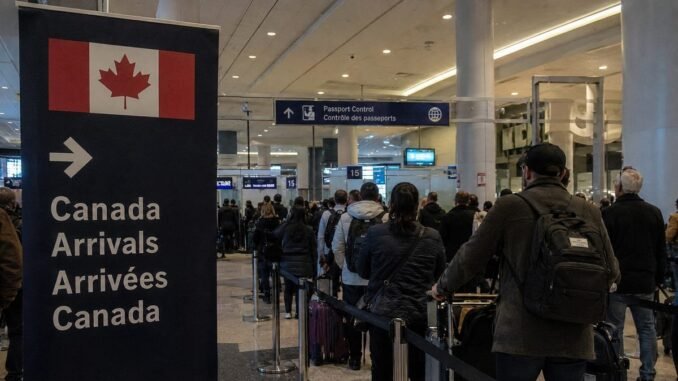
Canada feels so familiar that Americans sometimes treat it like a domestic trip — then get an unpleasant surprise at the border. A driver’s license alone hasn’t cut it since 2009. If you’re asking what documents do I need to travel to Canada from the US, here’s the complete, current guide: what’s accepted for adults and kids, by land vs. air, plus the non-document issues (like a DUI) that can get you turned away regardless of paperwork.
The governing framework is the Western Hemisphere Travel Initiative (WHTI) — the rules below come from it and from the State Department’s Canada page. Rules can change; verify close to departure.
What Documents Do I Need to Travel to Canada From the US? Adults
By air (required)
- Valid US passport book — the only option for flying. Must be valid for your entire stay (Canada doesn’t require 6 months’ validity, but your airline might — check).
By land or sea (options)
- US passport book (works everywhere, always the safest choice)
- US passport card ($30 with a passport book application, $65 standalone — wallet-size, valid for land/sea to Canada, Mexico, Bermuda, Caribbean)
- Enhanced Driver’s License (EDL) — available in MI, MN, NY, VT, WA only. Functions as both license and border-crossing document for land/sea.
- Trusted traveler cards: NEXUS, SENTRI, FAST — valid for land/sea (NEXUS also works for air kiosks).
What does NOT work: a regular driver’s license alone, a birth certificate alone (for adults), a Social Security card, or photocopies of anything. The “I drove to Canada with just my license in 2005” era is long over.
Children (Under 16)
Rules are more lenient for kids traveling by land or sea:
- By land/sea: US birth certificate (original or certified copy) is acceptable for under-16s. A passport is still recommended — it’s faster and works for air too.
- By air: passport book required, same as adults — no exceptions for infants.
- Traveling with one parent or non-parents: carry a notarized consent letter from the absent parent(s) with contact info. Canada is strict about child abduction prevention — border officers will question solo parents and grandparents. Include the child’s birth certificate and the absent parent’s contact number.
- Groups (school/church trips): supervised groups of under-19s can use birth certificates for land crossings with proper organizational documentation.
NEXUS: The Frequent Crosser’s Cheat Code
If you cross even 2–3 times a year, NEXUS ($50 for 5 years) is the best value in travel: expedited lanes at land borders, kiosks at airports, and it includes TSA PreCheck and Global Entry benefits. The catch: you need an in-person interview (enrollment centers have waits — apply months ahead) and both the US and Canada must approve you. For road-trippers and cross-border shoppers, it transforms the border from a 45-minute ordeal to a 5-minute wave-through.
What Gets You Turned Away (Beyond Documents)
This surprises Americans most: Canada can deny entry for criminal history — including offenses that seem minor in the US:
- DUI/DWI: Canada treats impaired driving as a serious crime. A single DUI can make you “criminally inadmissible” — yes, even one from years ago, even if it was a misdemeanor at home. Options: apply for rehabilitation (takes months, $200–$1,000 fee) or a Temporary Resident Permit at the border (not guaranteed, $200 fee).
- Other offenses: theft, assault, drug offenses — similar inadmissibility. Check your status before booking anything nonrefundable.
- CBSA officers have wide discretion: be honest, be polite, answer directly. Lying to a border officer is a fast track to a multi-year ban.
- Know the customs rules: declare everything — alcohol (1.5L wine or 1.14L spirits or 24 beers duty-free), tobacco (200 cigarettes), cannabis (illegal to cross with it either direction despite legalization in both countries — this catches people constantly), firearms (handguns essentially prohibited; long guns require paperwork filed in advance), and food (fresh fruits/vegetables/meats restricted).
Quick Pre-Trip Checklist
- Passport valid for entire stay (or EDL/passport card for land)
- Kids: passports (or birth certificates for land) + consent letters if applicable
- Travel insurance — your US health plan may not cover Canada; travel medical coverage is cheap and wise
- Check criminal admissibility if any history exists
- Review CBSA duty-free limits and prohibited items
- Phone plan: verify Canada coverage or get a travel pass (roaming without one is brutally expensive)
- Notify banks; bring some CAD (though cards are widely accepted)
Crossing by Car: The Land Border Playbook
Most Americans visit Canada by car — and land crossings have their own rhythm. Pick your crossing: major crossings (Detroit-Windsor, Buffalo-Niagara, Blaine WA) have the longest waits — check CBSA’s live border wait times before choosing your route. Smaller crossings can save an hour at peak times. Timing: cross mid-morning Tuesday–Thursday for the shortest waits; Friday afternoons and holiday weekends are the worst. At the booth: passports ready (not in the trunk), windows down, engine off if asked, sunglasses off. Answer the officer’s questions directly and briefly — “Where are you going? How long? Anything to declare?” are the big three.
The car itself: rental cars are fine (carry the rental agreement), but some US rental contracts restrict Canadian travel — verify before booking. Your US auto insurance typically covers Canada (confirm with your insurer; carry the proof). What gets searched: officers can and do search vehicles — keep the car tidy and accessible, declare all alcohol/tobacco/food, and never carry anything you’re unsure about across. The most common car-crossing mistake isn’t documents — it’s the passport left in the hotel safe “for safekeeping.” Keep it on your person at the border, every time.
The 48-Hour Document Check
Two days before departure, do the document drill: passports in hand (check expiration dates — Canada wants validity for your whole stay), kids’ documents plus consent letters if applicable, NEXUS cards if you’re using the fast lanes, travel insurance confirmations, and hotel bookings accessible offline. Photograph everything and email the photos to yourself. This 10-minute drill has saved more border crossings than any other single habit — the vast majority of document problems are discovered at the booth, when it’s too late.
The Bottom Line
Adults need a passport book to fly to Canada, or a passport/EDL/NEXUS for land crossings; kids need passports by air, birth certificates suffice by land (plus consent letters for solo parents). Check DUI admissibility before booking, declare everything at customs, and never attempt to cross with cannabis. Get the documents sorted a month out — expedited passports take weeks, and the border doesn’t do exceptions.
Leave a Reply