
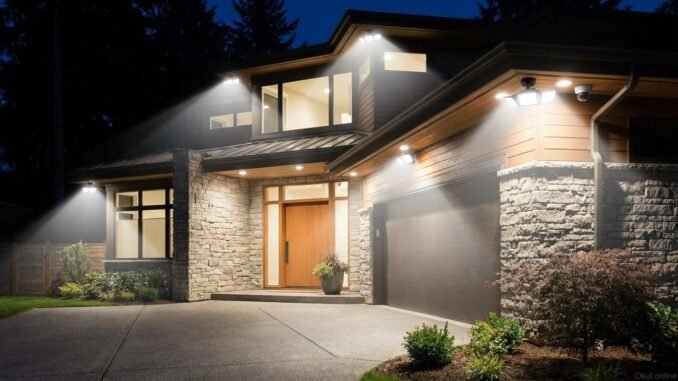
Here’s what most people get wrong about security lighting: more light isn’t better — smarter light is. A house blazing like a stadium all night creates harsh shadows (great hiding spots) and annoys neighbors, while a dark house with well-placed motion lights startles intruders and alerts you. Learning the best outdoor lighting options for home security means thinking like a deterrent designer, not a lighthouse keeper. Here’s the layered approach security professionals actually recommend.
Layer 1: Motion-Activated Floodlights (The Deterrent)
The workhorse of security lighting. A sudden 2,000–3,000 lumen blast when someone approaches is startling and attention-grabbing — exactly what a burglar doesn’t want.
- Placement: corners of the house covering driveways, side yards, and rear entries — the approaches burglars actually use (front doors are for guests; 34% of burglars enter through the front door, but rear and side entries are the stealth routes). Mount 8–12 feet high — out of reach, wide coverage.
- Settings matter: aim the sensor for human-height movement (not swaying branches — the #1 false-trigger complaint). Set the timer to 1–5 minutes and sensitivity to medium. Test at night and adjust.
- Best picks: Ring Floodlight Cam ($200 — light + camera + siren), LEPOWER LED security light ($40–$60 — excellent dumb floodlight, 2500 lumens), Mr. Beams battery-powered ($25–$35 each — no wiring needed, great for sheds and far corners).
- LED is mandatory: instant-on (no warm-up like old halogens), 50,000-hour life, and low power draw.
Layer 2: Entry and Pathway Lighting (The Welcome Layer)
- Front door: a well-lit entry (wall sconces or overhead, 800–1,600 lumens total) signals occupancy and lets you see who’s at the door. Put it on a dusk-to-dawn sensor or smart schedule.
- Pathways: low solar path lights ($25–$40 for a 6-pack) — not for security per se, but they eliminate the dark walkway where someone could lurk unseen, and they look great.
- House numbers: illuminated or well-lit numbers — not for burglars, for emergency responders finding you fast. Often overlooked, genuinely important.
Layer 3: Smart Lighting (The Occupancy Illusion)
Unoccupied homes get targeted. Smart lighting fakes presence convincingly:
- Smart bulbs/floodlights (Philips Hue, Ring, Wyze — $15–$50/bulb): randomized vacation-mode schedules that turn lights on/off in lived-in patterns — far more convincing than a single timer.
- Camera-integrated lights trigger recording when motion is detected — light + evidence.
- Voice/app control: turn on all exterior lights from bed if you hear something. The ability to flood the yard with light remotely is a genuine security feature.
What Are the Best Outdoor Lighting Options for Home Security? Placement Rules
- Eliminate dark pockets near doors and windows — but avoid glare into neighbors’ windows (aim lights down and outward, use shields).
- Don’t light the street: light your property’s approaches. Over-lighting creates deep shadows beyond the lit zone.
- Backyard > front yard for security priority — burglars avoid visible front approaches.
- Garages and sheds: separate motion lights — detached structures are easy targets.
- Consistent color temperature: 3000K–4000K across fixtures looks intentional; mixed temps look chaotic.
The CDC’s injury data and law-enforcement guidance converge on the same point: lighting deters opportunistic crime but doesn’t stop determined intruders — pair it with good locks, trimmed sight lines (no bushy hiding spots near windows), and neighbors who notice things. Budget build: two $50 motion floods (rear corners) + $30 solar path lights + $40 smart bulbs for entry = ~$170 for a meaningfully more secure-feeling home. Layer it, aim it down, and let the motion sensor do the startling.
Security Lighting Mistakes to Avoid
- Blazing the house like a stadium: all-night floodlighting creates harsh shadows (hiding spots) and light pollution that annoys neighbors. Motion-activated + targeted beats always-on — smarter light, not more light.
- Aiming lights outward into the street: light your property’s approaches, not the road — over-lighting creates deep shadows beyond the lit zone where someone can wait unseen. Aim down and inward, use shields.
- Ignoring the backyard: burglars avoid visible front approaches — rear and side entries are the stealth routes. Backyard motion lights are the priority, not the front porch showpiece.
- Never adjusting the motion sensor: factory settings trigger on swaying branches and cats — the boy-who-cried-wolf effect means you stop noticing. Test at night, aim for human-height movement, set 1–5 minute timers.
Outdoor Security Lighting FAQs
Does outdoor lighting actually deter burglars?
Yes — for opportunistic crime, which is most residential burglary. Sudden motion-activated light startles and exposes — exactly what burglars avoid. But lighting doesn’t stop determined intruders — pair it with good locks, trimmed sight lines (no bushy hiding spots near windows), and neighbors who notice things.
What’s better: motion-activated or dusk-to-dawn?
Motion-activated for security (the sudden-on is the deterrent; also saves energy). Dusk-to-dawn for entries and pathways (welcoming, lets you see). Use both — they’re different tools: motion floods on approaches, gentle always-on at the door.
How high should I mount security lights?
8–12 feet — out of reach (can’t be easily disabled or redirected), wide coverage pattern. Higher than 12 feet diffuses the light too much; lower than 8 invites tampering and creates blinding glare.
Are smart security lights worth it?
For the vacation-mode and remote-control features: yes. Randomized schedules fake occupancy convincingly; flooding the yard from your phone at 2 a.m. is a genuine security feature; camera integration (Ring Floodlight Cam, $200) combines light + evidence. The light itself can be a $40 dumb floodlight — the smarts are what you pay for.
Lighting + Landscaping: The Combination Play
Security lighting works twice as hard paired with defensive landscaping: trim bushes below window-sill height (eliminates hiding spots — the classic burglar cover), use thorny plantings (holly, barberry, roses) under vulnerable windows (beautiful + painful to climb through), keep trees trimmed away from second-story windows (no ladders provided), and gravel beds under windows (audible footsteps — the low-tech alarm). Motion light + trimmed sight lines + thorny barrier is the residential security trifecta — each layer covers the others’ weaknesses. Total cost: $50–$100 in pruning tools and plants you may already own. No camera, no subscription, no batteries — just physics and botany working the night shift.
Leave a Reply