
The first gluten-free cake I baked had the texture of a kitchen sponge and the flavor of cardboard. If you’re asking what are the best gluten-free flour alternatives for baking, you’ve probably had a similar disaster — because swapping wheat flour one-for-one with a single alternative almost never works.
Here’s what took me two years of testing to learn: great gluten-free baking isn’t about finding one magic flour. It’s about blends. Almond flour for richness, oat flour for structure, a starch for tenderness, and usually a binder like xanthan gum. Once you understand the roles, you can bake cookies, cakes, and muffins that nobody would guess are gluten-free.
What are the best gluten-free flour alternatives for baking: The Short Answer
The best gluten-free flour alternatives are almond flour (rich, moist), oat flour (mild, good structure), and white rice flour blended with tapioca or potato starch (neutral, versatile). For most baking, use a commercial 1-to-1 blend like King Arthur Measure for Measure or Bob’s Red Mill 1-to-1 — they contain xanthan gum and work as direct wheat-flour replacements in cookies, muffins, and quick breads. Coconut flour is very absorbent and can’t be swapped 1-to-1.
Why This Matters More Than You Think
Gluten is the protein network that gives wheat baking its structure and chew — remove it and you need to rebuild that structure from other ingredients. That’s why single-flour swaps disappoint: almond flour alone makes greasy, crumbly results; rice flour alone turns gritty. Celiac Disease Foundation’s baking resources Commercial blends solve this by combining a protein-rich flour, a neutral flour, a starch for tenderness, and xanthan gum, which mimics gluten’s binding. Understanding the blend means you can also build your own and adjust for specific recipes.
5 Tips That Actually Work
Start with a 1-to-1 commercial blend
Don’t reinvent the wheel on day one. King Arthur Gluten-Free Measure for Measure (~$9) and Bob’s Red Mill 1-to-1 (~$8) are formulated to replace wheat flour cup-for-cup in most recipes and already contain xanthan gum. They’re the fastest path to good results while you learn.
Learn the flour personalities
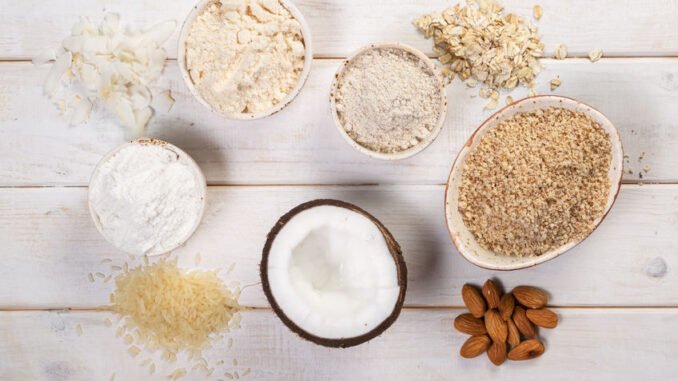
Almond flour: high fat, high protein — great for moist cakes and cookies, browns fast so drop oven temp 25°F. Oat flour (certified GF): mild and slightly sweet — excellent in muffins and pancakes. White rice flour: neutral — best in blends, gritty alone. Tapioca/potato starch: light and tender — the ‘softener’ in blends. Coconut flour: absorbs 3–4x its weight in liquid — use only in recipes written for it.
Add xanthan gum if your blend lacks it
Xanthan gum replaces gluten’s binding power: 1/4 teaspoon per cup of flour for cookies and pancakes, 1/2 teaspoon per cup for cakes and muffins, 1 teaspoon per cup for bread. Too much makes things gummy, so measure carefully. Most commercial blends already include it — check the label before adding more.
Let batters rest 20–30 minutes
Gluten-free flours — especially rice-based ones — absorb liquid slowly. Resting the batter before baking hydrates the starches, eliminating that gritty texture that ruins so many GF baked goods. This single step made the biggest difference in my muffin game.
Weigh your flour and watch the bake
Gluten-free batters are fussier about ratios: 120–125g per cup depending on the blend. They also brown faster (almond flour) or look underdone when done (pale rice blends) — trust toothpick tests and internal temps over color. A $14 scale removes the biggest variable.
My Favorite Tools and Brands
I only recommend gear I’ve actually used or that’s widely vetted by testing labs — King Arthur Baking’s gluten-free guides is worth checking before you buy.
- King Arthur Measure for Measure — ~$9 — The most reliable 1-to-1 swap I’ve tested; contains xanthan gum.
- Bob’s Red Mill Almond Flour — ~$12 — Finely ground, consistent — the good stuff for cakes and macarons.
- Kitchen scale — ~$14 — Non-negotiable for gluten-free baking consistency.
- Certified GF oat flour — ~$7 — Make your own by blending certified GF oats; fresher and cheaper.
Common Mistakes to Avoid
- Swapping coconut flour 1-to-1. It absorbs enormous liquid. Use only in recipes developed for coconut flour, roughly 1/4 cup per cup of wheat flour plus extra eggs.
- Skipping the rest period. Unrested rice-flour batters bake up gritty. Twenty minutes of patience fixes it.
- Doubling the xanthan gum ‘for structure.’ More binder means gummy, slimy texture. Follow the per-cup ratios exactly.
- Storing alternative flours like wheat flour. Nut flours go rancid fast — refrigerate or freeze almond and coconut flour, and use within 3 months.
Frequently Asked Questions
Can I just use almond flour instead of regular flour?
Not 1-to-1 in wheat recipes — almond flour has no gluten-like structure and much more fat. It shines in recipes designed for it (flourless cakes, macarons, tender cookies) but needs eggs and often a starch to hold together in converted recipes.
Is oat flour gluten-free?
Oats are naturally gluten-free but usually contaminated with wheat during growing and processing. Only use oats labeled ‘certified gluten-free’ — Bob’s Red Mill and GF Harvest are reliable brands around $6–7.
Why is my gluten-free bread so dense?
Bread is the hardest GF bake because it needs the most structure. Use a blend with more protein (add almond or sorghum flour), increase yeast slightly, add an extra egg, and don’t expect an open artisan crumb — GF bread is naturally tighter, and that’s okay.
My Favorite Blend Ratio
If you want to mix your own all-purpose gluten-free blend instead of buying commercial, here’s the ratio I use: 2 cups white rice flour, 2/3 cup potato starch, 1/3 cup tapioca starch, and 1 teaspoon xanthan gum. Whisk it thoroughly and store it in a labeled jar. It behaves like a commercial 1-to-1 blend in cookies, muffins, and quick breads at a fraction of the cost — a big bag of rice flour is a few dollars and makes multiple batches.
The best gluten-free baking starts with a good 1-to-1 blend, rests its batters, and measures by weight. Learn what each flour does and you’ll stop fearing the GF label. For more baking confidence, check out thaw frozen meat safely and quickly, cook the perfect steak at home without a grill, and oil for high-heat cooking — good technique transfers across every recipe.
Leave a Reply