
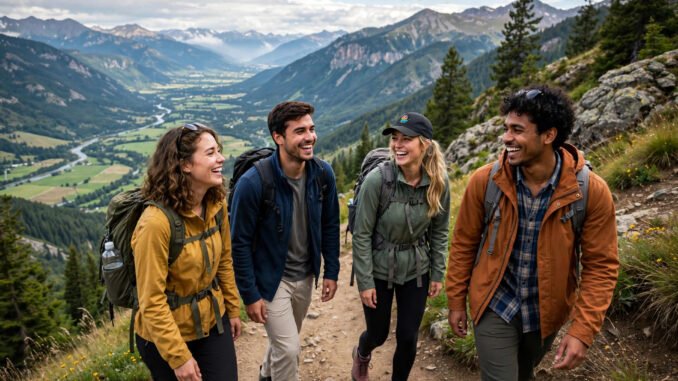
The active weekends that fail are rarely ruined by weather. They are ruined earlier, at the kitchen table: four hours of driving each way, three competing plans fighting for two days, and a hotel on the wrong side of the map from the trailhead. Everyone arrives tired, the main activity starts late, and Sunday feels like a commute with a hike attached. The fix is not more enthusiasm. It is a system, and it fits in five steps.
Follow the steps in order. Draw a small radius, choose one anchor activity, sleep close to that activity, pack only what serves it, and feed people properly. Do those five things and even a mixed-fitness group, with one keen hiker and one happy stroller, can share the same weekend and both come home glad they went.
Step 1: Draw your radius
Start with the 3-hour rule. Keep drive time under about three hours each way. That single limit is the biggest predictor of a weekend that feels like a break, because it leaves you with two real days instead of two travel days. A Friday drive of two hours after work is manageable. A Friday drive of five hours steals the evening, the sleep, and the Saturday morning.
Draw a rough circle of that size around home and list what sits inside it. Most people are surprised by the haul: state parks, national forests, lakes, rail-trails, rivers, ski areas in season, and climbing crags. The network looked after by the National Park Service alone covers more than 400 sites, and state park systems add thousands more. You do not need a famous destination. You need a good one that is close.
Step 2: Choose one anchor activity
Build the whole weekend around a single main activity. One anchor, everything else a bonus. A hiking weekend has one main trail day. A lake weekend has one main paddle or swim day. A cycling weekend has one main route. When people try to fit in a big hike, a boat rental, a town tour, and a long scenic drive, each part gets rushed and the group spends the weekend herding itself from place to place.
Pick an anchor with built-in levels, so the group can split by energy and regroup without anyone feeling left behind. A trail system with a short loop, a medium loop, and a long climb from the same car park is ideal. A lake with a shallow swimming area, rental kayaks, and a longer paddle route does the same job. The keen members get their challenge. Everyone else gets a real version of the day, not a consolation prize.
That point answers the fitness-gap worry directly. Plan the anchor so the least-fit person has a genuine version of it, not a waiting bench at the trailhead. Shorter distance, slower pace, more stops, and the same picnic at the end is a genuine version. Sitting in the car with the bags is not. Agree the split points and the meeting place before you set off, carry phones, and make the regroup time generous. Groups stay happy when nobody wonders where the others have gone.
Protect the anchor with timing. Do it on Saturday, not Sunday, and start it in the morning. If weather turns or legs tire, you still have Sunday for the smaller pleasures. Put the anchor first in energy and first in the plan, and let meals and side trips arrange themselves around it.
Step 3: Sleep close to the activity
Lodging has one job: to serve the activity. Location beats luxury, every time. A basic cabin 10 minutes from the trailhead beats a beautiful hotel 45 minutes away, because you will actually use the cool morning hours outdoors instead of commuting to your own vacation. Late starts in warming heat, or a long drive back in wet clothes, undo much of the good the day was meant to do.
Work through the options in value order. Camping is the cheapest, roughly $0 to $35 a night. Sites in a what a state park is campground, with showers and a water tap, commonly run around $20 to $35. Dispersed camping on national forest land is often free, though it asks more of you: no facilities, stricter care with water and waste, and rules that vary by forest, so check them before you go.
Next come cabins and vacation rentals, roughly $80 to $200 a night for the whole place, split between the group. The arithmetic is what makes them such good value. A $160 cabin split four ways is $40 per person per night. For that, a group gets a kitchen, a dry place for boots, and an early start. Hotels and lodges, at $100 or more a night per room, suit couples, bad-weather weekends, and trips where a real bed and a hot shower are part of the point. For more ways to stretch the same budget, see the ideas for planning a weekend getaway on a budget and apply them to any group.
Whichever you choose, check three dull things before you book: how early you can arrive, where wet gear can dry, and how far the morning start really is on foot or by car. A cheap room that forces a 40-minute drive to the trail is not cheap in the currency that matters on a short weekend, which is time.
Step 4: Pack gear without the overbuying trap
The outdoor business would love you to believe a single weekend needs $2,000 of new gear. It does not. Rent the big, activity-specific items. Many outfitters rent boats, bikes, and boards, often including life jackets, for roughly $30 to $50 a day. Renting also tells you what you actually enjoy before you buy anything. Own the small personal basics, borrow what you can, and leave the rest in the shop.
The non-negotiables are short and serious. Start with broken-in footwear. Never debut new boots on a trip. New boots on a long trail day are a reliable way to earn blisters by mile three and a limp by mile six. Wear new footwear at home and on short walks first, or bring the old pair you trust. Add weather layers you can add and remove, at least 2 litres of water capacity per person for a full day out, snacks you can eat while moving, a charged phone plus a paper map as back-up, a basic first-aid kit, and sun protection. Phones die, signals vanish, and paper does neither.
Pack for the group as well as for yourself. One person carries the first-aid kit and the map. Someone else carries the spare snacks and a spare layer that fits most people. Agree who has the car keys and where the spare set lives. These are five-minute conversations on Friday that prevent an hour of confusion on a hillside on Saturday.
Step 5: Feed people properly
Food is the underrated trip-maker. Hungry groups get quiet, then cross, then careless about small decisions. Plan one proper group meal, keep breakfasts simple, and buy trail food before you leave town, where choice is wide and prices are normal. A small shop near a popular trailhead is a poor place to discover you need lunch for six.
Make the group meal easy to cook in a tired state: pasta, rice dishes, chilli, or anything that waits kindly while people shower in turns. Cook a little extra. Appetites after a full day outside are larger than the same people predict at a supermarket on Friday. Keep hot drinks, water, and a salty snack ready the moment you get back, before anyone starts cooking. That half hour decides the mood of the evening.
Breakfast should need almost no thought. Oats, bread, eggs, fruit, and coffee cover most groups. Eat a real breakfast before the anchor activity, not just a biscuit in the car. Pack more trail snacks than your calm indoor self thinks necessary, and include something sweet, something salty, and something plain. On the drive home, stop while people are still cheerful rather than pushing on until everyone is starving and silent.
A sample 48 hours
Here is how the system looks in practice. Friday: leave after work, drive inside your three-hour circle, arrive before dark if you can, and take an easy walk to stretch legs and find your bearings. Eat simply, lay out Saturday gear, and sleep early. The weekend already feels started, without a single hard mile.
Saturday is anchor day. Start in the morning, split by energy where the route allows it, and regroup for a long, unhurried lunch. In the afternoon, offer a split option: the keen can add a short extra loop or a swim, while others rest, read, or wander into town. Cook the planned group meal in the evening and keep the night short if Sunday has an early start.
Sunday runs slow on purpose. A late breakfast, one short stop on the way home, such as a viewpoint, a farm shop, or a brief lakeside walk, and then the drive, aiming to be home by mid-afternoon. That timing matters. People who get home with daylight left, time to unpack, and an evening to rest will say yes to the next trip. People who roll in at midnight will not.
Short notes on solo trips, weather, and timing
A solo active weekend works the same way, with the safety basics turned up. Tell someone you trust your plan and your return time, and stick to both. Share your plan and return time in a message before you lose signal, carry the paper map, and keep the anchor well inside your ability. A solo trip should feel calm and chosen, never like a test you must pass alone.
For weather, decide the rain plan when you book, not at the trailhead. Name the back-up in advance: a shorter route, a covered activity, or a town day, and agree the call will be made on the forecast the night before. Groups argue about weather when the decision arrives as a surprise at 8 a.m. They accept it easily when the back-up was part of the plan from the start. Light rain rarely ruins a well-dressed group. No plan does.
Book popular cabins and campsites a few weeks out in season, earlier for holiday weekends. A spontaneous camping trip outside peak times needs almost no lead time at all, which is one more reason to keep your three-hour list ready. Small radius, one anchor, close lodging, honest gear, real food. That is the whole method, and it works the first time you use it.
Leave a Reply