
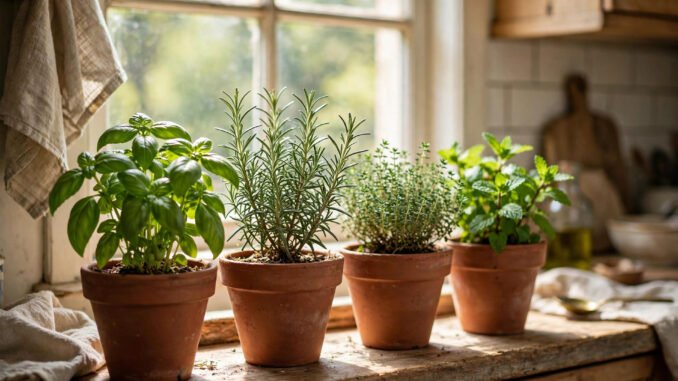
A plastic clamshell of basil costs about $3.50 at the grocery store and wilts in two days. A living basil plant costs about the same and keeps producing for months. Few home projects offer math that friendly, and indoor herbs are one of them. Nashville makes the case stronger still: long, hot summers punish tender herbs outside, while a pot on a sill grows steady and calm all year.
The Honest Math First
Savings depend on how a household actually cooks, so start there. A household buying two to three fresh herb packs a week at roughly $3 to $4 each spends about $300 to $600 a year on herbs. The arithmetic for a middle case is worth seeing in full: about 2.5 packs at $3.50 each, across 52 weeks, comes to roughly $450 a year. That is real money spent on leaves that often brown before the week ends.
Set that against the indoor garden. Starting one costs roughly $30 to $120, with the full ledger below. Running it costs roughly $30 to $80 a year for soil, a few seeds or starts, and a little electricity if a light is used. For a household that truly cooks with herbs several times a week, the payback lands within a few months. After that, each harvest is close to free.
Honesty cuts the other way for light users. A household that buys one pack of herbs a month spends so little that no garden pays for itself in cash. For that household, the case rests on flavor and pleasure, not savings, and there is no shame in it. Growing a plant you love using beats growing five you ignore. The numbers below are a ledger, not a sales pitch, and they reward readers who check their own habits first.
A note on terms before the ledger: a culinary what counts as a herb is simply a plant used for its leaves or stems in cooking, which is why this setup stays small. You are not farming. You are keeping a handful of leafy plants close to the stove, where they will be cut often and eaten at their best.
The Startup Ledger, Line by Line
Containers run $15 to $40 for a starter set of five. Drainage holes matter above all else: drowning kills more indoor herbs than drought ever will. Every pot needs holes, with no exceptions for a pretty pot that lacks them. Terracotta costs around $3 to $8 a pot, breathes well, and suits herbs that dislike soggy roots. A 6-inch pot per herb is the sweet spot for a sill. Add saucers at $1 to $2 each to protect wood and paint.
Soil runs $8 to $12. One bag of decent potting mix fills five to six pots of that size, with a little left for topping up. Skip garden soil dug from the yard. It packs hard in pots, drains poorly, and can carry weed seeds and pests indoors. Potting mix is made for containers, light and open, and one bag is the whole soil budget for the first season.
Plants run $5 to $30, and the seed-versus-start choice drives the spread. Seeds cost a few dollars a packet and reward patience. Starts, the small plants sold in nursery pots, run roughly $3 to $5 each, so five starts cost about $15 to $25. Starts give a harvest in two to three weeks, which is why beginners lean that way. A mixed approach works well: starts for the herbs you want now, seeds for cheap extras.
Light runs $0 to $40, the widest line in the ledger. A bright south-facing window is free and suits many Nashville homes for much of the year. A simple LED grow light, in the range above, covers a dark apartment or a north-facing kitchen. This line is also where the whole project is decided, since light is the make-or-break input for indoor herbs. The guidance on container gardening basics returns to the same point: in pots, the grower controls water and soil, but light is mostly given by the home itself.
Add the lines up and the total is honest: about $30 to $120 to start, depending on the light line and the seed-versus-start choice. A sunny sill and seeds land near the low end. A grow light and five nursery starts land near the high end. Either way, the startup sits far below the $450 a year that steady herb buyers hand to the grocery store.
The Pros: Why the Plants Earn Their Space
Cost per harvest is the first gain, and it compounds. Once the ledger is paid back, a handful of basil or parsley costs pennies in water and time. The second gain is quality, and most cooks rate it higher. A leaf cut and dropped into a pan within thirty seconds tastes different from a leaf cut days ago, chilled, shipped, and shelved. Peak flavor is the daily reward that keeps people growing after the savings stop being news.
The supply changes how you cook. Parsley stops being an ingredient to remember and becomes a habit. Tough stems get used in stocks. A plain pot of rice or eggs gets a green finish because the plant is right there, asking to be cut. Anyone tired of watching store-bought bunches slump in the fridge will recognize the problem that keeping fresh herbs from going bad so fast tries to solve. A living plant sidesteps it: the herb stays fresh by staying alive until the moment it is cut.
The Cons: Where Indoor Herbs Fail
Light is the hard truth. Most kitchens look brighter to human eyes than they are to a plant. A sill that seems sunny may give herbs only a few weak hours a day, and the plants answer with long, pale, stretched stems. Basil and cilantro are the classic casualties, sulking or dying through winter in homes without strong light. A small LED light fixes this for modest money, but buyers should expect to need one more often than sellers admit.
Yields are small, and pretending otherwise sets people up to quit. A windowsill seasons meals beautifully. It does not supply a restaurant, a big pesto batch every week, or a family of eight. One basil plant gives handfuls, not armfuls. Growers who plan around that scale stay pleased. Growers who expect a market stall on a sill get discouraged by June.
The small taxes are real, too. Fungus gnats appear when soil stays wet on top. Overwatering is the beginner habit behind both the gnats and most dead herbs. Let the top of the soil dry between waterings, water at the base, and empty saucers so roots never sit in a puddle. None of this is hard. All of it is daily, in small doses, for as long as the plants live.
The Forgiving Set and How to Harvest
Beginner success follows a clear order. Basil thrives in warmth and strong light and repays pinching with bushy growth. Chives are hard to kill and return after every cut. Parsley is slow to start, then steady for months. Thyme and oregano forgive missed waterings that would finish softer herbs. Grow that set first, and confidence arrives early.
Two rules protect the set. Mint always goes in its own pot, alone. It spreads hard and will take over any shared container, crowding out slower herbs until the pot holds mint and regrets. Cilantro needs a different kind of honesty: it bolts fast, racing to seed in warmth, so treat it as a sow-often herb in small batches rather than a plant that settles in for a season.
Harvest technique keeps plants producing. Pinch basil just above a node, where two small leaves meet the stem, and the plant branches into two stems in reply. Never strip more than about a third of a plant at once, so it keeps enough leaves to feed itself. Cut in the morning when you can: herbs cut early in the day carry the most flavor, as widely given kitchen-garden advice has long held.
Nashville Notes and the Verdict
Nashville’s long frost-free season gives indoor growers a bonus. Pots can summer outside on a porch or step, grow hard in the heat, then come back in before the first frost. Local nurseries such as Bates Nursery and JVI Secret Gardens are worth knowing for starts and advice, and thrift shops around town often sell terracotta for $1 to $2 a pot. That last tip is worth checking before paying full price anywhere.
The verdict follows the ledger. Start with five starts, one bag of potting mix, and the sunniest sill in the house. Live with that setup for a month. Add the LED light only if the sill proves too dim, since sunlight already paid for is the cheapest light there is. Run that way, an outlay under $100 becomes the kitchen upgrade its fans describe: better flavor at the stove, a greener room, and an end to the sad clamshell wilting in the fridge door.
Leave a Reply