
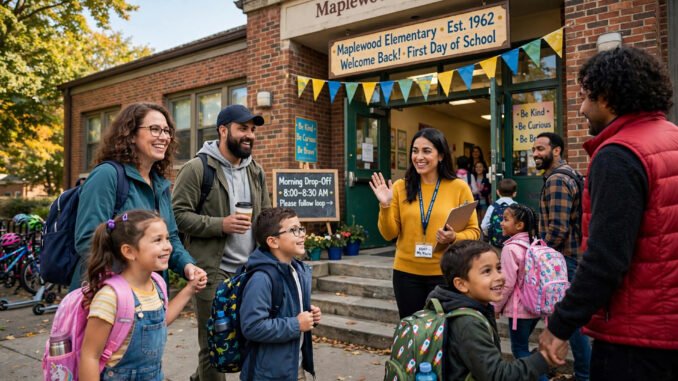
Columbus, Ohio is one of America’s fastest-growing cities — and its elementary school landscape is a maze. Columbus City Schools, a dozen suburban districts (Dublin, Hilliard, Upper Arlington, Worthington, Olentangy…), plus charter schools, magnet programs, and private options, all operating under Ohio’s open-enrollment and school-choice rules. For a parent on a tight budget, the stakes feel enormous and the information feels scattered. Here is how to cut through it: what actually predicts a good elementary experience, where to find honest data, and how Columbus-specific options change the decision.
What Actually Matters (It Is Not the Rating Number)
Parents fixate on the single-number rating — GreatSchools 8/10 versus 6/10 — but research on school effectiveness tells a subtler story. The factors that most predict your child’s experience:
Growth, not just proficiency
A school where 60% of students test proficient but students grow a full grade level yearly is serving kids better than a school at 85% proficient where affluent students arrived already ahead. Ohio’s report cards include growth (value-added) measures — weight them heavily. A “B” school with strong growth often beats an “A” school coasting on demographics.
Early-grade foundations
For elementary specifically: class sizes in K–3, the reading curriculum (Ohio’s science-of-reading push means phonics-based instruction — ask about it directly), and the school’s approach to kids who struggle. A school’s intervention systems matter more than its average test score.
Your child’s fit
A high-energy kid may thrive in a structured traditional school or wilt in it; an anxious child may bloom in a warm, small community school regardless of its rating. Fit is not soft science — it determines whether your child likes school, which determines everything else.
Start your research with GreatSchools.org for parent reviews and basic data, but cross-reference with the National Center for Education Statistics for enrollment, staffing, and demographic facts. Neither source alone tells the whole story.
Understanding the Columbus Landscape
Columbus City Schools (CCS)
The state’s largest district, serving the urban core. CCS quality varies enormously by building — some elementary schools (notably in Clintonville, German Village, and Upper Arlington-adjacent zones) are strong and sought-after, while others struggle. CCS also runs sought-after lottery programs: the Columbus Gifted Academy, Spanish and French immersion programs, and arts-focused schools. These lottery seats are free and excellent — but competitive, with applications typically due in winter for the following fall. If you live in-district, research these first; they are the budget parent’s secret weapon.
Suburban districts
Dublin, Olentangy (one of Ohio’s fastest-growing and highest-rated), Hilliard, Worthington, Upper Arlington, and New Albany consistently post strong results — and correspondingly higher housing costs. The price premium for a Dublin or New Albany address is effectively prepaid private-school tuition via your mortgage. On a tight budget, look at the value plays: Hilliard and Worthington offer strong schools with more moderate housing costs than the top-tier suburbs; Grove City and Reynoldsburg offer improving schools at genuinely affordable prices.
Charters, magnets, and open enrollment
Ohio allows inter-district open enrollment — some suburban districts accept students from outside their boundaries tuition-free (policies change yearly; check directly). Charter schools are tuition-free public schools with independent management; quality varies wildly, so apply the same growth-and-fit scrutiny. Ohio’s EdChoice voucher program also provides scholarships for private school tuition for students in designated areas or below income thresholds — worth investigating if a specific private school fits your child.
The Budget Parent’s Playbook
Housing-school arbitrage: The single biggest lever. Renting or buying just inside the boundary of a strong-but-affordable district (Hilliard, Worthington, Grove City) buys school quality at a fraction of the Dublin premium. Verify boundaries with the district directly — listing sites get them wrong. Lottery programs first: CCS lottery and magnet applications cost nothing to enter; treat them as free lottery tickets for excellent education. Tour in session: Visit during a school day. Watch transitions between classes, listen to hallway noise levels, observe how staff speak to children. Thirty minutes in the building teaches more than thirty hours of online research. Talk to parents: Neighborhood Facebook groups and playground conversations reveal what data cannot — principal quality, bullying culture, teacher turnover. Ask about reading: Specifically ask what phonics program K–2 uses and how struggling readers are identified and supported. Schools with strong answers here are usually strong everywhere.
And zoom out: school choice is one input to your child’s development among many. The research consensus is that engaged parenting predicts outcomes more than school selection within the broad middle of school quality — so choose thoughtfully, then invest your energy at home too. For the longer educational horizon, our look at whether AI will change the value of college degrees is worth reading while you are thinking long-term, as is which careers are most AI-resilient — the skills that matter are shifting, and elementary foundations in reading and math matter more than ever.
Red Flags on a School Tour
High teacher turnover (ask directly — evasive answers are answers), chaotic hallways during class time, a principal who cannot articulate the reading curriculum, visible disrepair suggesting funding or management problems, and parent reviews mentioning bullying handled poorly. Conversely, green flags: teachers who have stayed 10+ years, student work displayed proudly, a librarian who knows kids by name, and an active PTA even in lower-income schools (parent engagement transcends demographics).
Timeline: When to Do What
12+ months out: Research districts relative to housing decisions — school boundaries should shape where you rent or buy. Winter before kindergarten: CCS lottery and magnet applications due; open-enrollment applications for suburban districts. Spring: School tours (call the office; most welcome prospective parents). Summer: Registration, which requires proof of residency, birth certificate, and immunization records. Ongoing: Reassess yearly — a school that fit your kindergartner may not fit your third-grader, and Ohio’s choice options let you adjust.
Conclusion
Picking the best elementary school for your child on a tight budget in Columbus comes down to: weight student growth over raw ratings, exploit free high-value options (CCS lottery programs, open enrollment, EdChoice vouchers), consider housing-school arbitrage in value districts like Hilliard and Worthington, tour in person during the school day, and ask hard questions about reading instruction. The “best” school is not the highest-rated one across town — it is the good school your child attends happily, that your budget sustains without strain, in a community you can actually be part of.
Frequently Asked Questions
What is the best school district in Columbus, Ohio?
Upper Arlington, Dublin, New Albany, and Olentangy consistently rank highest on state measures. For budget-conscious families, Hilliard, Worthington, and Grove City offer strong schools with more affordable housing.
Can I send my child to a different Ohio school district tuition-free?
Often yes, through Ohio’s inter-district open enrollment — participating districts accept outside students tuition-free, though policies and availability change yearly. Check with the specific district.
What are Columbus City Schools lottery programs?
Free specialized programs within CCS — including gifted academies, language immersion, and arts schools — available by lottery application, typically due in winter for the following school year.
Should I trust GreatSchools ratings?
Use them as a starting point, not a verdict. They weight test proficiency heavily, which correlates with neighborhood income. Ohio’s growth (value-added) measures and in-person tours give a truer picture of school quality.
What should I ask on an elementary school tour?
What phonics program K–2 uses, how struggling readers are supported, teacher turnover rates, class sizes in early grades, and how bullying is handled. Watch hallway behavior and how staff interact with students.
Leave a Reply