
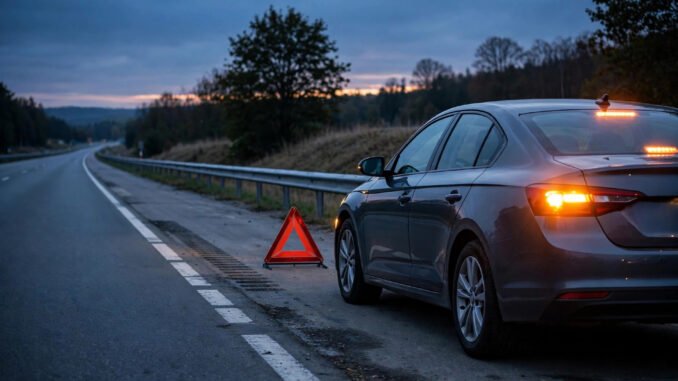
The steering goes light. The engine note changes. A warning light blooms on the dashboard. You’re doing 70 mph in the middle lane with trucks on both sides, and your car has just decided it can’t go on. For a complete beginner, a highway breakdown is one of the most frightening driving experiences there is — and the difference between a scary story and a dangerous one comes down to knowing what to do in the first sixty seconds. Here’s the complete beginner’s playbook, in the order you should use it.
The First 60 Seconds: Get Off the Road Safely
Your only job in the first minute is to get the car as far from moving traffic as possible. Everything else waits.
Stay calm and keep steering. A breakdown rarely means instant loss of control. Keep both hands on the wheel, take your foot off the gas, and don’t slam the brakes — sudden braking at highway speed with a mechanical problem can make things worse.
Signal and move right. Turn on your hazard lights immediately, then merge toward the right shoulder as smoothly as traffic allows. Aim for the widest, flattest spot you can reach — ideally a full emergency lane, a rest area, or an exit. If you can’t reach the right shoulder, the left shoulder is better than stopping in a lane.
If you truly cannot move the car, stay in the vehicle with your seatbelt on and hazards flashing. Getting out into live traffic lanes is more dangerous than sitting in a disabled car. This is the counterintuitive part beginners get wrong — your instinct says “get out,” but on a busy highway, inside the car with the belt on is statistically safer than standing beside it.
Once You’re Stopped: Secure the Scene
Now make yourself visible. Highway fatalities involving disabled vehicles are overwhelmingly about visibility — other drivers not seeing you in time.
Wheels away from traffic, parking brake on, engine off (unless you need heat or AC in extreme weather — then keep it running but stay alert to exhaust issues). Turn the wheels away from the road so that if the car is struck, it moves away from traffic rather than into it.
Set out warning triangles or flares if you have them — place them 50 to 100 feet behind the vehicle. This is genuinely worth having in your trunk: a $15 set of reflective triangles is one of the best safety purchases a beginner can make.
At night, keep the hazard lights on and interior dome light on. Visibility is everything. If you have a flashlight or your phone, keep it handy.
Decide: stay in or get out. If you’re fully off the road on a wide shoulder with good visibility, staying in the car with seatbelts fastened is generally safest. If the shoulder is narrow, traffic is heavy and fast, or you smell fuel or see smoke — get out, move well away from the road (behind a guardrail if one exists), and take everyone with you, including pets and children. Never stand between your car and traffic.
Calling for Help: What to Say
This is where beginners freeze up, so here’s the script. Call roadside assistance (your insurer, AAA, the car manufacturer’s program, or a credit-card benefit — check what you have before you need it), or 911 if anyone is hurt, the car is in a dangerous position, or you feel unsafe.
Have this information ready:
Your exact location. This is the hardest part on a highway. Use the nearest mile marker, exit number, or “I-95 northbound, about two miles past exit 42.” Your phone’s map app will show your location — read it to the dispatcher. Direction of travel matters enormously for tow trucks.
What happened. “The engine lost power,” “a tire blew,” “steam is coming from the hood,” “a warning light came on and the car died.” You don’t need a diagnosis — describe symptoms.
Your vehicle. Make, model, color, and license plate.
Who’s with you and whether anyone needs medical help.
Whether you’re in a safe position or still near traffic. Dispatchers prioritize accordingly.
Understanding road trip snacks that are healthy and cheap won’t help in a breakdown, but the broader habit of planning a road trip across the US with proper stops means you already know your route’s mile markers and service areas — information that’s gold when you’re describing your location to a dispatcher.
While You Wait: The Rules
Waiting for a tow on a highway shoulder feels endless. The rules are simple: stay visible, stay away from traffic, stay with the vehicle if it’s safe to do so (abandoned cars get towed by police and impounded). Keep your phone charged — a car charger or power bank belongs in every beginner’s emergency kit.
If a stranger stops to help: it’s fine to accept help calling for assistance, but stay in or near your locked car, don’t get into anyone’s vehicle, and trust your instincts. Most people who stop are genuinely kind. If someone makes you uncomfortable, stay in the car with the doors locked and tell the dispatcher.
If it’s dark, raining, or you’re in an isolated area: tell the dispatcher explicitly. They’ll prioritize your call and may send highway patrol to sit with you until the tow arrives.
The Beginner’s Trunk Kit (Build This Before You Need It)
Every beginner should assemble this once and forget about it:
Reflective warning triangles ($10–$20) — the single most important item.
A flashlight with fresh batteries, plus a headlamp if you want to be fancy.
A phone charger (car charger or power bank) — a dead phone turns a breakdown into a crisis.
Basic tools: the car’s jack, lug wrench, and spare tire (verify the spare holds air twice a year), plus a tire pressure gauge.
Water and a blanket — breakdowns don’t check the weather first.
Your roadside assistance numbers saved in your phone and written on a card in the glove box.
The NHTSA’s emergency preparedness guidance covers seasonal additions to this kit, and AAA’s roadside resources explain what professional assistance can and can’t do at the scene.
Common Breakdown Causes Beginners Can Actually Prevent
Most highway breakdowns aren’t random. The top causes — dead batteries, tire blowouts, overheating, running out of fuel — are all largely preventable with basic maintenance. A battery older than three to four years deserves testing before a long trip. Tires with low pressure or worn tread are blowout candidates. An engine temperature gauge creeping upward is a “pull over now” signal, not a “see if it goes away” signal. And the fuel gauge is not a suggestion — on remote highway stretches, refill at half a tank.
If you’re finding pet-friendly hotels when road tripping, remember that a breakdown with animals in the car adds urgency — heat builds fast in a disabled vehicle, so pet owners should be especially aggressive about calling for help quickly.
Conclusion
Dealing with a highway breakdown as a complete beginner comes down to a short, learnable sequence: hazards on, move right, get visible, call for help with your location ready, and wait safely. None of it requires mechanical knowledge — it requires presence of mind, which is exactly what this kind of preparation gives you. Build the trunk kit this weekend, save your roadside assistance number in your phone, and learn to read a mile marker. The next time something goes wrong at 70 mph, you’ll be the calm person executing a plan instead of the panicked person improvising one. That’s the whole difference.
Frequently Asked Questions
Should I try to fix the car myself on the highway shoulder?
Only the simplest things — and only if you’re fully off the road. Changing to a spare tire on a wide, flat shoulder is reasonable if you know how. Anything involving the engine bay, getting under the car, or working near traffic lanes should wait for professional help.
Is it safer to stay in the car or get out during a highway breakdown?
If you’re completely off the roadway on a wide shoulder, staying inside with seatbelts on is generally safest. Get out and move behind a guardrail if the shoulder is narrow, you’re partially in a lane, you smell fuel, or you see smoke.
Who do I call first — roadside assistance or 911?
Call 911 if anyone is injured, the vehicle is in live traffic lanes, you smell fuel or see fire, or you feel personally unsafe. Otherwise, roadside assistance (insurer, AAA, manufacturer) is the right first call for a mechanical breakdown in a safe position.
How do I describe my location on a highway?
Direction of travel plus the nearest mile marker or exit number: “I-80 eastbound, about a mile past exit 215.” Your phone’s map app shows your precise position — read the road name and nearby cross street or exit to the dispatcher.
Leave a Reply