
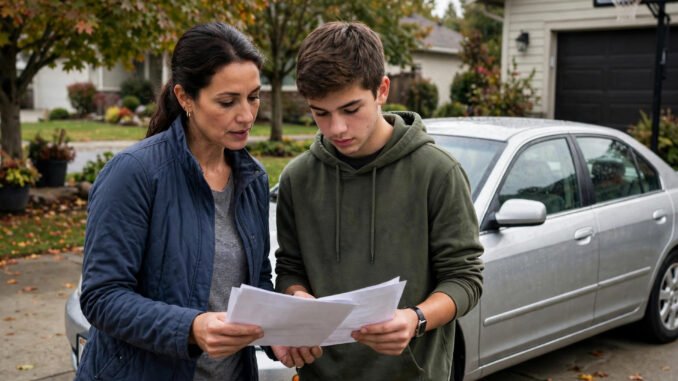
Adding a teenage driver to your insurance in Denver, Colorado, is the moment many parents discover what “sticker shock” really means. Teen drivers are the most expensive group to insure in America, and Colorado’s rates run above the national average — but “can I insure a teenage driver on a tight budget?” has a real answer: yes, with the right strategy, and Denver families have more leverage than they think. Here’s how the costs actually break down and every legitimate way to bring them down.
Why Teen Insurance Costs So Much (The Honest Math)
Insurers don’t charge teens more out of spite — they charge based on crash data. Drivers aged 16–19 have a fatal crash rate nearly three times higher than drivers 20 and older, per mile driven, according to CDC data. Inexperience plus developing risk judgment equals claims, and claims equal premiums.
In Colorado, adding a teen driver to a family policy typically increases the annual premium by $1,500–$3,000+, depending on the insurer, the car, coverage levels, and the teen’s record. Denver’s rates specifically run higher than Colorado’s rural areas — denser traffic, more theft, more hail claims. Statewide, Colorado’s average full-coverage premium sits well above the national average, driven by hail damage, rising repair costs, and litigation trends. A teen on their own policy (instead of the family policy) is almost always dramatically more expensive — often $4,000–$7,000+ per year. Rule one of teen insurance on a budget: the teen goes on the parents’ policy, not their own.
The Denver-Specific Factors Working For and Against You
Against you: Colorado’s hail season is a genuine insurance cost driver — the Denver metro’s spring hailstorms generate billions in claims some years, and comprehensive coverage pricing reflects it. Urban Denver ZIP codes carry higher premiums than suburbs like Aurora or Lakewood. Colorado also has relatively high rates of uninsured drivers, which pushes up uninsured-motorist coverage costs.
For you: Colorado’s graduated driver licensing (GDL) system means teens spend a supervised year with a permit before full licensure, which slightly moderates risk. More importantly, Denver is a competitive insurance market — the price spread between the cheapest and most expensive quote for the same teen can easily exceed $1,000 a year. Shopping around isn’t optional; it’s the single biggest lever.
Colorado also requires minimum liability coverage of 25/50/15 ($25,000 per person, $50,000 per accident, $15,000 property damage). On a tight budget, it’s tempting to buy minimums — but for a teen driver, the risk of an at-fault accident exceeding minimums is real, and the financial exposure falls on the parents. Most advisors suggest carrying more than minimums if you can swing it; the cost difference between minimum and moderate liability is often smaller than expected.
The Discount Stack: Every Legitimate Way to Pay Less
This is where a tight budget meets real savings. Stack every discount you qualify for:
Good student discount (10–25%). Most insurers offer this for full-time students with a B average or better (typically 3.0 GPA). It’s the biggest single teen discount — get the report card ready and ask explicitly, because some insurers don’t apply it automatically.
Driver’s education and defensive driving courses. Colorado-approved driver’s ed can earn a discount, and an additional defensive driving course (many available online for $25–$50) often stacks another 5–10%. For a new driver, the safety benefit alone justifies it.
Telematics / usage-based programs. Programs like Progressive’s Snapshot, State Farm’s Drive Safe & Save, or Allstate’s Drivewise monitor actual driving behavior and discount safe driving — often 10–30%. For a cautious teen, this is free money. For an aggressive one, it’s a behavior-modification tool with financial teeth.
The car choice matters enormously. Insuring a teen on a 10-year-old Honda Civic with liability-only coverage versus a new sports car with full coverage can differ by thousands per year. The budget play: an older, safe, boring sedan with strong crash-test ratings, insured for liability plus comprehensive (hail!) — and consider dropping collision if the car’s value is low enough that you’d just replace it. The IIHS vehicle ratings help identify safe-but-cheap-to-insure models.
Multi-policy and multi-car discounts. Bundling home/renters with auto, and keeping all family cars with one carrier, typically saves 10–20% across the board.
Higher deductibles. Raising the collision deductible from $500 to $1,000 can cut that portion of the premium 15–30%. Only do this if you can actually cover the deductible from savings — otherwise it’s false economy.
Pay in full / autopay / paperless. Small discounts (5–10% combined) that stack with everything else.
The Strategy Most Denver Families Miss: Assign the Teen to the Cheapest Car
Insurers rate each driver against a specific vehicle. Many families don’t realize they can (and should) designate the teen as the primary driver of the household’s cheapest-to-insure car. If the teen will mostly drive the old sedan, make sure the insurer knows that — don’t let them default-rate the teen against the family’s newest SUV. This single administrative detail can save hundreds per year, and you just have to ask.
Similarly, be honest about mileage. A teen driving 3,000 miles a year to school and back is a different risk than one commuting across the metro daily. Accurate low-mileage reporting earns its discount — and with telematics programs, it’s verified automatically.
What About the Teen Paying Their Share?
On a tight budget, having the teen contribute is common and reasonable. The going approach: the teen covers the increase in the family premium their licensure causes — not an equal split of the whole bill, just the marginal cost they added. That number is concrete (ask your agent for the before/after), fair, and gives the teen skin in the game on safe driving. Many Denver families tie this to the good-student discount: keep the grades up, keep the discount, pay less.
A part-time job covering $150–$250/month handles the typical premium increase in most cases. And the telematics programs double as accountability — parents can see the driving data, which settles a lot of arguments.
Shopping the Denver Market: Do It Right
Get quotes from at least five carriers, including at least one independent agent who can quote multiple companies. Captive agents (State Farm, Allstate, Farmers) only sell their brand; independents shop the market for you. Include regional carriers and consider USAA if military-affiliated (consistently among the cheapest for eligible families).
Re-shop every year at renewal. Insurers’ teen pricing changes constantly, loyalty is rarely rewarded in auto insurance, and the teen’s growing experience (plus a clean record) should steadily lower rates. The Colorado Division of Insurance offers consumer guides on shopping for auto coverage in the state.
One more budget consideration for Denver families: if the teen is heading to college without a car, most insurers offer a “student away” discount (often 20–30%) — or you can exclude them from the policy entirely while they’re away. Ask before paying for coverage you don’t need. And for the daily driving grind itself, making the daily commute more enjoyable applies to new drivers too — calm, unhurried driving is both cheaper and safer. Also see road trip planning with proper stops before their first long drive.
Conclusion
Can you insure a teenage driver on a tight budget in Denver? Yes — but not by accident. The formula: teen on the family policy (never solo), assigned to the cheapest car, good-student discount secured, telematics program enrolled, defensive driving course completed, quotes shopped across five-plus carriers, and deductibles set at the highest level your emergency fund supports. Each step is small; stacked together, they routinely cut the teen premium increase by 30–50%. Denver’s market is expensive, but it’s also competitive — and competitive markets reward shoppers. Start shopping before the license arrives, not after the first bill does.
Frequently Asked Questions
How much does it cost to add a teen driver to insurance in Denver?
Typically $1,500–$3,000+ per year added to a family policy, depending on the carrier, vehicle, coverage levels, and discounts. A standalone teen policy is far more expensive — usually $4,000–$7,000+ annually — which is why teens should stay on the family policy.
What is the good student discount and how much does it save?
Most insurers discount 10–25% for full-time students maintaining a B average (usually 3.0 GPA) through age 25. You’ll need to provide a report card or transcript, and you may need to ask — it isn’t always applied automatically.
Should a teen have their own policy or stay on the parents’ policy?
Stay on the parents’ policy in almost all cases. Standalone teen policies are dramatically more expensive because the teen loses access to multi-car, multi-policy, and loyalty discounts. The only common exception is when family dynamics or liability concerns require separation — discuss with an agent.
Does the car my teen drives affect the insurance cost?
Enormously. Older, safe sedans with strong crash ratings cost far less to insure for a teen than new, sporty, or luxury vehicles. Designate the teen as primary driver of the household’s cheapest-to-insure car and tell the insurer explicitly.
Leave a Reply