
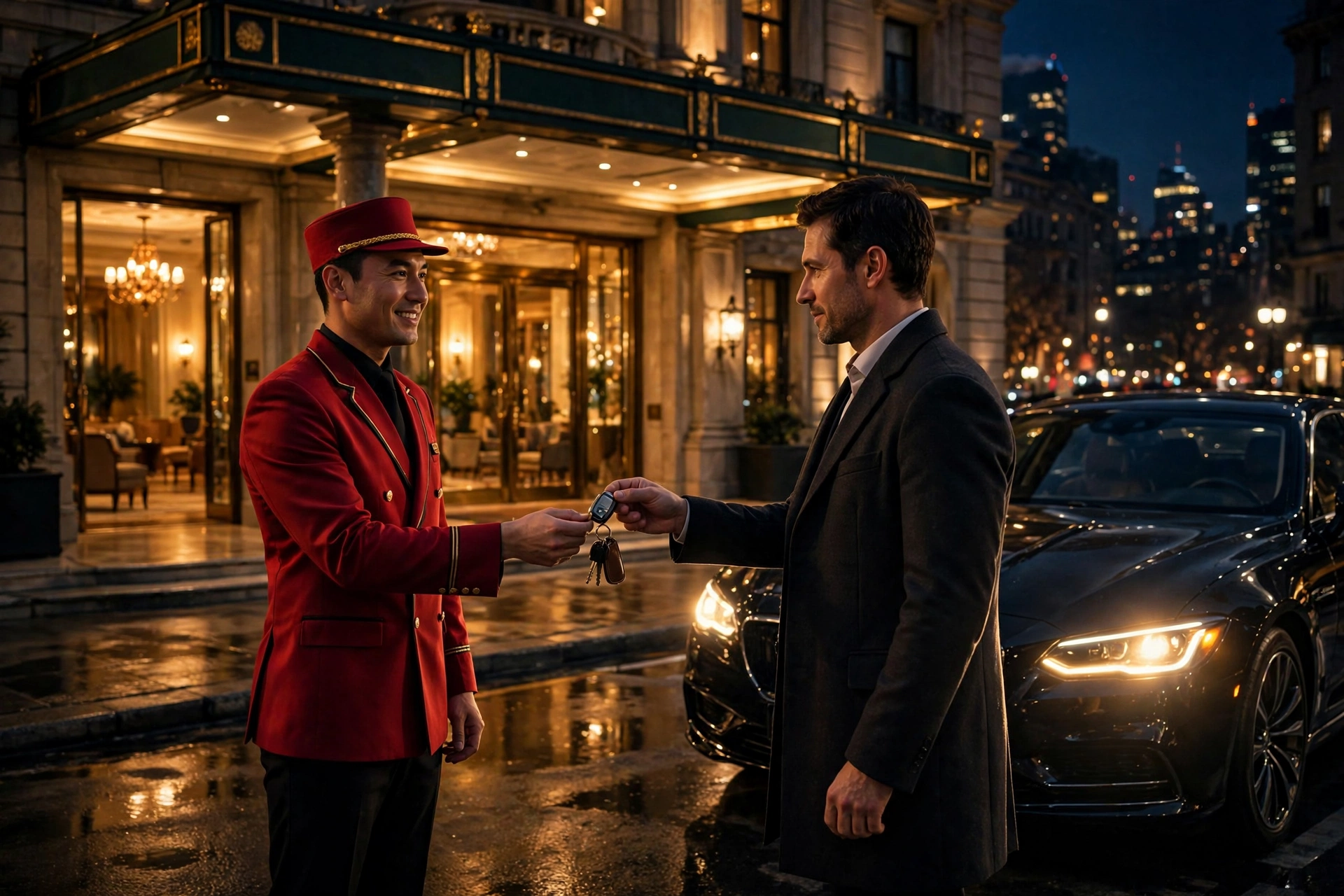
You pull up to the restaurant, hand over your keys, and then the mental math starts: how much do you tip a valet? It is one of those small social transactions where confidence matters — and the answer is simpler than the anxiety suggests.
The Standard: $2–$5
The standard valet tip in the United States is $2 to $5. Hand over $2–$3 for standard service at a restaurant or hotel; go to $5 (or more) at upscale venues, during bad weather, or when the valet went visibly out of their way. Emily Post’s etiquette experts place the customary range right in this zone.
Have small bills ready before you arrive. (New to the concept? Valet parking is the service where an attendant parks your car for you.) Fumbling for change while the valet waits is the awkward part — the amount itself is not.
When to Tip: Arrival, Return, or Both?
The most common practice: tip when your car is returned, not when you drop it off. The return tip rewards the actual service — retrieving your car promptly and in good condition. At high-end hotels or events where a different valet handles pickup and return, tipping both ($2–$3 each) is the polished move.
One exception: if you want to encourage extra care for a nice car, a tip at drop-off plus a tip at pickup is classic and effective.
When to Tip More
- Luxury venues and events: Weddings, galas, and five-star hotels — $5–$10 shows you understand the setting. If you are planning a wedding reception with valet service, budget for guest tipping or arrange a hosted gratuity.
- Bad weather: Rain, snow, or extreme heat — add a couple of dollars. They are running in it.
- Special requests: Kept your car up front, handled luggage, jumped your battery — tip for the extra effort.
- Holidays: A little extra during the holiday season is a kind tradition.
- Long waits handled well: If retrieval took a while through no fault of the valet, do not punish the tip.
When Less Is Fine
At casual restaurants with complimentary valet, $2 is perfectly respectable. If the service was genuinely poor — long unexplained wait, damage, rudeness — you may reduce or skip the tip and speak to the manager instead. But distinguish poor service from busy service: a 15-minute wait at a slammed Saturday-night restaurant is not the valet’s fault.
Valet Tipping Around the World
Outside the US, norms shift. In much of Europe, valets are less common and a euro or two (or rounding up) suffices where they exist. In the Middle East and parts of Asia, tipping customs vary widely — when in doubt, follow the lead of locals or ask your hotel concierge. The universal principle holds everywhere: a modest, confident tip beats an anxious overtip.
Cash Is Still King
Valet tipping is overwhelmingly a cash transaction — have $1s and $5s in your wallet or car. Some upscale venues now allow adding a gratuity to the bill; if that option exists and you use it, no separate cash tip is needed. But the classic hand-the-bills-with-a-thank-you remains the standard, and valets prefer it.
Related Tipping Situations
Valet tipping sits in a family of small service gratuities worth knowing: how much to tip for a massage (15–20%), coat check ($1–$2 per item), and restroom attendants ($1–$2). Master these and you will never do the parking-lot wallet panic again.
The Bottom Line
Keep a few small bills handy, tip $2–$5 when the car comes back, and go higher when the situation warrants it. It takes five seconds, costs less than the appetizer, and it is one of those tiny social graces that quietly marks you as someone who has their act together.
The Valet Key Question
Modern cars complicate the handoff: keyless fobs, valet modes, and phone-as-key systems. Most valets prefer the physical fob — hand it over rather than explaining your phone setup in a rush. Many cars have a dedicated valet mode that limits speed and locks the glovebox and trunk; learn how to activate yours before the evening. And never hand over your only key without keeping track of which valet company has it — the claim ticket is your receipt, so do not lose it.
Valet at Weddings and Private Events
Private-event valet works differently from restaurant valet. Hosts often pre-pay or arrange hosted gratuities, meaning guests should not tip individually — but this is never guaranteed, so guests should still carry small bills unless told otherwise. If you are the host, tell your guests explicitly (“valet is hosted”) on the invitation or event signage; it removes the awkward lobby moment entirely. Event valets also handle far more cars in a compressed window, so patience at pickup is part of the deal.
What Valets Wish You Knew
Valets consistently mention the same things: clear out your valuables (they are not responsible for what is in the car), do not leave the car in an undrivable state (nearly empty tank, warning lights), and remember where you parked is their job, not yours — but the claim ticket speeds everything up. They also notice and appreciate the guests who make eye contact, say thank you, and treat the handoff like a human interaction rather than a transaction. A little warmth costs nothing and is remembered.
When Valet Is Not Worth It
Sometimes self-parking is the smarter call: if the lot is visible and close, if you are in a hurry at pickup time (valet retrieval during peak exit can take 20+ minutes), or if you drive a manual transmission and worry about the valet’s stick-shift skills — a legitimate concern worth asking about upfront. There is no shame in declining valet; a cheerful “I’ll self-park, thanks” is perfectly fine.
Tipping Apps and the Cashless Shift
The hardest part of modern valet tipping is simply having cash — fewer people carry it than ever. A practical fix: keep a dedicated “tip stash” of small bills in your car’s sun visor or center console, replenished monthly. Five ones and two fives cover nearly any valet situation. Some drivers keep the stash in their phone case. Whatever the system, the goal is never being the person patting empty pockets while the valet waits — preparation is the entire etiquette.
Valet vs. Rideshare: The Cost Comparison
It is worth noting when valet even makes sense. At $2–$5 plus occasional parking fees, valet is often cheaper than a rideshare round trip — and far more convenient when you are dressed up or the weather is bad. For evenings with multiple stops, though, rideshares win on flexibility. Do the quick math: if parking plus tip is under $15 and the venue is valet-friendly, valet is usually the best experience per dollar of the night.
Liability and Peace of Mind
Reputable valet companies carry insurance for damage and theft, and established venues vet their operators — but document your car’s condition anyway if it matters to you. A quick phone photo of the dashboard (mileage) and exterior before handing over keys takes ten seconds and settles any dispute. In practice, incidents are rare; valets park thousands of cars without issue. The photo is just cheap insurance for expensive cars and anxious owners alike.
Leave a Reply