
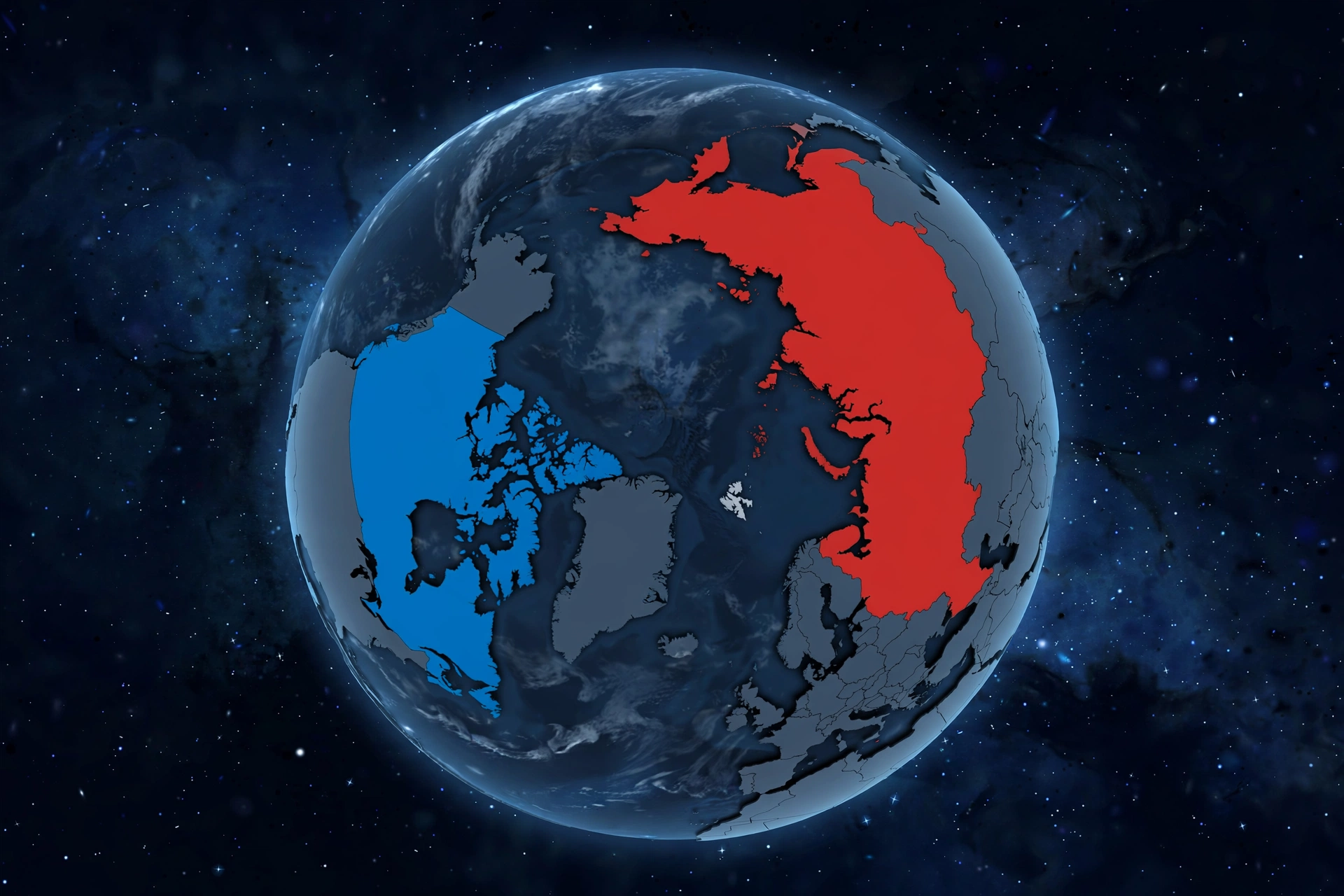
Russia is the largest country on Earth — but just how big is Russia compared to the US? Type “how big is Russia compared to us” into any search engine and the short answer comes back fast: Russia is about 1.8 times the size of the United States by land area. But the raw number only scratches the surface of a comparison full of surprises, from population to time zones to what “size” even means.
The Numbers
- Russia: approximately 17.1 million square kilometers (6.6 million square miles)
- United States: approximately 9.8 million square kilometers (3.8 million square miles)
- Ratio: Russia is roughly 1.75–1.8x the size of the US
To visualize it: you could fit the entire United States inside Russia and still have room left over for another country the size of India. Russia spans two continents — Europe and Asia — stretching from Eastern Europe to the Pacific Ocean.
Population: The Great Inversion
Here is where the comparison flips dramatically. Despite being nearly twice the land area, Russia has less than half the people:
- Russia: roughly 144 million people
- United States: roughly 340 million people
Russia’s population density is about 8–9 people per square kilometer; the United States sits around 35–36. Vast stretches of Siberia are among the emptiest inhabited places on Earth, while European Russia — Moscow, St. Petersburg — holds the overwhelming majority of the population.
Eleven Time Zones
Russia spans 11 time zones, from Kaliningrad (UTC+2) to Kamchatka (UTC+12). When it is morning in Moscow, it is already evening in Vladivostok. The United States, by contrast, spans 6 time zones including Alaska and Hawaii (4 in the contiguous states). Russia actually reduced its count from 11 to 9 in 2010, then restored 11 in 2014 — time zones being, apparently, a matter of national debate.
What Fills All That Space?
Russia’s enormity is mostly wilderness: the Siberian taiga (the world’s largest forest), tundra, steppe, and mountain ranges. It holds the world’s largest reserves of natural gas, major oil deposits, and about a fifth of the world’s forests. Lake Baikal alone contains roughly a fifth of the world’s unfrozen surface fresh water. The country’s size is its defining geographic fact — and its defining strategic challenge, since defending and governing that much territory has shaped Russian history for centuries.
Climate Extremes
Size brings climatic variety. Russia’s record low of around −68°C (−90°F) in Siberia contrasts with summer highs above 40°C (104°F) in the south. The US has its own extremes, from Alaska’s cold to Death Valley’s heat — but Russia’s cold is on another level, with entire cities (like Yakutsk, population ~300,000) functioning normally at −40°.
Economy vs. Area
Land area does not translate to economic size. The US economy is roughly ten times larger than Russia’s by nominal GDP, despite Russia’s resource wealth. This disconnect — enormous territory, modest economy — is one of the most important facts in geopolitics, and it is why the two countries’ rivalry has always been asymmetric.
For more on the country behind these numbers, read how Stalin came to power — the story of the man who ruled this vast territory at the height of its 20th-century power.
Borders and Neighbors
Russia shares land borders with 14 countries — more than any other nation on Earth (China ties it at 14 by some counts). From Norway in the northwest to North Korea in the southeast, Russia’s frontiers touch Europe, Central Asia, China, and Mongolia. The US, by contrast, borders just two countries. Managing fourteen borders — each with its own history, tensions, and trade — is a diplomatic workload no other country quite matches, and it explains much about Russia’s security-focused worldview.
The Trans-Siberian Railway: Crossing the Giant
Nothing conveys Russia’s scale like the Trans-Siberian Railway: over 9,200 kilometers (5,700 miles) from Moscow to Vladivostok, the longest railway line in the world. The full journey takes about seven days — a week on a train without leaving the country. By comparison, crossing the entire United States by rail takes roughly three days. The railway, completed in 1916, was built precisely because Russia’s size made it otherwise ungovernable — an engineering answer to a geographic fact.
Alaska: The American Footnote
Here is a delicious piece of trivia: Alaska was Russian territory until 1867, when the US purchased it for $7.2 million — about two cents an acre. At its narrowest, the Bering Strait separates Russia and the US (Alaska) by less than 4 kilometers (2.5 miles). The Diomede Islands sit in the middle: Big Diomede is Russian, Little Diomede American, and the International Date Line runs between them — meaning you can literally see “tomorrow” from “today.” The two superpowers are neighbors, separated by a short boat ride.
Size in Perspective: Fun Comparisons
- Russia is larger than the entire continent of Australia — and then some.
- Texas, the biggest contiguous US state, would fit inside Russia roughly 24 times.
- Russia’s land area exceeds that of the next two largest countries (Canada and China) — no wait, it does not exceed their combined area, but it is larger than either one alone by a wide margin.
- If Russia were a US state comparison project, every single US state would fit inside it simultaneously — with room to spare.
Natural Resources: The Underground Economy
Russia’s size is inseparable from its resource wealth. The country holds the world’s largest proven natural gas reserves, enormous oil fields, and vast deposits of coal, timber, gold, and diamonds — much of it in Siberia, where extraction is a heroic engineering challenge. Resource exports have historically funded a huge share of the state budget, making commodity prices a matter of national destiny. It is the paradox of Russian geography: unimaginable wealth underground, brutally difficult to reach, in a country whose population clusters thousands of miles from the resources.
How the US Compares on Resources
The United States is also resource-rich — a top oil and gas producer, with vast farmland and timber — but its advantages are distributed across a more temperate, more accessible landscape. American resources sit near American people and infrastructure; Russian resources often sit in permafrost wilderness. Geography does not determine destiny, but it deals very different hands: the US drew farmland and navigable rivers, Russia drew minerals and distance.
The Strategic Weight of Size
Military thinkers have a term for what Russia’s size provides: strategic depth. Invaders from Napoleon to Hitler learned that conquering territory in Russia means stretching supply lines across impossible distances while winter does the rest. The same vastness that makes Russia hard to govern makes it extraordinarily hard to conquer — a fact that has shaped every Russian leader’s calculus, including Stalin’s. Size is not just trivia; it is the central fact of Russian statecraft.
Population Distribution: Where Everyone Actually Lives
Three-quarters of Russians live in the European part of the country — west of the Ural Mountains — on roughly a quarter of the land. Moscow alone holds over 12 million people, with the greater metropolitan area pushing past 20 million. East of the Urals, cities like Novosibirsk, Yekaterinburg, and Vladivostok anchor vast, thinly populated regions. This lopsided distribution means most Russians experience their country as a European nation that happens to extend to the Pacific — a geographic identity crisis baked into the map itself.
Leave a Reply