
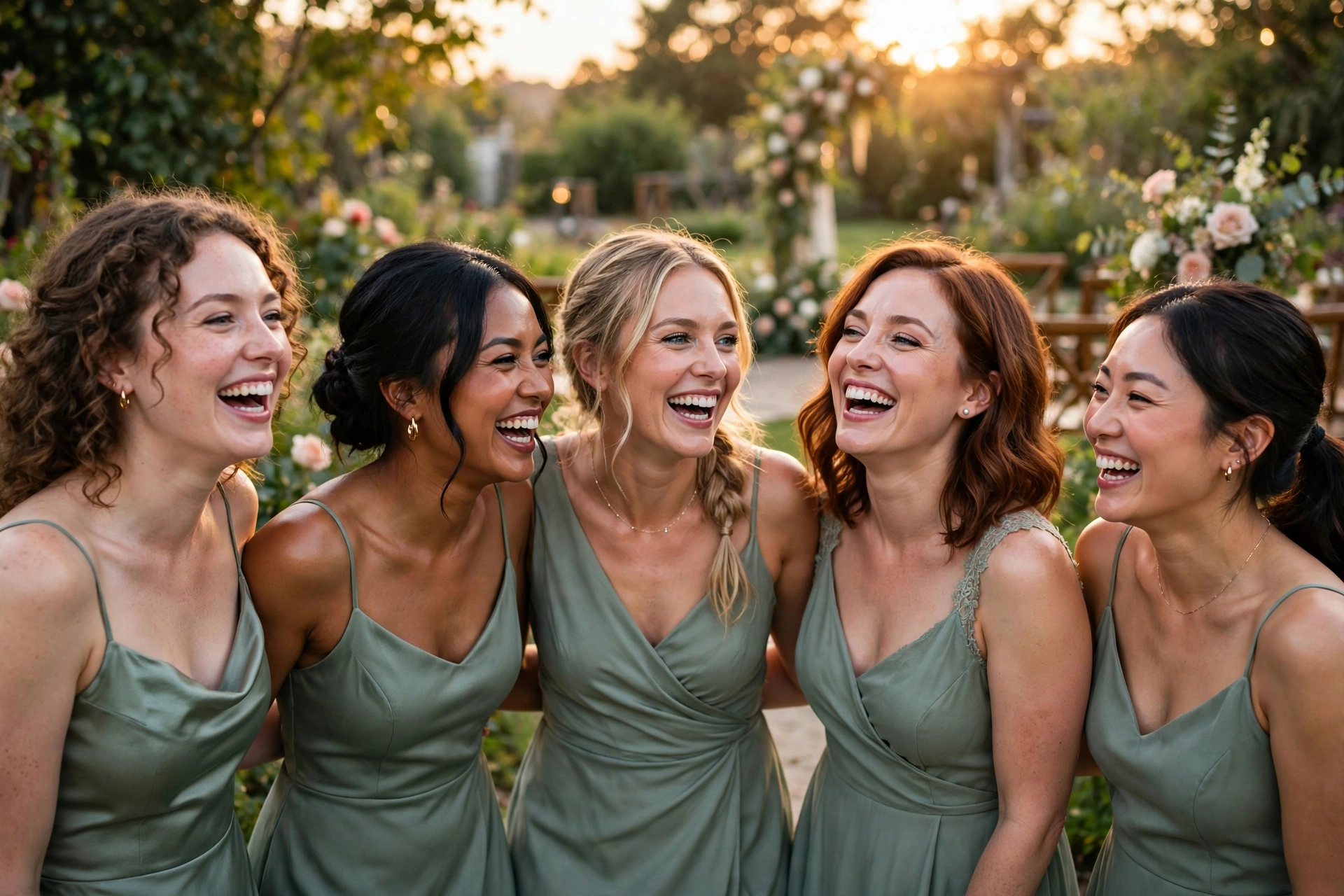
When you start picturing your wedding day, one of the first questions that pops up is usually about the bridal party. You have a list of friends and family you love, and suddenly you’re wondering: how many bridesmaids can you have before it gets out of hand? The short answer is that there’s no official rule. You can have as many bridesmaids as you want. But there are practical limits worth thinking about, and most couples land somewhere between three and six.
This guide breaks down the average numbers, the factors that should shape your decision, and the etiquette questions everyone asks but nobody wants to bring up first.
Is There a Legal or Official Limit?
No. There is no law, religious rule, or wedding authority that caps the number of bridesmaids. Your marriage license doesn’t care whether you have one bridesmaid or fifteen. The ceremony itself works the same way either way. The limits that exist are practical ones: your budget, your venue, and your own sanity.
That said, most wedding planners will tell you there’s a sweet spot. Bridal parties of three to six bridesmaids are the most common in the United States, according to surveys of recent couples. This size photographs well, keeps costs manageable, and doesn’t turn simple logistics — like getting everyone to the venue on time — into a group project.
The Average Number of Bridesmaids
Industry surveys consistently show that the average bridal party has about four to five bridesmaids, matched by a similar number of groomsmen. But averages hide a lot of variety:
- Intimate weddings (under 50 guests): 1–3 bridesmaids is typical. A small wedding with a huge bridal party can feel unbalanced.
- Medium weddings (50–120 guests): 3–5 bridesmaids is the sweet spot.
- Large weddings (120+ guests): 5–8 bridesmaids is common, and some couples go up to 10 or 12.
- Very large parties (10+): Usually seen at big cultural or family weddings where including everyone matters.
Your wedding size and your bridal party size should feel proportional. A good rule of thumb: your total wedding party (bridesmaids plus groomsmen) shouldn’t exceed about 10–15% of your guest count. Otherwise the “audience” starts to look smaller than the “cast.”
Factors That Should Shape Your Decision
1. Your Budget
Every bridesmaid adds cost, even if they pay for their own dresses. You’ll likely cover bouquets (around $50–$100 each), gifts ($50–$150 each), hair and makeup if you’re providing it, and possibly transportation or accommodation. A bridal party of eight can easily add $1,500–$3,000 to your budget before you notice. If money is tight, a smaller party is one of the easiest places to save. Our guide on planning a wedding in six months covers budget triage in more detail.
2. Venue Space
Think about where everyone will stand during the ceremony. A small chapel altar or a beach setup may physically struggle to fit twelve attendants plus the couple plus the officiant. Check with your venue about how much room you actually have up front.
3. Logistics and Coordination
Every additional bridesmaid is another schedule to coordinate for dress fittings, the bachelorette, rehearsal, and the wedding morning. Group chats get chaotic past six or seven people. If you’re not naturally organized, keep the group small enough that you can actually manage it.
4. Family Expectations
In some families and cultures, including sisters, cousins, and future sisters-in-law is expected. If skipping someone would cause genuine hurt, that matters. But don’t let obligation alone drive the number — resentment builds fast when you’re paying for a bridesmaid you didn’t really want.
5. Symmetry (or Not)
You don’t need the same number of bridesmaids and groomsmen. Uneven sides are completely normal now and nobody at the wedding will be counting. Choose the people who matter; don’t recruit extras to match a number.
Big vs. Small Bridal Party: Honest Pros and Cons
The Case for a Small Party (1–3)
- Lower cost and simpler logistics
- More meaningful: each person is truly close to you
- Easier to coordinate schedules and group decisions
- More intimate wedding-morning experience
The Case for a Large Party (7+)
- Nobody important gets left out
- More help with planning, setup, and day-of tasks
- Lively, fun energy in photos and at the reception
- Works well for big weddings where the party matches the scale
The Downsides of Going Big
- Dress consensus becomes nearly impossible
- Higher chance of drama, scheduling conflicts, or dropouts
- More bouquets, gifts, and coordination costs
- The ceremony lineup can look crowded
How to Choose Who Makes the Cut
Start with the non-negotiables: your sister, your best friend, the people who’d be hurt not to be asked. Then ask yourself a few honest questions about everyone else on the maybe-list:
- Have we talked regularly in the last year, or is this nostalgia?
- Would I be upset if they couldn’t come, or just mildly disappointed?
- Am I choosing them, or is someone else choosing them for me?
A useful test: imagine telling them they’re a bridesmaid. If you feel excited, they’re in. If you feel relieved that an obligation is handled, reconsider. You can always honor people in other ways — readings, toasts, or a special dance — without putting them in the lineup. If you’re still figuring out the basics of the whole process, read our overview of how getting married actually works, from paperwork to ceremony.
Bridesmaid Etiquette Questions Everyone Asks
Can I have an uneven number of bridesmaids and groomsmen?
Yes. This is one of the most common worries and it genuinely doesn’t matter. Photographers handle it easily, and guests don’t count.
Do bridesmaids have to be female?
No. “Bridesmen” and “groomswomen” are common. Put the people you love on whichever side feels right.
Can I ask someone and later change my mind?
Technically yes, but it’s one of the fastest ways to damage a friendship. Be as sure as you can before you ask. If a genuine falling-out happens, handle it privately and kindly.
Do I have to make all bridesmaids wear the same dress?
No. Mismatched dresses in the same color palette are now more popular than identical ones, and they let each person pick a flattering cut.
Who pays for the bridesmaid dresses?
Traditionally each bridesmaid pays for her own dress, but the couple usually covers hair, makeup, bouquets, and gifts. If you’re requiring an expensive dress, consider contributing. Clear expectations up front prevent 90% of bridesmaid drama.
What If Someone Asks to Be a Bridesmaid?
It happens. Someone assumes they’re in, or hints heavily. You don’t owe anyone a spot. A kind, honest response works: “We’re keeping the wedding party really small, but I’d love for you to be part of the day in another way.” Then follow through with a real role — a reading, the guest book, or a toast.
The Bottom Line
You can have as many bridesmaids as you want, but most couples are happiest with three to six. Let your budget, venue, and genuine relationships decide — not guilt, not symmetry, and not what someone else’s wedding looked like. The right number is the one that lets you enjoy the day instead of managing it.
Once you’ve settled the lineup, the next big timing question is how long the wedding ceremony itself lasts, so you can plan the rest of the day around it.
The History Behind the Bridal Party
The bridesmaid tradition goes back much further than modern weddings. In ancient Rome, bridesmaids dressed identically to the bride — not for photos, but to confuse evil spirits (or jealous suitors) about which woman was actually getting married. The history of the bridesmaid tradition shows how the role evolved from spiritual decoys to the honor it is today: your closest people standing beside you. Knowing the tradition’s roots makes it easier to treat the role with the weight it deserves — and to choose people who genuinely want to be there.
What the Data Says About Party Size
If you’re wondering whether your number is “normal,” the average wedding party size data from recent industry surveys is reassuring: most couples choose four to five attendants per side, and satisfaction is highest in the three-to-six range. Couples with very large parties report more coordination stress, while couples with one or two attendants report the smoothest planning experience. The takeaway isn’t that there’s a magic number — it’s that smaller groups are consistently easier to manage, so only go big if the relationships genuinely warrant it.
Leave a Reply