
Traveling solo means there’s no one to watch your bag while you use the restroom, no one to notice the hand in your pocket, no backup if your phone vanishes. I learned this the hard way in Barcelona — or rather, I almost learned it, catching the pickpocket’s wrist mid-reach because a fellow traveler had warned me that morning. If you’re asking how do I keep my belongings safe while traveling solo, the answer is layered defense: make yourself a hard target, separate your valuables so no single loss is catastrophic, and have a plan for when things go wrong anyway.
Mindset first: the goal isn’t paranoia — it’s routine caution. The travelers who get robbed are usually not unlucky; they’re the ones with the phone in the back pocket, the bag hanging open, the “I’ll just leave my laptop here for a sec.” Make the safe behavior automatic and you can relax into the trip.
How Do I Keep My Belongings Safe While Traveling Solo? Gear That Helps
The anti-theft kit (worth the investment)
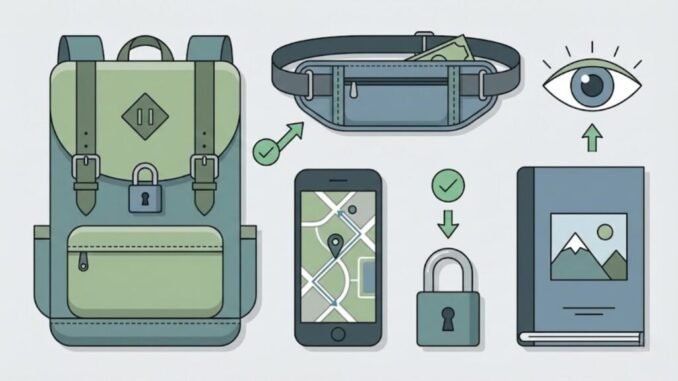
- Crossbody anti-theft bag or slash-proof backpack: Pacsafe, Travelon ($40–$80) — locking zippers, slash-proof straps, RFID blocking. Worn in front in crowds. This is the single highest-impact purchase.
- Money belt or neck pouch ($10–$20): for passport, backup cards, and emergency cash — worn under clothes, invisible. Not for daily spending money (fumbling under your shirt at every café defeats the purpose); for the stuff that would end your trip if lost.
- Portable door lock ($10–$15): adds a lock to any hotel/hostel/Airbnb door from the inside. Tiny, light, enormous peace of mind for solo sleepers.
- Cable lock ($15): lock your bag to a fixed object on trains, in hostel dorms, at beach cafés. Opportunistic grab-and-run theft drops to near zero.
- Decoy wallet: an old wallet with expired cards and small cash in the obvious pocket. If you’re mugged, hand this over without hesitation — your real valuables are elsewhere. Your life is worth more than any wallet; comply, then report.
Phone and tech protection
- Tether it: a phone leash/lanyard ($8) prevents the snatch-and-run that’s epidemic in many cities. Sounds dorky; works perfectly.
- Cloud backup everything before the trip — photos auto-uploading (Google Photos/iCloud), documents in email/Drive. A stolen phone is an inconvenience; a stolen phone with your only copies is a crisis.
- Know your IMEI number (dial *#06# and screenshot it) — needed for police reports and carrier blacklisting.
- Enable Find My + remote wipe and use a strong passcode (not 1234, not your birth year).
Daily Habits of the Unrobbable Traveler
- Separate everything: daily cash in one pocket, backup cash + cards in the money belt, one card in the hotel safe. The anti-scam money separation principle applies double when solo.
- Hotel safe: use it properly. Passport, backup cards, excess cash, laptop when out — in the safe, every time you leave. Set a PIN you’ll remember (not your birthday). Photograph the safe’s contents as a checklist so you never leave anything.
- Hostel dorms: use the lockers (bring your own padlock — hostel locks are often flimsy or rented). Sleep with valuables in a packing cube inside your sleeping bag liner if no locker. Choose hostels with keycard dorm access and 24-hour reception.
- At restaurants/cafés: bag strap looped around your chair leg or under your leg — never on the chair back, never on the floor beside you. In high-theft cities, this single habit prevents the most common tourist theft.
- On transit: backpack worn in front or between your feet with a leg through the strap. Nothing in back pockets — ever. In crowded metros, hand in pocket over wallet, or wallet in front zipped pocket.
- At the beach: bring only what you’d be okay losing — one card, small cash, cheap sunglasses. Or a waterproof pouch ($10) worn while swimming. Unattended beach bags are the #1 tourist theft worldwide.
- Don’t flash valuables: expensive camera around the neck, cash fanned out, laptop open at outdoor cafés — each is an advertisement. Be discreet; wealth signaling makes you a target.
Situational Awareness (Without the Anxiety)
- Research the specific risks of each destination (Wikivoyage “Stay safe” sections, 10 minutes per city). Barcelona = pickpockets; certain areas = bag-snatching scooters; some = hotel room theft. Different places, different defenses.
- Trust the unease: if a situation feels wrong — the empty street, the overly friendly stranger, the ATM that looks tampered with — leave. Your instincts are data; solo travelers who ignore them write the cautionary tales.
- Share your itinerary: someone at home gets your hotel names, rough plans, and check-in schedule. Location sharing (Google Maps/Find My) with a trusted person during the trip.
- Arrive in daylight: plan arrivals before dark in unfamiliar cities. A confusing bus station at 2 AM is when bad things happen; at 2 PM it’s an adventure.
- Blend in: dress like locals, not like a tourist billboard. Ditch the fanny pack worn outside, the giant camera, the map unfolded on the sidewalk. Confidence and local pace make you invisible to predators.
If Theft Happens Anyway
- Stay calm, ensure your safety first. Things are replaceable; you aren’t. Never chase a thief.
- Cancel cards immediately (bank apps make this instant) and use your backup card.
- File a police report — needed for insurance claims. Tourist police stations in major cities have English speakers; get the report number in writing.
- Contact your embassy for emergency passport replacement (keep passport photos/scans accessible in cloud storage — replacement is much faster with them).
- File your travel insurance claim within the policy’s window, with the police report attached. This is why you bought travel insurance — theft coverage is standard.
The 2-Minute Hotel Room Security Check
Every time you check into a new room, run this 2-minute drill before unpacking: test the door lock and deadbolt (use your portable door lock as backup), check that windows latch (ground-floor rooms especially), locate the safe and test it with your code, and note the fire exit route. It takes 120 seconds and becomes automatic after the third hotel. For extra peace of mind, the State Department’s pre-travel safety guidance covers hotel security alongside broader trip preparation — worth reviewing before any solo international trip.
The Bottom Line
Keep belongings safe traveling solo with: anti-theft gear (crossbody bag, money belt, door lock, cable lock), separated valuables so no single loss is catastrophic, disciplined daily habits (bag secured, nothing in back pockets, hotel safe used), destination-specific research, and a theft-response plan ready before you need it. Do this and solo travel isn’t scary — it’s the most liberating way to see the world, with your stuff (and you) intact.
Leave a Reply