
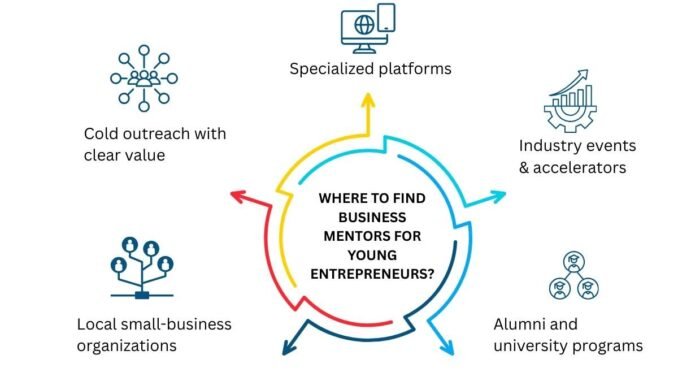
Here’s an uncomfortable truth about starting a business: you don’t know what you don’t know, and the mistakes you can’t see coming are the expensive ones. A good mentor has already made those mistakes — on someone else’s dime — and can spot yours from a mile away. The best part? If you’re wondering how do I find a business mentor for free, the answer is that the best mentorship programs in America cost absolutely nothing. You just have to know where to look.
I want to be straight with you about what a mentor is and isn’t. A mentor is not a co-founder, not a consultant who does the work for you, and not a magic connection to investors. A mentor is an experienced sounding board — someone who’ll tell you your pricing is wrong, your lease is a trap, or your “great idea” has been tried six times already. That honesty is worth more than any course you could buy.
How Do I Find a Business Mentor for Free? The Best Programs
SCORE: the gold standard (free, nationwide)
SCORE is a nonprofit partnered with the SBA, with over 10,000 volunteer mentors across the US — retired executives, former business owners, and working professionals. You get matched with a mentor in your industry, meet in person or over video, and it’s completely free with no catch. I’ve seen SCORE mentors help with everything from writing a first business plan to negotiating a commercial lease. Sign up on their site, describe what you need, and you’ll typically hear back within a few days. This should be every new owner’s first stop.
Small Business Development Centers (SBDCs)
There are nearly 1,000 SBDCs hosted at universities and colleges nationwide, also SBA-funded. They offer free one-on-one advising plus low-cost workshops on topics like bookkeeping, marketing, and getting loans. The advisors are professionals, not volunteers, and they see hundreds of local businesses a year — which means they know your specific market.
Your local Chamber of Commerce
Chambers run mentorship matchups, roundtables, and networking events where established owners genuinely enjoy helping newcomers. Membership usually costs $200–$500 a year, but many mentorship programs and introductions are free even to non-members. Show up, be useful, ask good questions.
Less Obvious (But Excellent) Places to Find Mentors
- Industry associations: Almost every trade has one, and most run formal or informal mentoring. A restaurant owner should be talking to their state restaurant association; a retailer to their local retail alliance.
- Former employers and professors: People who already know your work ethic are the easiest yes you’ll ever get. Don’t overthink this — a simple email works.
- Supplier and vendor relationships: Your suppliers want you to succeed (you’re their customer). Experienced sales reps have watched hundreds of businesses in your industry and will share what works — for free, over coffee.
- Online communities: Subreddits like r/smallbusiness and r/Entrepreneur, plus industry-specific Facebook groups, are full of owners who answer questions daily. It’s not formal mentorship, but the collective wisdom is real.
- Volunteer and nonprofit boards: Joining a nonprofit board puts you in a room with established local business leaders. Contribute genuinely, and mentorship relationships form naturally.
How to Ask (Without Being Awkward)
Most people never ask because it feels presumptuous. It isn’t — experienced business owners are flattered far more often than they’re annoyed. But how you ask matters enormously. Here’s what works:
- Be specific about what you want. “Can you mentor me?” is vague and easy to dodge. “Could I buy you coffee and get your take on my pricing strategy? I’m opening a bakery and struggling with wholesale vs. retail margins” is almost impossible to refuse.
- Start small. Ask for 30 minutes, not a year-long commitment. If the conversation clicks, the relationship builds itself.
- Do your homework first. Read about their business. Come with real questions. Nothing kills a potential mentorship faster than “so, how do I start a business?” — that’s Googleable, and it signals you won’t value their time.
- Make it easy to say yes. Suggest a specific time and place. Offer to come to them. Keep it to 30 minutes and end on time — that alone puts you ahead of 90% of people.
A template that actually works: “Hi [Name], I’m [you], opening a [business] in [town]. I really admire how you [specific thing]. Would you be open to a 30-minute coffee next week? I’d love your perspective on [specific question]. Happy to work around your schedule.” Short, respectful, specific. Send it.
Being a Mentee Worth Mentoring
Getting a mentor is the easy part. Keeping one requires you to be worth their time:
- Actually act on advice. Nothing frustrates a mentor more than giving the same advice three times. Try what they suggest, then report back on what happened — even if it failed. That feedback loop is what makes the relationship valuable for them too.
- Come prepared. Bring an agenda or at least two real questions to every meeting. “Just catching up” meetings die out fast.
- Respect the clock. End on time, every time. Send a thank-you note after. These tiny courtesies are why mentors take your calls.
- Give back when you can. Share an article relevant to their business, make an introduction, or just genuinely celebrate their wins. Mentorship works best when it’s not one-directional.
- Know when to graduate. Some mentorships last years; others serve their purpose in six months. It’s fine to thank someone and move on — just do it graciously.
What If You Can’t Find the Right Fit?
Sometimes the perfect industry mentor isn’t available locally. That’s fine — a great general business mentor beats a mediocre industry-specific one. Cash flow, hiring, pricing psychology, and negotiating are universal. And honestly, an outside-industry perspective often sparks the best ideas, because they’re not trapped in your industry’s conventional wisdom.
Also consider peer mentoring: a small group of fellow owners at a similar stage, meeting monthly to share what’s working. Everyone teaches, everyone learns, and the accountability is powerful. Your SBDC or Chamber can often help you find or form one.
While you’re building your support network, it’s worth reading up on the traps mentors help you avoid — our guide to the biggest mistakes new business owners make covers the classics. And when you’re ready to seek funding, how to prepare for a meeting with a potential investor will help you walk in ready.
The bottom line: free, high-quality business mentorship is one of America’s best-kept secrets — SCORE and SBDCs alone put thousands of experienced advisors within your reach. The only real cost is swallowing your pride, asking clearly, and showing up prepared. The owners who get mentored early make fewer expensive mistakes. Be one of them.
Leave a Reply