
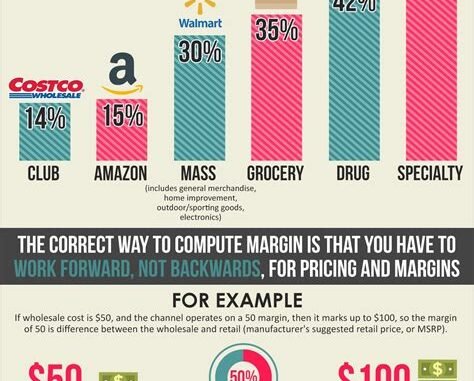
Ask ten retail owners about their margins and you’ll get ten different answers — and half of them will be mixing up gross margin with net margin without realizing it. So let’s settle the question properly: what is a good profit margin for a small retail business? For most small retailers, a healthy net profit margin lands between 5% and 10%. Gross margins vary wildly by what you sell — anywhere from 25% for electronics to 60%+ for specialty goods. If your net margin is consistently under 3%, you’ve got a problem worth fixing. If it’s over 15%, you’re doing something genuinely right.
Before we go further, the distinction that matters most: gross margin is what you keep after the cost of the goods themselves (revenue minus cost of goods sold, divided by revenue). Net margin is what survives after everything — rent, payroll, marketing, insurance, taxes. New owners love quoting gross margin because it sounds impressive. Your landlord, unfortunately, accepts payment from net margin.
What Is a Good Profit Margin for a Small Retail Business? Benchmarks by Category
“Good” is relative to what you sell. Here’s what typical US small retailers actually see:
- General merchandise / convenience: 2–5% net. High volume, thin margins — this is a tough game for independents.
- Clothing and apparel boutiques: 5–10% net; 50–65% gross. Markup is generous, but markdowns and seasonality eat into it.
- Specialty food / gourmet: 5–8% net. Good gross margins, but spoilage and labor are relentless.
- Electronics: 3–6% net. Brutal — you’re competing with Amazon on price every single day.
- Furniture and home goods: 6–12% net. Bigger tickets mean each sale matters more.
- Gift shops / specialty retail: 7–15% net. Unique products command better pricing power.
- Online-only retail: 5–15% net. No storefront rent, but ad costs and shipping have replaced it as the big expense.
Notice the pattern: the more commoditized the product (electronics, basics), the thinner the margin. The more differentiated (curated gifts, specialty foods, your own designs), the fatter. Your margin is really a measure of your pricing power.
How to Calculate Your Margins Honestly
Pull your last 12 months and run these numbers. Use annual figures, not one good month:
- Gross margin = (Revenue − Cost of Goods Sold) ÷ Revenue × 100
- Operating margin = (Revenue − COGS − Operating Expenses) ÷ Revenue × 100
- Net margin = (Revenue − All Expenses Including Taxes and Interest) ÷ Revenue × 100
Example: your shop did $400,000 in sales. You spent $220,000 on inventory (COGS), $120,000 on rent, wages, and everything else, and $15,000 on taxes and loan interest. Gross margin: ($400k − $220k) ÷ $400k = 45%. Net margin: ($400k − $220k − $120k − $15k) ÷ $400k = 11.25%. That’s a genuinely healthy small retail business.
Do this math quarterly, not just at tax time. Margins drift — a supplier raises prices, you hire someone, ad costs creep up — and by the time you notice at year-end, you’ve bled money for months.
The Levers That Actually Move Your Margin
You can’t wish your way to better margins. But you can pull these levers:
Price smarter, not just higher
Most small retailers underprice out of fear. Test a 3–5% price increase on your best sellers — in my experience, customers rarely notice, and that flows almost entirely to your bottom line. A shop doing $400k at 8% net ($32,000 profit) that raises prices 4% with no volume loss jumps to roughly $48,000. That’s a 50% profit increase from a change nobody noticed. Also: stop discounting reflexively. Every 10% off coupon needs roughly 30–40% more unit sales just to break even on gross profit.
Fix your product mix
Not all revenue is equal. Identify your highest-margin items and give them the best shelf space, the staff recommendations, the email features. Conversely, know your loss leaders and limit how much of your business they represent. One boutique owner I know discovered 20% of her SKUs generated 70% of her profit — she doubled down on those categories and her net margin went from 6% to 11% in a year.
Attack the big three costs
For most retailers, the margin killers are rent, labor, and shrinkage (theft, damage, spoilage). Renegotiate your lease before it renews — landlords often prefer a reliable tenant at slightly less rent over an empty space. Schedule labor against actual sales patterns instead of gut feel. And take shrinkage seriously: the National Retail Federation consistently reports shrink rates around 1.5–2% of sales, which comes straight off your net margin. Cameras, better receiving procedures, and employee training pay for themselves.
Margin Traps New Retailers Fall Into
- Confusing cash flow with profit: A busy register doesn’t mean you’re profitable. You can sell $50,000 a month and still lose money if margins are thin and expenses are high. Our guide on managing cash flow month to month covers the difference in detail.
- Ignoring owner pay: If you’re working 60 hours a week and the business “profits” $40,000, your real margin is lower — you haven’t paid yourself a market wage. Price and plan as if you had to hire someone to do your job.
- Chasing revenue over margin: Doubling sales by selling low-margin items at razor prices feels like growth. It’s actually just more work for the same money. Profitable growth beats big revenue every time.
- Not tracking expenses properly: Small leaks — subscriptions you forgot, over-ordering, personal purchases on the business card — quietly destroy margins. Our walkthrough on tracking business expenses without an accountant shows how to catch them.
For broader context on what healthy small business finances look like, the SBA’s small business resources and NerdWallet’s profit margin benchmarks are both worth bookmarking.
Quick Answers: Retail Profit Margins
What profit margin should a small retailer target?
Net margins of 5–10% are typical for healthy small retail, varying widely by category (grocery runs thin at 1–3%, specialty retail can exceed 10%). But the number matters less than the trend — a stable or rising margin means your pricing and cost control are working, whatever the absolute figure.
The bottom line: aim for 5–10% net margin as a healthy target, know your numbers quarterly, and remember that margin is a choice you make through pricing, product mix, and cost discipline — not something the market hands you. The retailers who thrive aren’t the ones with the most sales; they’re the ones who keep the most of each sale.
Leave a Reply