
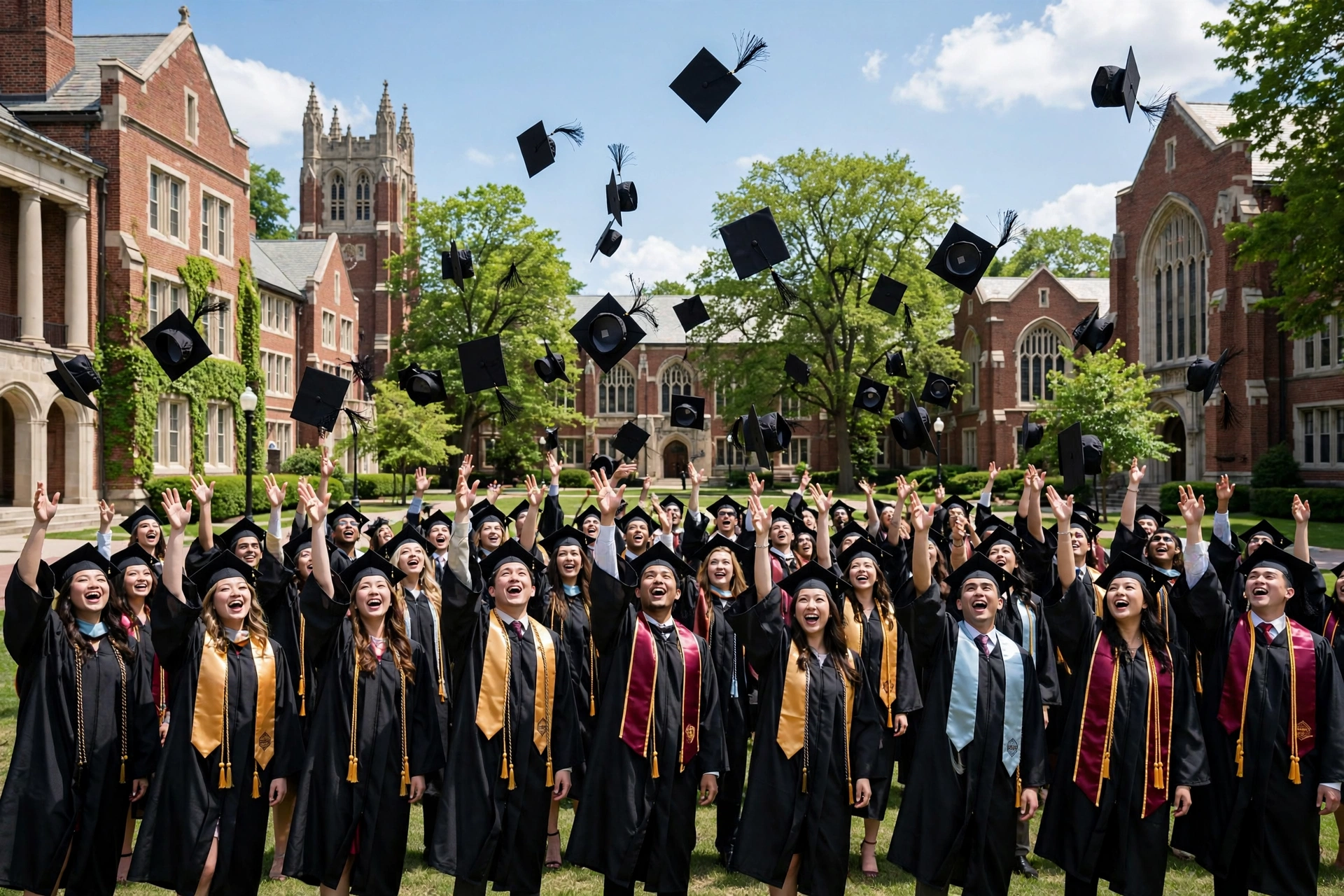
Whether you are the graduate or the proud family member in the audience, one question matters for planning the whole day: how long is the graduation ceremony? The answer ranges from a snappy 45 minutes to a marathon three hours, depending on the school level, the size of the class, and how many speeches the organizers squeeze in.
Typical Lengths by School Level
- High school: 1–2 hours. Most fall around 90 minutes, with the main variable being class size — each name takes a few seconds, and 500 names add up.
- College/university (main ceremony): 2–3 hours. Large universities often hold a big commencement with all graduates, then separate smaller ceremonies by school or department.
- Departmental ceremonies: 45–90 minutes. These are the sweet spot — your graduate actually gets recognized individually without the stadium-scale wait.
- Graduate/professional school: 1–2 hours, often more formal with hooding ceremonies.
- Kindergarten/elementary: 30–60 minutes of pure charm.
A graduation ceremony’s length is overwhelmingly driven by one factor: how many names are read aloud.
What Fills the Time
The standard program runs: processional (graduates march in), national anthem or invocation, welcome remarks, student speeches (valedictorian, class president), keynote address, conferring of degrees, the name-reading and diploma walk, tassel turning, and recessional. The keynote is the wildcard — a tight 10-minute speech energizes the room; a rambling 30-minute one empties it mentally if not physically.
Why Some Ceremonies Drag
Three culprits stretch ceremonies past the comfort point: enormous graduating classes with every name read individually, too many speakers (every administrator wants a turn), and logistical gaps — long pauses between segments while the next group gets into position. The best-run ceremonies keep transitions tight and limit speeches ruthlessly.
Tips for Attendees
- Arrive early. Parking and seating fill fast; latecomers often stand or miss the processional.
- Bring the essentials: sunscreen and water for outdoor ceremonies, a cushion for bleachers, tissues for the emotional moments.
- Know the photo policy. Many schools restrict aisle photography; professional photos are usually available.
- Plan the meetup spot in advance. Finding one graduate among thousands afterward is chaos without a designated landmark.
- Do not leave early. Slipping out after your graduate’s name is considered rude — and ushers may block exits during the ceremony anyway.
Tips for Graduates
Eat beforehand — you may be seated for hours with no food. Break in your shoes; you will be standing, marching, and climbing stage stairs. Keep your phone silent but accessible for the post-ceremony coordination. And savor it: however long the ceremony feels, it ends, and the part afterward — the hugs, the photos, the relief — is what you will actually remember.
Virtual and Alternative Ceremonies
Since 2020, many schools offer livestreams alongside in-person events — a blessing for distant relatives. Virtual-only ceremonies tend to run shorter, often under an hour, since they skip the logistics of moving thousands of bodies. If your school offers both, the stream is also a great backup for family members who cannot handle a three-hour outdoor event in the heat.
Planning Your Day Around It
Work backward from the ceremony: add 30–45 minutes for parking and seating before, and at least an hour after for photos and finding each other. A 10 a.m. ceremony realistically consumes the day until 2 or 3 p.m. Plan celebratory lunches or dinners accordingly — and make reservations, because every other graduate’s family has the same idea. Event timing matters for all of life’s big days; our guide to planning a wedding reception covers the same kind of timeline thinking for celebrations.
The History of the Cap and Gown
Ever wonder why graduates dress like medieval scholars? Because the tradition literally comes from medieval universities. The cap, gown, and hood descend from the robes worn by scholars at Oxford, Cambridge, and the early European universities of the 12th century — practical warm clothing for unheated stone buildings that became ceremonial over time. In the US, the Intercollegiate Code of 1895 standardized the colors: bachelor’s gowns with pointed sleeves, master’s with oblong sleeves, doctor’s with velvet panels — and hoods lined in the colors of the graduate’s institution. That strange flat cap? It is called a mortarboard, part of the traditional academic dress, named for its resemblance to the tool bricklayers use.
Decoding the Ceremony Program
Programs are full of Latin and tradition. “Commencement” means beginning, not ending — the ceremony marks the start of your post-school life. “Valedictorian” comes from vale dicere, “to say farewell.” The mace carried in the processional symbolizes the institution’s authority, a tradition borrowed from medieval civic ceremonies. Knowing what you are watching makes even a long ceremony more interesting — you are participating in a ritual nearly a thousand years old.
Weather Contingencies
Outdoor ceremonies live and die by the forecast. Most schools set a rain date or move indoors to a gymnasium or arena, announced the morning of the event. Heat is the sneakier enemy: June ceremonies in direct sun have sent graduates and grandparents alike to the medical tent. Schools increasingly provide water stations and urge light clothing under gowns. Check the plan the night before, and have a backup meetup spot in case venues change.
Making It Meaningful (Not Just Long)
The ceremonies graduates remember fondly share traits: a speaker who told stories instead of platitudes, a moment of silence or recognition for classmates lost, and efficient pacing that respected everyone’s time. If you are involved in planning — as a student speaker or committee member — advocate for brevity. Every minute you cut from the program is a gift to a thousand families. The goal is a ceremony people describe as “perfect,” never as “finally over.”
What to Wear (Graduates and Guests)
Graduates: the gown covers most of your outfit, but your shoes and the bottom few inches show — wear something comfortable and photogenic. Dark shoes photograph best under black gowns. Guests: dress for the venue and weather, not the formality you imagine. Outdoor bleacher ceremonies call for sun hats and flat shoes; indoor arena ceremonies are straightforward smart-casual. When in doubt, slightly overdressed beats underdressed — it is a milestone, after all.
Gifts: What Is Appropriate?
Cash remains the most popular graduation gift, and nobody pretends otherwise — graduates are usually broke and grateful. Thoughtful alternatives: a quality pen, luggage for the next chapter, a book with a handwritten inscription, or contributions to a specific goal (a “first apartment fund” beats generic cash in meaning). For high school graduates, $25–$50 is typical from acquaintances; close family gives more. College graduates often receive $50–$200 depending on the relationship. A heartfelt card matters as much as the amount.
After the Ceremony: Making the Day Count
The ceremony is the formality; the celebration is the memory. Whether it is a backyard barbecue or a nice dinner out, gather the people who got the graduate here — teachers, coaches, grandparents, best friends. Take the group photo while everyone is still dressed up. And graduates: write thank-you notes within a couple of weeks. In an age of instant everything, a handwritten note to someone who supported your education stands out enormously.
And one final tip for the sentimental: save the program, the tassel, and a photo from the day somewhere safe. Years from now, when the details blur, those small artifacts will bring the whole day back — the heat, the speeches, the moment your name was called.
Leave a Reply