
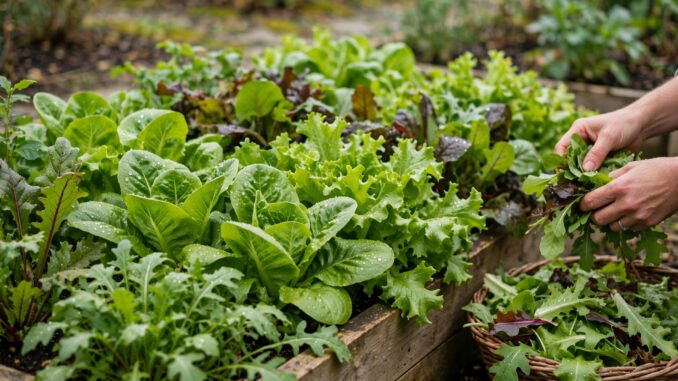
Most beginner crops make you wait. You sow in spring, you fuss all summer, and you find out months later whether any of it worked. Salad leaves work the other way around. The gap between sowing and eating is measured in weeks, not seasons, and that short loop is what teaches you to garden. You try something, you see the result while you still remember what you did, and you adjust. Better still, salad does not have to be a spring-only treat. With a simple relay of small sowings, matched to the season you are in, some leaf is harvestable in every month of the year.
Why Salad Leaves Forgive Beginners
Start with speed. Many leaves are harvestable in about 3 to 4 weeks from sowing, and the fastest, like arugula, can be ready in about 3 weeks. A crop that answers that quickly forgives a lot of early clumsiness, because a failed sowing costs you days rather than a season.
Space is the second gift. A single window box produces real salads, not garnish. A small raised bed, a couple of large pots on a step, or a strip along a fence will do the same job at larger scale. Salad plants stay compact, they sit close together without much complaint, and they never need staking, tying in, or a ladder at harvest time.
Light is the third gift, and it surprises people. Leaves are grown for their foliage, not their fruit, so they are tolerant of partial shade. About 3 to 4 hours of sun is enough for most leaves to grow well. A yard that is too shady for tomatoes can still be a very good salad yard, especially in summer, when shade becomes an outright advantage.
There is also no pollination to worry about. Nothing needs to flower, no bees need to visit, and no fruit needs to set. You eat the leaf itself, so the whole job is simply keeping a leaf growing steadily and picking it young. The cut-and-come-again habit helps here too. Take the outer leaves and the plant keeps producing from the center, which means a slightly greedy or slightly clumsy harvest rarely ends the crop.
The money side is modest but real. A roughly $3 packet of mesclun mix holds hundreds of seeds, enough for a year of sowings. Against about $4 for one shop-bought clamshell of spring mix, the packet needs to replace only a handful of bought salads to pay for itself. After that, every bowl you pick is a bowl you did not buy, grown a few steps from the kitchen.
Spring, March to May: The Easy Season
Spring is where the year starts, and it is kind to new growers. Sow directly outdoors as soon as the soil can be worked. Many salad seeds germinate in soil as cool as about 40 degrees Fahrenheit, so you do not need warm weather, just soil that is no longer frozen or waterlogged enough to crumble in your hand.
The best spring picks cover you for flavor and reliability. Salad Bowl lettuce is a loose-leaf type that handles cut-and-come-again picking well. Bolt-resistant spinach such as Space or Tyee holds longer before it tries to flower. Arugula brings a spicy kick and the fastest return of the group. A mesclun mix gives you variety in one sowing, and it helps to understand what a mesclun mix actually contains before you choose one, since mixes vary from mild lettuce blends to sharper, mustard-heavy combinations.
Summer, June to August: The Tricky Season
Summer does not end the salad year, but it changes the rules. Lettuce and spinach bolt as temperatures climb past the mid-70s. Bolting means the plant shoots up, turns bitter, and goes to seed. The leaf is still the same plant, but its mind has moved on to making the next generation, and the flavor tells you so.
It helps to read up on how lettuce grows, bolts and turns bitter so you can spot the early signs, a lengthening center stem and leaves that taste sharp even when they look fine. Once bolting starts in earnest, pull the plant and give the space to something else. No watering trick turns a bolting lettuce sweet again.
The counters are simple and they work together. Choose bolt-resistant varieties for summer sowings, the ones bred to hold in heat a little longer. Give plants afternoon shade, from a fence, a taller crop, or the side of the house that loses the sun first. Then add a simple 30 to 50 percent shade cloth over the bed. The cloth drops leaf temperatures, softens the harshest light, and extends tender lettuces by weeks. Framed plainly, shade in summer is not a compromise for salad. It is often the reason summer salad exists at all.
Fall, September to November: The Second Spring
If spring is the easy season, fall is the best one. Cool nights return, many pests fade, and leaves grow sweet and crisp without the constant threat of bolting. Experienced salad growers often plan the year around fall, and beginners who missed spring get a full second chance here.
Sow the spring list again. Lettuce, spinach, and arugula all thrive as days shorten, as long as you sow early enough for plants to size up before growth slows in deep cold. Add Asian greens to the fall list. Many handle cool weather beautifully, grow fast, and bring flavors, from mild to mustard-hot, that spring sowings never had a chance to show.
Winter, December to February: The Protected Season
Winter salad is not about growth at full speed. It is about keeping hardy leaves alive and picking modestly through the coldest months, then watching them surge the moment days lengthen. A cold frame, a low tunnel of plastic over hoops, or heavy row cover keeps harvests going through winter in zone 6 and warmer, and well into winter in colder zones with hardier leaves like spinach and corn salad.
Pick gently in winter. Take outer leaves only, leave the center and the roots undisturbed, and never harvest a frozen plant, since leaves picked while frozen turn to mush as they thaw. Growth will be slow, sometimes barely visible for weeks. That is normal. A living spinach plant in January is not failing. It is waiting, and it will repay you in March before any spring sowing is ready.
Succession Sowing: Small Amounts, Often
Of all the techniques that keep salad on the table, succession sowing matters most. Sow small amounts every 2 to 3 weeks instead of one heroic row. A 2-foot row sown every two weeks feeds a household continuously, where a 10-foot row sown once feeds you for a fortnight and then bolts. The big row all matures at once, most of it goes uneaten, and the bed sits empty or bitter afterward.
Cut-and-Come-Again Harvesting
Harvest in a way that keeps the plant in the game. Take outer leaves one by one, or shear the top of a leafy patch and leave the growing center intact. Never strip the plant bare. A plant that keeps most of its leaves keeps its engine, and it will replace what you took within days in good weather.
Morning is the best picking time, when leaves are full of water and crisp. Use scissors for patch sowings to get a clean cut without tearing roots loose in loose soil. Wash leaves in cold water, spin or pat them dry, and store them in the fridge with a dry cloth in the container to absorb extra moisture. Picked this way and stored dry, home leaves keep their snap far longer than most people expect.
A picked bowl is also where the harvest meets the kitchen, and plain leaves deserve a good finish. Learning to make homemade salad dressing that actually tastes good turns a handful of leaves into the part of the meal people ask about, and it takes less time than the picking did.
Containers, Soil, and Pests Without Drama
Salad leaves have shallow roots, so containers only need to be 6 to 8 inches deep. Width matters more than depth. A wide, shallow box gives you a picking patch, while a narrow deep pot wastes soil. Every container needs drainage holes, and pots in hot weather need watering more often than beds, sometimes daily in a heat wave.
Soil should stay simple and rich. Leaves are hungry and thirsty in proportion to their speed, so a decent potting mix or garden soil improved with compost suits them well. Feed lightly and regularly rather than heavily once. A weak liquid feed every couple of weeks during peak growth keeps color deep and leaves tender, while heavy feeding pushes soft growth that pests find first.
Pest management needs no drama. Fleece keeps birds off sowings. Slug vigilance, a walk with a torch after rain and pellets or traps only where you choose to use them, protects seedlings at their most fragile stage. Spacing for airflow keeps mildew down, and a hard jet of water knocks aphids off leaves without any spray at all. Most salad pest problems shrink to small ones when plants grow fast and beds stay clean.
A Sample Year, and the Bitterness Question
Here is the simplest possible version of the whole year. In March, sow one packet of mesclun across a 4-foot bed or two large containers, then half as much again every three weeks through May. Total seed cost for the plan comes to under about $15 for the spring run, and the same relay carries into fall with the seed you already own. In summer, move sowings into shade and lean on bolt-resistant varieties. In fall, sow the full list again and add Asian greens. In winter, tuck the hardiest leaves under a cover and pick lightly. Nothing in that plan needs a big garden, a greenhouse, or a free weekend of heroic work.
One question follows every beginner home sooner or later: why does my lettuce taste bitter? Bitter lettuce is usually heat, age, or thirst, in that order. Heat pushes the plant toward bolting and sharpens flavor first. Age does the same work more slowly, which is why young leaves picked small taste sweetest. Thirst stresses the plant and concentrates the bitterness. The fixes follow the causes. Pick younger, water steadily, shade summer crops, and clear old plants instead of hoping they sweeten. Do that, season after season, and the relay that started as a single packet becomes the most reliable harvest in your garden.
Leave a Reply