
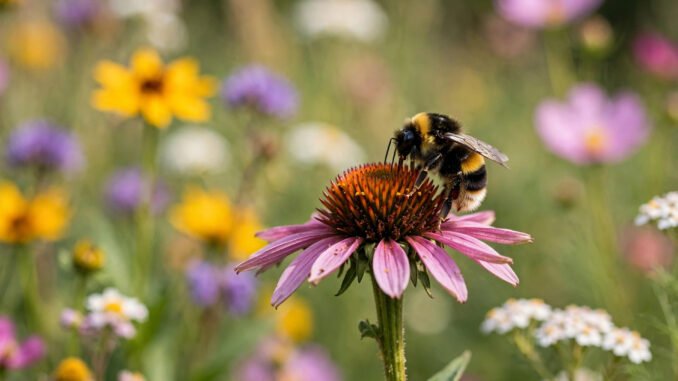
Bees find new flowers fast. Scouts patrol constantly, testing color and scent across whole neighborhoods, and a good new patch can get its first visitors within days. That quick arrival fools beginners into expecting a finished bee garden in one spring. A garden bees rely on is a slower build. It takes bloom in every season, places to drink, ground to nest in, and years of steady returns before local bees treat your yard as a stop they count on.
Start with the checklist. Get those six things in place and the timeline below becomes realistic: first scouts in a week or two, busier flowers across the first months, and a true destination garden by the second or third season. Skip half the list and you may still see bees, but they will pass through instead of settling into the routines that make a garden hum.
The Arrival Checklist, Up Front
Keep this short list where you can see it while you plan and plant. First, flowers blooming now and in sequence, so food never fully stops from spring to frost. Second, those flowers planted in drifts, not dots, so foragers can fill up in one stop. Third, mostly natives, so specialist bees find the plants they evolved with. Fourth, water with mud, close to the flowers. Fifth, nesting ground left bare and stems left standing, so bees can raise young on site. Sixth, zero insecticide on open blooms, with no exceptions during flowering.
Each item gets its own detail section after the timeline. Read the checklist as a promise to check before you buy more plants. Most struggling bee gardens are not missing exotic flowers. They are missing one plain item on this list, often water, bare ground, or bloom in a gap month when nothing else in the yard is open.
Weeks 1 to 2: The First Scouts Arrive
The early result is quick and modest. Bees patrol on every fair day, and if something is blooming, expect visitors within the first week or two of good weather. That is the normal pattern, not a promise for every yard in every week. Cold rain, high wind, or a garden with nothing open yet will delay the first sightings, and that delay says little about your long-term chances.
To picture who is arriving, it helps to know how bees live, forage and communicate, because honeybees, bumblebees, and solitary bees use a garden in different ways. A honeybee scout may test your flowers and return with nestmates if the reward is rich. A bumblebee queen in spring works alone at first, feeding herself while she starts a nest. Solitary bees visit quietly and may already be looking for nesting spots nearby. All three count as success. Do not judge the first weeks only by honeybee numbers.
Months 1 to 3: Word Gets Around
Across the first season, a good patch gets busier. Honeybees recruit nestmates to rich sources, and how the waggle dance recruits other foragers explains why traffic can climb once scouts rate your flowers highly. A forager returns to the hive, shares the location, and more workers follow. One strong drift can shift from a few visits to steady work over weeks as word spreads through the hive.
Bumblebees and solitary bees build local routines of their own, without a dance to watch. Individual bees learn routes and return to rewarding flowers day after day. You will start to recognize the pattern: the same patch busy at the same warm hour, the same shrubs worked from bottom to top. That repeat traffic is the true month-by-month result. Your garden has entered the mental maps of bees that live nearby.
Keep food coming during this stretch. A garden that blooms hard for three weeks and then stops will lose its regulars. As one group of flowers fades, another should be opening. Fill gaps with long-blooming plants and late starters so recruits who arrive in month two still find a reason to stay in month three.
Seasons 2 to 3: Becoming a Destination
The deeper result takes longer and is worth more. In the second and third seasons, perennials mature and flower with more strength than young plants can manage. Succession planting covers spring to frost without the thin weeks that break routines. Nesting establishes as ground bees return to bare soil that stayed undisturbed and stem-nesters emerge from stalks you left standing through winter.
Diversity grows with time. A first-year garden may draw mostly honeybees and a few bumblebees. A mature garden with natives in layers, water, and nesting sites draws small solitary bees, leafcutters, mason bees, and hoverflies alongside them. You will not name them all, and you do not need to. A rising variety of shapes and sizes on the flowers is the sign that the garden now supports bees across the whole season, not just visitors passing through.
Plant in Drifts, Not Dots
Single plants scattered around a yard look tidy to people and read as poor value to bees. Plant in drifts instead. Groups of at least about 5 to 7 plants of the same species read as one worthwhile target from the air and fill a forager’s load efficiently. A bee that can gather a full load from one patch saves flight time and energy, and scouts rate that patch higher when they report back.
Budget shapes these choices, so it pays to know what starting a wildflower patch really costs before you buy. A drift of seed-grown natives can cover a wide area for little money, while potted plants give faster bloom at a higher price per plant. Either route works. What matters is the grouping, the season it covers, and leaving room for the next drift instead of filling every gap with singles.
Go Native, Mostly
Native plants feed the specialist bees that garden exotics cannot. Some native bees collect pollen from one plant family, or even one genus, and no imported flower can replace it. A yard with no natives at all shuts those bees out, no matter how many blooms it offers to generalists.
Mostly native is the practical compromise for real gardens. Build the backbone from natives suited to your region and soil. Add a few long-blooming non-natives that extend the season and fill gaps, taking care to avoid invasive kinds. That mix supports specialists, keeps honeybees and bumblebees fed across more weeks, and still lets you grow a favorite flower that came from elsewhere.
Choose natives by bloom time as much as by looks. You need early flowers for spring queens, steady summer bloom for workers and growing nests, and late flowers for bees building reserves before winter. A local native plant list, matched to your soil and sun, will serve you better than a national bestseller list planted without thought.
Add Water and Mud
Bees need water, and beginners forget it. On hot days foragers collect water to cool the hive and mix food. A garden with rich flowers and no water sends them elsewhere for half of what they need.
Keep it simple and safe. Set a shallow dish with stones for footing, so bees can drink without drowning, and refill it before it dries out or turns foul. Place it near flowers but not under a bird feeder where traffic spooks drinkers. Nearby, keep a patch of damp bare soil. Mason bees use mud as nest plaster, gathering it load by load to seal each cell. A small mud patch beside the flowers saves them long trips and can be the detail that turns visitors into residents.
Provide Nesting: Bare Ground and Standing Stems
Food draws bees in. Nesting keeps them local. On ground nesting, conservation groups put it at roughly 70% for the share of native bee species that nest in the ground. That is why bare soil matters so much. Leave some bare, unmulched, untilled soil in a sunny, well-drained spot. Skip fabric and thick mulch there. Ground bees dig small tunnels in open soil, and they cannot dig through a blanket.
Stem-nesters need the other half of the habit. Leave hollow stems standing through winter and into spring. Cut them back only when spring temperatures are reliably above about 50 degrees Fahrenheit, because stem-nesters are still inside until warmth holds. Cutting in a mild February week can remove a whole generation resting in the stalks you toss. Wait, then cut, and leave some cut stems in a quiet corner so any late risers can still emerge.
Bee houses can help, handled honestly. Tunnel houses work for mason and leafcutter bees only if properly built, with tubes about 5 to 6 inches deep. They must be cleaned or replaced yearly against disease and parasites, set facing morning sun, near flowers and mud. A dirty bee hotel is worse than none, since it gathers bees into a place where disease spreads fast. If you will not clean it yearly, skip the house and invest in bare ground and standing stems instead. Those two habits help far more species with far less risk.
What Slows It All Down
Three habits undo good planting. The worst is insecticide sprayed on or near open blooms. A spray meant for pests can kill or poison the foragers you are trying to draw, and residues on flowers keep harming after the day you spray. Keep insecticide off open blooms entirely. If you must treat a plant problem, do it before bloom or after flowers close for the season, and shield nearby flowers.
Double-flowered cultivars slow you down in a quieter way. Bred for full, layered petals, many offer no accessible pollen or nectar. Bees visit once, find nothing, and learn to skip them. Choose single, open flowers where bees can reach the center. The plainer bloom usually feeds far more life.
A short season is the third drag. A garden that blooms for three weeks and then stops trains bees to look elsewhere. Review your bloom calendar each year and plant into the thinnest weeks first. Steady food, not one grand peak, builds the routines that fill a garden.
A Short Word on Safety
Foraging bees are not defending a nest, and stings are uncommon if you do not grab or step on them. Watch where you kneel, wear shoes on clover-rich grass, and let busy flowers be while you work nearby. Households with a bee allergy should take medical advice, not gardening advice, and plan planting and seating with that guidance in mind.
Give the checklist a full year before you judge it. Scouts within weeks, regulars across the months, residents by the second or third season. That honest pace, held steady, is how a yard becomes a place bees count on.
Leave a Reply