
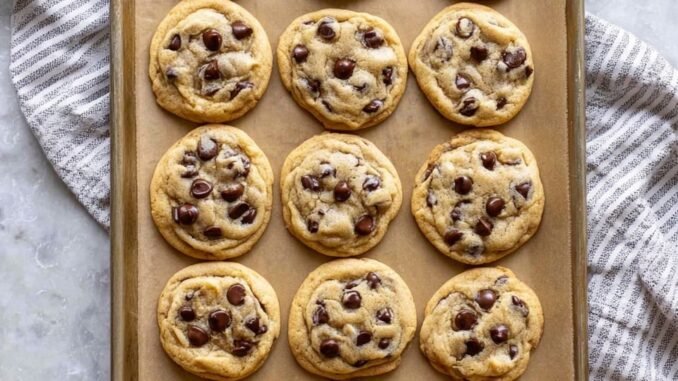
Crispy cookies have their place, but the platonic ideal — the one that makes people close their eyes on the first bite — is soft and chewy with a slightly underbaked center. If you’re asking how do I bake soft and chewy chocolate chip cookies, the answer is a specific set of ingredient and technique choices that all push in the same direction: moisture retention.
I’ve baked literally hundreds of batches chasing this texture, tweaking one variable at a time. The recipe science below is settled: brown sugar, melted butter, extra egg yolk, cornstarch, and pulling them early. Here’s the full method.
How do I bake soft and chewy chocolate chip cookies: The Short Answer
For soft, chewy chocolate chip cookies: use melted butter, more brown sugar than white (3/4 cup brown to 1/2 cup white), one extra egg yolk, 2 teaspoons cornstarch, and 2 cups flour (spooned and leveled). Chill the dough 30+ minutes, bake at 350°F for 10–12 minutes, and pull when edges are set but centers look slightly underdone — they’ll finish on the hot pan. Underbaking is the single biggest factor in chewiness.
Why This Matters More Than You Think
Chewiness is chemistry: brown sugar’s molasses adds moisture and acidity (which reacts with baking soda for lift), melted butter coats flour proteins to limit gluten (tenderness), extra yolk adds fat and emulsifiers (richness and structure), and cornstarch absorbs moisture then holds it (softness for days). King Arthur Baking’s cookie science Pulling cookies early works because carryover cooking finishes the centers gently on the hot pan — a fully-baked-looking cookie is already overbaked for chewiness. Chilling the dough hydrates the flour and solidifies the fat, preventing spread and deepening flavor.
6 Tips That Actually Work
Melt the butter — don’t cream it
Creaming butter with sugar whips in air, which makes cakey cookies. Melted butter gives dense, chewy results. Melt it, let it cool 5 minutes so it doesn’t cook the eggs, then whisk with the sugars. Brown the butter (cook until it smells nutty and the milk solids turn amber) for an incredible toffee depth — worth the extra 5 minutes.
Go heavy on brown sugar
Use 3/4 cup packed brown sugar to 1/2 cup granulated. Brown sugar’s molasses keeps cookies moist and adds caramel notes; white sugar promotes crispness and spread. Dark brown sugar (more molasses) makes them even chewier and more flavorful.
Add an extra egg yolk
Two whole eggs plus one extra yolk is the magic formula. Yolks add fat and lecithin (an emulsifier) for richness and chew; extra whites would add protein that makes cookies cakey. Room-temperature eggs incorporate better — 30 minutes on the counter.
Add cornstarch and chill the dough
Two teaspoons of cornstarch per batch keeps cookies thick and soft for days — it’s the secret in many bakery-style recipes. Then chill the dough at least 30 minutes (overnight is even better for flavor). Cold dough spreads less, bakes thicker, and the resting time deepens the toffee notes.
Pull them when they look underdone
Bake at 350°F for 10–12 minutes. The cookies are done when the edges are set and lightly golden but the centers still look puffy and slightly wet. They’ll collapse and finish as they cool on the pan for 5 minutes. If you wait until they look ‘done,’ you’ve waited too long.
Use chopped chocolate, not just chips
Chips contain stabilizers that hold their shape; chopped bar chocolate (Ghirardelli or Guittard 60%, ~$4/bar) melts into luxurious pools. I use half chips for structure, half chopped for puddles. And sprinkle flaky sea salt (Maldon) on top before baking — the salt-chocolate contrast is everything.
My Favorite Tools and Brands
I only recommend gear I’ve actually used or that’s widely vetted by testing labs — Serious Eats’ cookie experiments is worth checking before you buy.
- Nordic Ware half-sheet pans — ~$15 for 2 — Light-colored pans bake evenly; dark pans over-brown bottoms.
- Cookie scoop (medium, #40) — ~$12 — Uniform cookies bake uniformly; no more burnt small ones and raw big ones.
- Parchment paper — ~$10 — No sticking, no greasing, easy transfer.
- Maldon flaky sea salt — ~$7 — The finishing touch that makes chocolate sing.
Common Mistakes to Avoid
- Overbaking. The number-one chewiness killer. When in doubt, pull a minute early — you can always bake more, you can’t unbake.
- Using only white sugar. All-white-sugar cookies spread thin and crisp. Brown sugar is the chewiness engine.
- Skipping the chill. Warm dough spreads into thin, crispy discs. Even 30 minutes in the fridge transforms the result.
- Overmixing after adding flour. Develops gluten = tough cookies. Mix just until the flour disappears.
Frequently Asked Questions
Why are my cookies flat?
Butter too warm, dough not chilled, too little flour, or old baking soda (it loses power after 6 months opened). Chill the dough and check your leavener’s date — flat cookies are almost always one of these four.
Can I freeze cookie dough?
Yes — scoop into balls, freeze solid on a tray, then bag. Bake from frozen, adding 1–2 minutes. Frozen dough actually bakes up thicker and more flavorful. Keep a bag ready for cookie emergencies.
How do I keep cookies soft for days?
Store in an airtight container with a slice of bread — the cookies absorb moisture from the bread and stay soft. The cornstarch in the recipe also extends softness to 3–4 days.
The Freezer Stash Strategy
These cookies freeze brilliantly both as dough and baked: scoop dough balls onto a tray, freeze solid, then bag them — bake from frozen at 350°F for 12–14 minutes whenever the craving hits. I keep a bag in the freezer at all times; it’s the closest thing to a superpower in baking. Warm cookies in 14 minutes with zero planning is how you become the person everyone wants to visit.
Melted butter, brown sugar heavy, extra yolk, cornstarch, chilled dough, pulled early — that’s the chewy cookie formula, and it never fails. Once you’ve mastered these, try your hand at easy dinner recipe for busy weeknights, store leftovers safely, and make my own sourdough starter from scratch.
Leave a Reply