
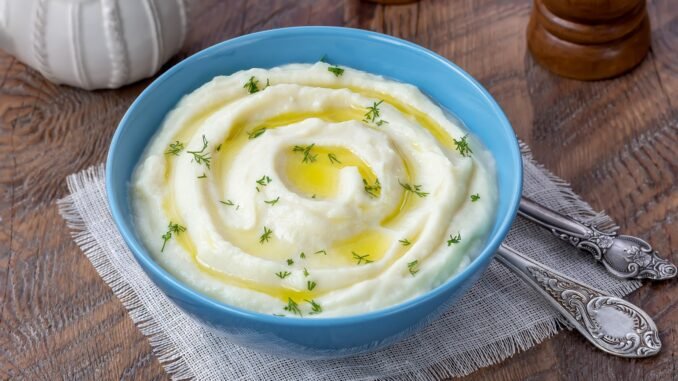
Lumpy mashed potatoes are a texture crime with a simple cause — and creamy mashed potatoes without lumps aren’t about fancy equipment, they’re about three decisions: the right potato, the right tool, and not overworking the starch. I’ve made mashed potatoes for Thanksgivings, weeknights, and one memorable disaster involving a food processor (never again — more on that below). The method here produces silky, fluffy, lump-free potatoes every single time. Here’s the science and the steps.
Decision 1: The Right Potato
- Yukon Gold — the winner. Naturally buttery, medium starch, creamy texture with minimal effort. They practically mash themselves smooth. This is the potato mashed-potato dreams are made of.
- Russet — the fluffy alternative. High starch, light and fluffy when mashed — but easier to overwork into glue (more starch = more risk). Great if handled gently.
- Avoid: red potatoes and other waxy varieties — low starch, they stay lumpy and gummy no matter what you do. Waxy potatoes are for roasting, not mashing.
- Size matters: cut into uniform 1.5-inch chunks — uneven pieces mean some disintegrate while others stay hard (lump source #1).
Decision 2: The Right Tool (Ranked)
- Potato ricer ($25–$35): the lump-killer champion — forces potato through tiny holes, producing uniformly fluffy strands with zero lump possibility. If lump-free is the goal, this is the tool. Also the gentlest on starch (no glue risk).
- Food mill: similar results to a ricer, slightly more work to clean.
- Hand masher: perfectly fine — requires a bit more elbow grease and thorough mashing (the “I’ll just mash a bit” approach leaves lumps). Mash before adding dairy for best lump elimination.
- Hand mixer (low speed): fast and fluffy — but 30 seconds max, low speed only. Overbeating is instant glue.
- NEVER a food processor or blender: the high-speed blades rupture starch cells, releasing amylose that turns potatoes into wallpaper paste. This is the #1 mashed potato disaster and it’s irreversible.
The Method (Lump-Free, Guaranteed)
- Start in cold salted water: cover chunks with cold water + 1 tablespoon salt, then bring to a boil. (Starting cold = even cooking; starting boiling = raw centers, mushy outsides = lumps.)
- Simmer 15–20 minutes until fork-tender — the fork should slide through with zero resistance. Undercooked centers are lump source #2.
- Drain thoroughly and steam-dry: return potatoes to the hot pot for 1–2 minutes, shaking — evaporating surface moisture prevents watery mash.
- Rice or mash while hot: hot potatoes absorb dairy and mash smoother. Work in batches through the ricer.
- Add WARM dairy: heat 1/2 cup milk/cream + 4 tablespoons butter until the butter melts and it’s steaming (not boiling). Cold dairy seizes hot potatoes and makes them gluey — warm dairy incorporates silkily. Add gradually, folding gently.
- Season assertively: salt (potatoes need more than you think — taste and add), white pepper (no black specks), roasted garlic or chives if desired.
How Can I Make Creamy Mashed Potatoes Without Lumps? Troubleshooting
- Lumps persist: potatoes were undercooked or unevenly cut — next time, fork-test every chunk. For today’s batch: push through a fine-mesh sieve with a spatula (tedious but effective rescue).
- Gluey/pasty: overworked — food processor, overbeaten, or cold dairy. Prevention only; no fix. (Repurpose as potato soup — thin with broth and it’s delicious.)
- Watery: didn’t steam-dry, or added too much liquid at once. Return to low heat and stir gently to evaporate; add dairy gradually.
- Bland: under-salted water and under-seasoned finish. Salt the cooking water like pasta water — it’s the primary seasoning.
Make-Ahead and Ratios
- Ratio per 2 lbs potatoes: 4 tbsp butter + 1/2–3/4 cup warm milk/cream + 1.5 tsp salt. Scale linearly.
- Make ahead: hold in a slow cooker on warm (with a towel under the lid to catch condensation) up to 2 hours — or refrigerate and reheat with a splash of warm milk, stirring gently.
- Freezing: mashed potatoes freeze surprisingly well (3 months) — the fat content protects texture. Thaw overnight, reheat gently with extra butter.
Yukon Golds, started cold, riced while hot, warm dairy folded in gently, never a food processor. That’s the whole formula — and it produces the kind of mashed potatoes people talk about after the meal. The Serious Eats potato testing backs every step: starch management is the entire game. Respect the starch, and lumps become a distant memory.
Mashed Potato Mistakes to Avoid
- The food processor: high-speed blades rupture starch cells, releasing amylose — wallpaper paste, irreversible. Ricer > hand masher > hand mixer (30 sec max) > NEVER food processor.
- Cold dairy into hot potatoes: cold milk seizes hot potatoes into glueyness. Warm the milk/butter until steaming, add gradually, fold gently — silky incorporation.
- Waxy potatoes: red potatoes stay lumpy and gummy no matter what — they’re for roasting, not mashing. Yukon Gold (creamy, forgiving) or Russet (fluffy, handle gently).
- Starting in boiling water: exteriors disintegrate while centers stay hard (lump source #1). Cold salted water → bring to boil — even cooking, zero hard centers.
Mashed Potato FAQs
What’s the best potato for mashing?
Yukon Gold — naturally buttery, medium starch, creamy with minimal effort, practically mashes itself smooth. Russet: fluffy and light, but easier to overwork (more starch = more glue risk). Never waxy reds for mashing.
How do I make mashed potatoes ahead of time?
Slow cooker on warm (towel under the lid catches condensation) — holds 2 hours perfectly. Or refrigerate and reheat gently with a splash of warm milk, stirring carefully. Freezing works too (3 months — the fat protects texture).
Why are my mashed potatoes gummy?
Overworked starch — food processor, overbeaten mixer, or cold dairy seizing. Prevention only; no fix (repurpose as potato soup — thin with broth, delicious). Next time: ricer, warm dairy, gentle folding.
How much butter and milk per pound?
Per 2 lbs potatoes: 4 tbsp butter + 1/2–3/4 cup warm milk/cream + 1.5 tsp salt — scale linearly. Salt the cooking water like pasta water (primary seasoning), then taste and adjust — potatoes need more salt than you think.
Leave a Reply