
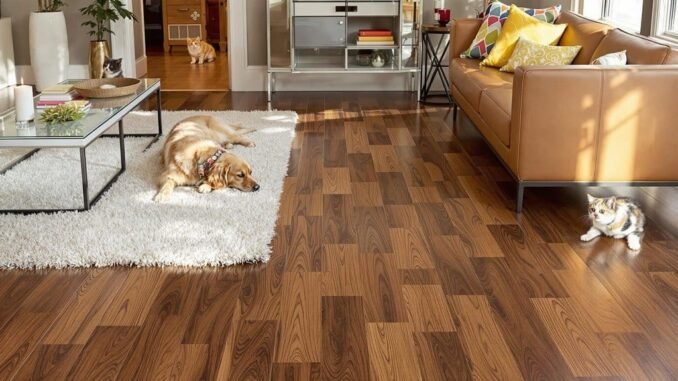
Dogs don’t care about your white oak. Finding the best flooring options for homes with pets means accepting one truth: claws, accidents, and muddy paws are non-negotiable, so the floor has to be. I live with two large dogs and have replaced flooring twice — once with the wrong thing (beautiful, destroyed in 18 months) and once with the right thing (still going strong at year four). Here’s the honest ranking, from someone who’s paid for the mistakes.
The Winners
1. Luxury vinyl plank (LVP) — the pet owner’s champion
Cost: $3–$7/sq. ft. installed. Why it wins: waterproof, scratch-resistant (look for 20-mil wear layer or higher), and individual planks can be replaced if damaged. Modern LVP convincingly mimics wood — guests genuinely can’t tell. Brands like COREtec and Lifeproof (Home Depot) dominate for good reason. My current floors are COREtec; four years of 90-pound dogs and they look new. This is the default answer for pet homes.
2. Tile (porcelain/ceramic) — indestructible
Cost: $5–$12/sq. ft. installed. Nothing survives pets better than porcelain tile — waterproof, scratch-proof, accident-proof. Downsides: hard and cold (area rugs fix this), and large dogs can slip on glossy finishes — choose matte or textured tile. Best for: kitchens, mudrooms, entries, and anywhere accidents happen.
3. Laminate (modern waterproof versions)
Cost: $2–$5/sq. ft. installed. Modern waterproof laminates (Pergo, Mohawk) handle pet life far better than the old stuff. Not quite as waterproof as LVP at the seams, but excellent scratch resistance for the price. The budget-friendly contender.
The Middle Ground
4. Engineered hardwood — the compromise
Cost: $6–$12/sq. ft. installed. Real wood veneer over plywood — harder to scratch through than solid hardwood, and can be refinished once or twice. Choose harder species (hickory, white oak) in distressed or wire-brushed finishes that hide scratches. Honest assessment: it’ll show wear eventually, but gracefully.
5. Bamboo (strand-woven) — the eco pick
Cost: $5–$9/sq. ft. installed. Strand-woven bamboo is harder than most hardwoods (great scratch resistance) and renewable. Must be the strand-woven type — regular bamboo dents easily. Keep it dry; it’s not waterproof.
What to Avoid
- Solid hardwood (soft species like pine, cherry, American walnut): claws carve it like butter. Even oak shows every scratch.
- Carpet: traps odor, stains permanently, and becomes a flea-and-dander reservoir. If you must, use carpet tiles (Flor) — stain one, replace one square for $8.
- High-gloss anything: shows every scratch and every paw print.
What Are the Best Flooring Options for Homes With Pets? The Decision Framework
- Big dogs + budget: LVP, 20+ mil wear layer. Done.
- Cats (litter + hairballs): tile in the litter zone, LVP everywhere else.
- Want real wood: site-finished white oak or hickory with a matte aluminum-oxide finish — the toughest wood finish available.
- Rentals: waterproof LVP throughout — durable, cheap, and future tenants’ pets won’t faze it either.
Two finishing tips: put washable rugs (Ruggable, ~$100–$250) in high-traffic dog zones — they catch the mud before the floor does — and keep nails trimmed. No floor is claw-proof if the claws are daggers. The Consumer Reports flooring ratings are worth a look before you buy; their scratch and dent tests line up well with real pet-owner experience. Choose for the animals you have, not the showroom you wish for, and you’ll only do this job once.
Pet Flooring Mistakes to Avoid
- Choosing floors for the showroom, not the dog: that hand-scraped solid hardwood looks incredible until the first claw marks. Choose for the animals you have — LVP or tile — and spend the aesthetic budget on rugs and furniture.
- Ignoring the wear layer: not all LVP is equal — a 12-mil wear layer scratches under big dogs while 20-mil+ shrugs it off. The wear-layer spec matters more than the brand name.
- Glossy finishes: high-gloss shows every scratch and paw print. Matte or textured finishes hide wear dramatically better — in tile, wood-look, and LVP alike.
- Wall-to-wall carpet with pets: it traps odor permanently, stains irreversibly, and becomes a dander reservoir. If you love soft underfoot, use washable area rugs (Ruggable) over hard flooring instead.
Pet Flooring FAQs
What’s the absolute best flooring for big dogs?
Luxury vinyl plank (LVP) with a 20+ mil wear layer — waterproof, scratch-resistant, replaceable plank-by-plank, and convincingly wood-like. COREtec and Lifeproof are the proven leaders. Porcelain tile is even tougher but cold and hard underfoot.
Will dog nails scratch LVP?
Quality LVP (20-mil wear layer) resists normal nail wear excellently. Keep nails trimmed regardless — no floor is truly claw-proof, and long nails also damage the finish over years. Think of it as scratch-resistant, not scratch-proof.
Is laminate okay with pets?
Modern waterproof laminate (Pergo, Mohawk) handles pets well — excellent scratch resistance at a $2–$5/sq. ft. price point. It’s not quite as waterproof at the seams as LVP, so it’s slightly less ideal for accident-prone puppies or senior dogs.
How do I protect the floors I already have?
Washable rugs in high-traffic zones, nail trims every 2–3 weeks, dog booties for the obsessively careful, and mats at every exterior door (80% of floor dirt comes through the door on paws). Prevention beats refinishing.
The Transition Zones: Where Pet Floors Fail First
Floors don’t fail uniformly — they fail at transition zones: doorways where muddy paws land, the 3-foot radius around the water bowl, and the hallway sprint path dogs run daily. Treat these as separate engineering problems: a washable runner ($30–$60, Ruggable or indoor/outdoor) on the sprint path, a waterproof mat ($20–$35, with a lip) under bowls, and rugs at every exterior door long enough for 3–4 paw steps. These three zones absorb 80% of pet wear — protecting them extends the life of the main flooring enormously. Also consider stair treads ($30–$50 for a set) if you have hardwood stairs — they’re the single most scratched surface in dog homes, and adhesive carpet treads install in minutes while saving the wood underneath.
Leave a Reply