Daniel Day-Lewis profile: net worth, age, height, wife and children
 By
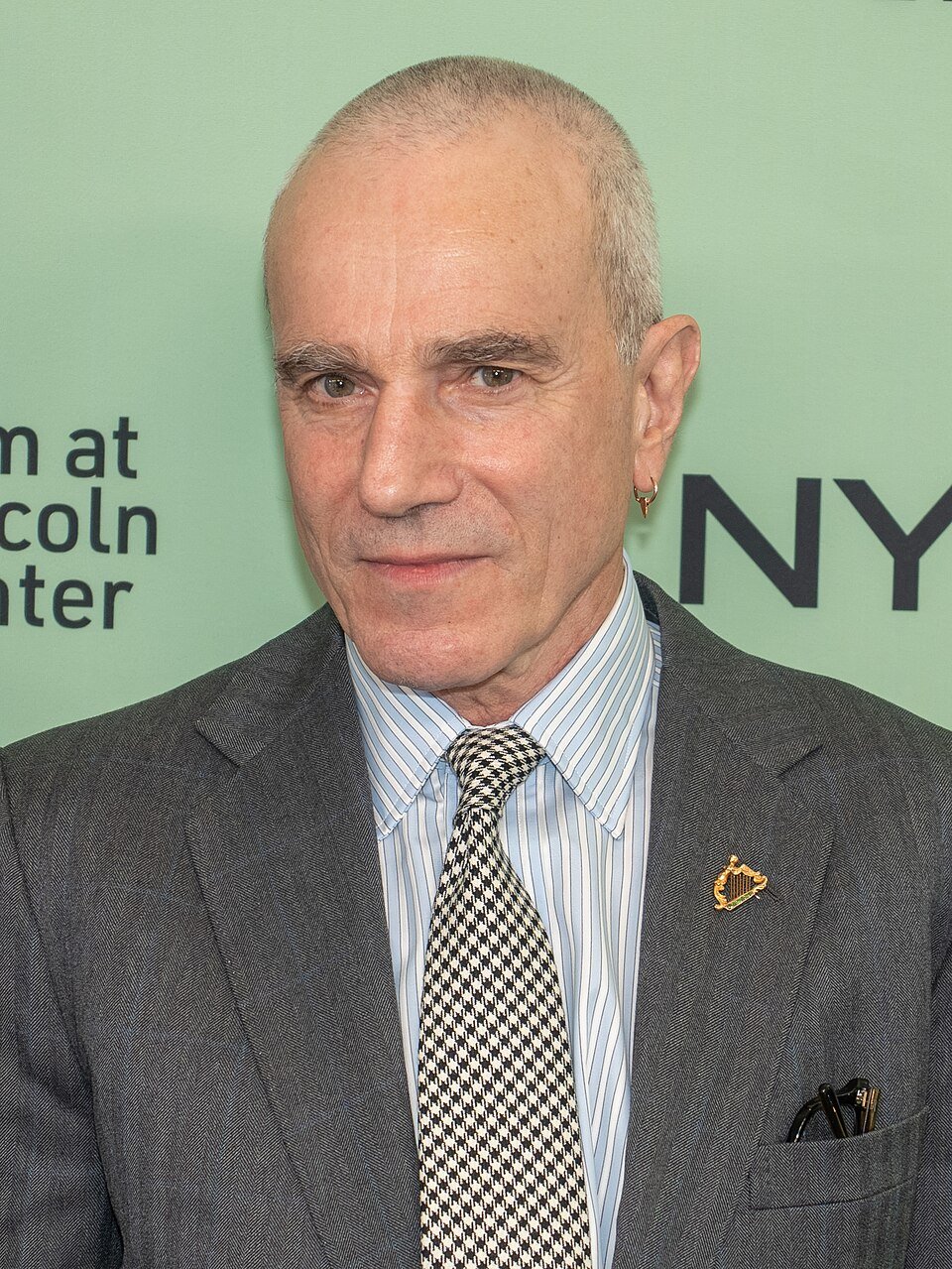
Sir Daniel Day-Lewis, born Daniel Michael Blake Day-Lewis on April 29, 1957, in London, England, is a 69-year-old English actor whose estimated net worth is $40 million, according to Celebrity Net Worth. He is the only male actor to win three Academy Awards for Best Actor, and in 2025 he returned to the screen in Anemone, directed by his son Ronan, after eight years away from acting. He holds British and Irish citizenship and has been married to the writer and filmmaker Rebecca Miller since 1996.
Quick facts
| Full name | Daniel Michael Blake Day-Lewis |
|---|---|
| Born | April 29, 1957, in Kensington, London, England |
| Age | 69 years old as of November 2026 |
| Height | Listings vary between about 6 feet 1 inch and 6 feet 2 inches (185-188 centimeters). No official figure is published. |
| Weight | No reliable official figure is published, so no weight is stated as fact here. |
| Partner | Wife: Rebecca Miller (married 1996). Earlier partner: Isabelle Adjani (1989-1995). |
| Children | 3 sons: Gabriel-Kane, with Isabelle Adjani, and Ronan Cal and Cashel Blake, with Rebecca Miller |
| Parents | Cecil Day-Lewis (father) and Jill Balcon (mother) |
| Net worth | $40 million, according to Celebrity Net Worth |
| No account; he has no official social-media presence |
Biography and early life
Daniel Michael Blake Day-Lewis was born on April 29, 1957, in Kensington, London, so his birthday falls at the end of April and he turned 69 in April 2026. According to Wikipedia, he was the second child of the poet Cecil Day-Lewis and his second wife, the actress Jill Balcon. His father, born in Ballintubbert, County Laois, in Ireland, was of Protestant Anglo-Irish descent and was appointed Poet Laureate in 1968. His mother was Jewish, and her father, Sir Michael Balcon, ran Ealing Studios and helped shape the British film industry; the BAFTA for Outstanding British Contribution to Cinema is still presented in Balcon’s honor. His older sister, Tamasin Day-Lewis, became a television chef and food writer, and he also has two older half-brothers from his father’s first marriage. The family moved to Croom’s Hill in Greenwich when he was two, and at school there the young Day-Lewis, bullied for being both Jewish and posh, mastered the local accent and mannerisms, an experience he has called his first convincing performance.
His parents, finding him too wild, sent him to board at Sevenoaks School in Kent in 1968, where he took up woodworking, acting and fishing but grew to dislike the school, and after two years he transferred to Bedales in Hampshire, which had a more relaxed and creative ethos. He made his film debut at 14 with an uncredited role in Sunday Bloody Sunday in 1971. In 1972 his father died of pancreatic cancer at the London home of Kingsley Amis and Elizabeth Jane Howard, where the family had been staying while he was ill. Leaving Bedales in 1975, Day-Lewis applied for a five-year apprenticeship as a cabinet maker and was rejected for lack of experience, a detour that explains his lifelong skill with wood and the trade he would return to decades later. He was accepted instead at the Bristol Old Vic Theatre School, where he trained for three years alongside Miranda Richardson. He then excelled at the National Youth Theatre and built a stage career in London, joining the Royal Shakespeare Company to play Romeo in Romeo and Juliet and Flute in A Midsummer Night’s Dream.
Career
Day-Lewis shifted between theater, television and film through the early 1980s, with small parts in Gandhi in 1982 and The Bounty in 1984, before two contrasting performances in 1985 made his reputation: a young gay Englishman in Stephen Frears’s My Beautiful Laundrette and the stiff Edwardian fiancé Cecil Vyse in A Room with a View. In The Unbearable Lightness of Being in 1988 he played a Czech surgeon, learning Czech during the eight-month shoot and beginning the practice of never breaking character during a production. That method reached its defining early form in My Left Foot in 1989, in which he played the Irish writer and painter Christy Brown, who had cerebral palsy and could control only his left foot. Day-Lewis visited Dublin’s Sandymount School Clinic in preparation, remained in character throughout filming and won the first of his Academy Awards for Best Actor. His final stage appearance came the same year, as Hamlet at the National Theatre in London, a run he left midway after collapsing during the ghost scene; he has not acted on stage since.
The 1990s brought the run of films on which his legend rests. For The Last of the Mohicans in 1992 he trained rigorously, learned to live off the land and carried a long rifle throughout the shoot. In In the Name of the Father in 1993 he played Gerry Conlon, one of the wrongfully convicted Guildford Four, losing about 30 pounds, keeping a Northern Irish accent on and off set and spending time in a prison cell, and he followed it with The Age of Innocence in 1993, The Crucible in 1996 and The Boxer in 1997, training for the last of those with the former world champion Barry McGuigan. He then stepped away from acting entirely, moving to Florence, Italy, to work as an apprentice shoemaker, before Martin Scorsese persuaded him back for Gangs of New York in 2002, in which his Bill the Butcher earned another Oscar nomination. He won his second Academy Award for Best Actor as the oilman Daniel Plainview in There Will Be Blood in 2007 and his third, a record for a male actor, as Abraham Lincoln in Steven Spielberg’s Lincoln in 2012, after a year of preparation. After Lincoln he worked sparingly, returning for Phantom Thread in 2017, in which he played a perfectionist London dressmaker, and then announced his retirement from acting that year.
The retirement did not hold. Announced in October 2024 and premiered at the New York Film Festival on September 28, 2025, Anemone marked his return after eight years: a psychological drama he co-wrote with his son Ronan Day-Lewis, who directed it in his feature debut, with Day-Lewis starring as Ray Stoker alongside Sean Bean and Samantha Morton. The film opened in the United States on October 3, 2025, and in the United Kingdom on November 7, 2025. In interviews around its release he explained that he had never intended to retire from the work itself, only to step away from one kind of filmmaking for a while, and that making a first film with his son was the project that drew him back. Whether Anemone begins a longer new chapter or stands as a single family collaboration remains genuinely unknown, and no further project has been announced.
Between the second Oscar and the third came a quieter stretch that still shows the method at work, including the musical Nine in 2009, in which he played a film director in crisis, singing on screen for the first time. Even in a lighter register, the preparation was the story, as it had been since he learned Czech for The Unbearable Lightness of Being and stayed in a wheelchair through the shooting days of My Left Foot.
Net worth
According to Celebrity Net Worth, Daniel Day-Lewis has a net worth of $40 million. Other published estimates run higher, commonly between $50 million and $60 million, so the honest answer is an estimate anchored on the named source, for an actor who has never discussed his finances publicly. The figure is modest beside his reputation for a simple reason: volume. Across more than four decades he has made only around twenty films, turning down far more than he accepted and taking years away from the industry, including his shoemaking period in Florence and the long gap after Lincoln. His earnings have come almost entirely from leading-role salaries on those few films, reported at their peak in the high single-figure millions per picture, plus residuals from titles that remain in constant circulation, such as There Will Be Blood and Lincoln. He has no endorsement career and no public business empire, so the fortune is essentially the saved residue of a deliberately small filmography.
Personal life and family
Day-Lewis is famously protective of his private life and rarely gives interviews. From 1989 to 1995 his partner was the French actress Isabelle Adjani, and their son, Gabriel-Kane Day-Lewis, was born in 1995, after the couple had separated. While filming The Crucible in 1996 he met the filmmaker Rebecca Miller, the daughter of the playwright Arthur Miller, and they married on November 13, 1996. In November 2026 the couple reached their 30th wedding anniversary, an occasion marked by rare family-photo coverage of a marriage that has stayed almost entirely out of public view. They have two sons, Ronan Cal Day-Lewis and Cashel Blake Day-Lewis. The family divides its time between County Wicklow in Ireland, where he has lived since the mid-1990s in search of privacy, and New York. His craft interests are practical as well as artistic: the cabinet-making ambition of his teens, the shoemaking apprenticeship of his first retirement and the year he spent learning dressmaking for Phantom Thread all point the same way, and readers with humbler projects can start with how to tailor clothes at home without a sewing machine, no year of study required.
Nationality and identity
The nationality answer is dual, and it is worth stating exactly. Day-Lewis was born in London and is British, and he has also held Irish citizenship since 1993, a position Wikipedia records as citizenship of both the United Kingdom and Ireland. The Irish connection runs through his father, who was born in County Laois, and through his own adult life: he moved to Ireland in the mid-1990s, raised his family largely in County Wicklow and has repeatedly described the privacy Ireland allows him as essential. He was knighted in 2014 for services to drama, becoming Sir Daniel Day-Lewis, while remaining, by residence and by citizenship alike, a figure of both countries rather than either one alone.
Instagram and public presence
Daniel Day-Lewis has no Instagram account and no official presence on social media of any kind. He does not promote his films through personal channels, appears publicly mainly at premieres and awards ceremonies connected to a release, and was absent from public life almost entirely during his 2017 to 2025 break from acting. Any account using his name is unofficial. News of his work reaches the public through his films’ distributors, festival coverage and the rare interviews he grants, of which the conversations around Anemone in 2025 were the first in many years.
Closing summary
Daniel Day-Lewis’s profile is the opposite of prolific, and that is the point. Born Daniel Michael Blake Day-Lewis on April 29, 1957, in London to the poet Cecil Day-Lewis and the actress Jill Balcon, he built a filmography of around twenty films and won a record three Academy Awards for Best Actor, for My Left Foot, There Will Be Blood and Lincoln. His estimated net worth is $40 million, according to Celebrity Net Worth. A British and Irish citizen, married to Rebecca Miller since 1996 and the father of Gabriel-Kane, Ronan and Cashel, he returned at 69 in Anemone, written and directed with his son Ronan, leaving open the question every admirer now asks: whether there will be more.