
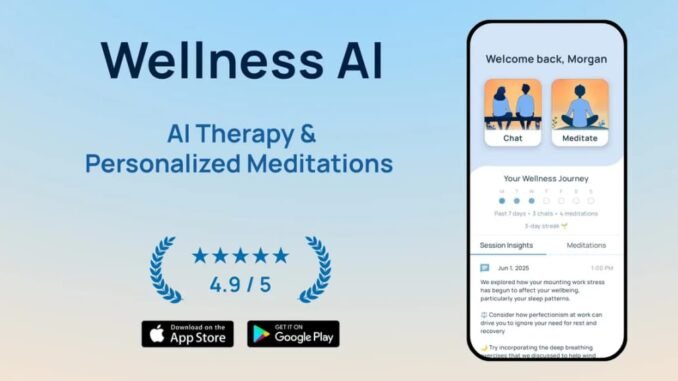
Therapy costs $150–$250 a session, waitlists stretch for months, and at 2am when anxiety spikes, no one’s available. AI mental wellness apps promise support in your pocket — always available, private, affordable. But can an app actually help your mental health, or is this techno-optimism wrapped in a subscription? If you’re asking what are the best AI-powered apps for mental wellness, here’s an honest, careful guide — including the crucial boundaries of what these apps can and can’t do.
The essential framing first: AI wellness apps are supplements, not replacements, for professional care. They’re best for: building mindfulness habits, managing everyday stress and mild anxiety, journaling and self-reflection, sleep support, and bridging gaps between therapy sessions. They’re not appropriate for: crisis situations, severe depression, trauma processing, eating disorders, or any condition requiring professional diagnosis and treatment. If you’re in crisis, call or text 988 (US Suicide and Crisis Lifeline) — available 24/7, staffed by humans. That boundary isn’t fine print; it’s the foundation everything below rests on.
What Are The Best Ai-powered Apps For Mental Wellness? The Top Picks
Wysa — best AI therapy chatbot (free tier + premium)
- What it does: AI chatbot using CBT (cognitive behavioral therapy), DBT, and mindfulness techniques. Conversational exercises for anxiety, stress, sleep, and low mood.
- Evidence: Among the most research-backed — published studies show measurable anxiety and depression score improvements. Used by the NHS in the UK.
- Best for: Structured, evidence-based self-help conversations.
- Limit: It’s a chatbot, not a therapist — great for techniques, not for deep personal work.
Woebot — best for CBT techniques (free)
- What it does: Friendly AI chatbot delivering CBT lessons through daily check-ins and conversations. Mood tracking built in.
- Evidence: Stanford-developed; clinical trials show reduced depression symptoms in young adults.
- Best for: Learning CBT skills (thought reframing, cognitive distortions) interactively.
Headspace / Calm — best for mindfulness and meditation (paid, ~$70/year)
- What they do: Guided meditations, sleep stories, breathing exercises, mindfulness courses. Increasingly AI-personalized (recommendations based on your patterns).
- Evidence: Mindfulness meditation has solid research support for stress and anxiety reduction. These are the most polished delivery vehicles.
- Best for: Building a consistent meditation/mindfulness habit.
Youper — best AI mental health assistant (freemium)
- What it does: AI conversations combining CBT techniques with mood tracking and personalized insights over time.
- Best for: Those wanting ongoing AI-guided emotional support with progress tracking.
Finch — best for gentle self-care habits (freemium)
- What it does: Self-care gamified — a virtual bird grows as you complete wellness check-ins, breathing exercises, and reflections. Less clinical, more habit-building.
- Best for: People who find clinical apps intimidating; building basic wellness routines.
ChatGPT / Claude (general AI) — surprisingly useful, with caveats
- Legitimate uses: Guided journaling prompts, explaining CBT concepts, drafting difficult conversations, bedtime wind-down routines, reframing anxious thoughts (with the caveat below).
- Critical caveat: General AI isn’t designed for mental health — it lacks clinical guardrails, may give bad advice confidently, and isn’t bound by healthcare privacy rules. Useful as a journaling partner; not as a therapist. Never share detailed trauma or crisis content.
How to Use Them Effectively
- Pick ONE and commit for 30 days. App-hopping kills the habit-building these tools depend on. Daily 5–10 minutes beats occasional hour-long sessions.
- Pair with the basics. Apps work best alongside sleep hygiene, exercise, and sunlight — not instead of them. Our guides on sleeping better naturally and AI workout routines cover the foundations that amplify any app’s effects.
- Track honestly. Mood tracking only works with honest input. The patterns revealed over weeks (sleep vs. mood, weekday vs. weekend) are genuinely insightful.
- Know your escalation triggers. Decide in advance: “If I feel X for Y days, I’ll call my doctor/therapist/988.” Write it down. Apps should lower the barrier to professional help, not raise it.
Privacy: Read This Before Downloading
Mental health data is among the most sensitive data you generate — and wellness apps aren’t covered by HIPAA the way therapists are. Before trusting an app with your inner life: check whether it sells or shares data (read the privacy policy’s data-sharing section, not just the marketing), prefer apps with published research and clear clinical boundaries, use the minimum personal identifiers needed, and know that the FTC has taken action against mental health apps for deceptive privacy practices — the risk is real, not theoretical. Our AI privacy guide covers the broader principles.
When to Skip the App and Get Human Help
Use this checklist honestly: thoughts of harming yourself → call/text 988 immediately. Symptoms persisting 2+ weeks despite self-help → see your primary care doctor or a therapist. Trauma, eating disorders, mania, psychosis → professional care, not apps. Substance dependence → professional treatment. An app telling you “you seem to be improving” is not a clinical assessment. The apps are the gym; the therapist is the doctor. Both have their place; don’t confuse them.
For stress management techniques that complement any app, see our stress management guide.
Quick Answers: AI Wellness Apps
Are AI therapy chatbots safe to use?
For everyday stress, mild anxiety, and building coping skills — reasonably, with the privacy caveats in this guide. They’re not safe as replacements for professional care in crisis, trauma, eating disorders, or severe depression. Know the boundary before you need it: if you’re in crisis, call or text 988, don’t open an app.
Do these apps actually work, or is it placebo?
The best ones have real evidence: Wysa and Woebot have published studies showing measurable improvements in anxiety and depression scores. The mechanism isn’t mysterious — they deliver CBT techniques, which work; the app is just the delivery vehicle. Consistency matters more than which app you pick.
The bottom line: Wysa and Woebot lead for evidence-based AI chat support, Headspace/Calm for mindfulness habits, Finch for gentle self-care routines — all as supplements to (never replacements for) professional care. Commit to one app for 30 days, pair it with sleep/exercise basics, guard your data privacy fiercely, and know your escalation triggers in advance. Used wisely, these tools put genuine coping techniques in your pocket at 2am — which is exactly when you need them most.
Leave a Reply