
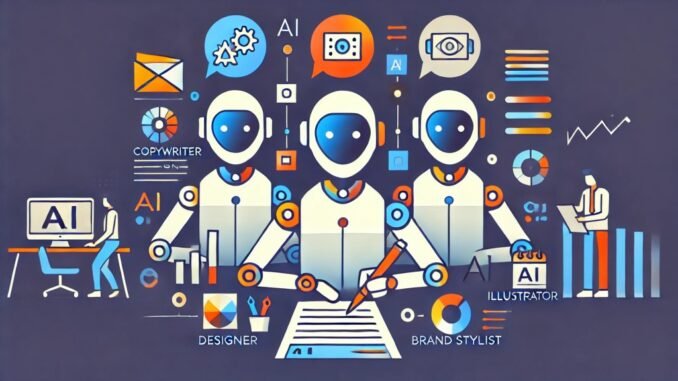
Writers watch AI generate articles in seconds. Designers watch it produce logos on demand. Musicians hear AI-composed tracks. It’s hard not to feel a chill — if a machine can do the thing you do, what happens to you? The question will AI take over creative jobs like writing and design deserves better than the usual hot takes. Having watched this unfold across creative industries, I think the honest answer is: AI will take over parts of creative work — the commoditized, formulaic parts — while making genuinely creative humans more valuable. The catch is that “genuinely creative” is a higher bar than most of us were clearing.
Let me start with what’s actually happening, because the reality is more specific — and more useful — than the headlines.
Will AI Take Over Creative Jobs Like Writing and Design? What’s Happening Now
Writing
- Commodity content is being automated: Product descriptions, SEO filler articles, basic news rewrites, social media captions, email templates — the high-volume, formulaic end of writing is shifting to AI fast. Content mills and low-end freelance writing have been hit hardest.
- But distinctive writing is thriving: Publications and brands are discovering that AI content all sounds the same — competent, bland, forgettable. Writers with genuine voice, original reporting, deep expertise, and strong opinions are becoming more differentiated, not less. The bar moved: “adequate” writing is now free, so “good” writing has to actually be good.
- New hybrid roles: AI-assisted writers producing 3–5x the output, editors who specialize in elevating AI drafts, prompt engineers for creative applications.
Design
- Template-level design is automated: Social media graphics, basic logos, stock-style illustrations, presentation decks — AI tools (Canva’s Magic Studio, Adobe Firefly, Midjourney) handle these competently now.
- Strategic design is not: Brand identity systems, UX research and design, art direction, packaging that has to work in physical retail — these require understanding business goals, human psychology, and cultural context. AI generates options; designers make decisions.
- The photographer’s lesson: When photography was invented, painters panicked — then painting evolved into impressionism, abstraction, and everything photography couldn’t do. Creative fields don’t die from new tools; they move upmarket.
Music, video, and other creatives
Similar pattern: stock music, background tracks, and generic commercial jingles face pressure; distinctive artists with vision and taste don’t. AI video tools are impressive for shorts and ads but nowhere near replacing cinematographers or directors with a point of view. The U.S. Copyright Office’s guidance on AI-generated works adds another wrinkle — purely AI-generated content faces real questions about copyright protection, which matters enormously for commercial creative work.
The Pattern: What AI Takes vs. What It Can’t
Across every creative field, the dividing line is consistent:
- AI takes: High-volume, formulaic, “good enough” work. The first draft. Variations on a theme. Production tasks with clear parameters.
- AI can’t take: Original taste and judgment. Lived experience and authentic voice. Understanding a specific audience deeply. Strategic thinking about why something should exist. Accountability for creative decisions. The courage to have an opinion.
Here’s the uncomfortable part: a lot of working creatives were spending most of their time on the first list. If 70% of your design work was resizing banners and your writing was mostly 500-word SEO posts, AI genuinely threatens that portion. The question isn’t whether AI can do creative work — it’s whether your creative work is the kind only you can do.
How Creatives Stay Valuable (The Playbook)
- Move up the value chain. Stop selling production; sell thinking. The deliverable isn’t “a logo” — it’s “a brand strategy expressed visually.” Clients pay for judgment, not pixels.
- Develop a recognizable voice or style. AI produces the average of everything. A distinctive point of view — in writing, visual style, or creative direction — is the scarcest and most valuable asset in an age of infinite average content.
- Become AI-fluent. The creatives thriving right now use AI as an accelerant: generating 50 concepts to find the 3 worth developing, drafting to edit rather than starting blank, automating the boring 60% to spend more time on the inspired 40%. Our guide on free AI tools includes creative options worth learning.
- Own the client relationship. AI can’t sit in a room, read the client’s hesitation, push back on a bad idea diplomatically, or understand the politics behind a rebrand. Relationship and trust are moats.
- Specialize in what AI does poorly. Original research, investigative work, culturally nuanced creative, live performance, community-specific design — anything requiring deep human context.
- Learn the business side. Creatives who understand strategy, marketing, and client economics become indispensable advisors rather than interchangeable vendors.
New Creative Careers Emerging
- AI art directors: Directing AI generation with expert taste — knowing what to ask for and what to reject.
- Brand voice specialists: Defining and maintaining distinctive voices as AI generates more content.
- Creative strategists: The “why” behind campaigns, which AI can’t determine.
- Authenticity consultants: Helping brands sound human in an age of synthetic content — already a real service.
The Honest Outlook
Will some creative jobs disappear? Yes — particularly entry-level production roles that served as the traditional career ladder. That’s the genuinely painful part: the junior designer grinding out social assets and the freelance writer doing $50 blog posts are losing the rungs they used to climb. The industry needs to reckon with how new talent develops when the entry-level work is automated.
But will AI “take over” creative jobs wholesale? No. Creativity was never just about producing artifacts — it’s about having something to say and the judgment to say it well. AI is a tool that makes production cheap, which makes taste expensive. The creatives who cultivate taste, voice, strategic thinking, and human relationships aren’t being replaced; they’re being amplified.
For the broader employment picture, see our analysis of jobs least likely to be replaced by AI and AI’s impact on customer service jobs. And if you’re a creative exploring AI image tools yourself, our guide to free AI image generators is a good starting point.
The bottom line: AI is taking over the commoditized middle of creative work — the formulaic, high-volume production — not creativity itself. The creatives at risk are those competing on output speed and adequacy; the ones thriving compete on taste, voice, strategy, and human understanding. The bar got higher, but the ceiling did too. Learn the tools, develop what AI can’t copy, and you’ll be more valuable than before.
Leave a Reply