
Your Atlanta power bill just hit a number that made you wince — again. Georgia summers are brutal, winters bring surprise freezes, and your house seems to leak money through every wall. A home energy audit promises to find exactly where your energy dollars are escaping and tell you what to fix first. But audits cost money, and on a tight budget you need to know: is it worth it, what does it really cost in Atlanta, and are there free options?
This guide covers home energy audits in Atlanta specifically: real costs, free and cheap alternatives, what the audit actually finds, and which fixes pay back fastest in Georgia’s climate.
What a Home Energy Audit Actually Is
A professional energy audit is a systematic diagnosis of your home’s energy waste. The standard version includes:
Blower door test: a powerful fan mounted in a doorway depressurizes the house, revealing air leaks — the audit’s core diagnostic. Most homes leak far more air than owners imagine; the test quantifies it.
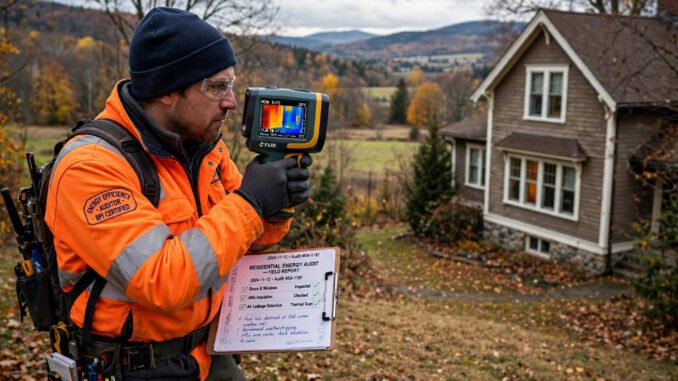
Thermal imaging: an infrared camera shows missing insulation, thermal bridging, and air infiltration as color patterns — the famous images where walls glow red (heat escaping) or blue (cold intruding).
Combustion safety testing: checks furnaces, water heaters, and fireplaces for carbon monoxide and proper venting — a genuine safety service, not just efficiency.
Insulation and HVAC assessment: attic insulation depth, duct leakage testing (ducts in hot Atlanta attics are notorious energy wasters), and HVAC efficiency evaluation.
The deliverable is a prioritized report: findings ranked by cost-effectiveness, so you fix the $200 air-sealing before the $8,000 windows.
What It Costs in Atlanta (and the Free Options)
Professional audits: $200–$500
Atlanta-area energy auditors typically charge $250–$450 for a comprehensive audit including blower door and thermal imaging. Some utilities and programs subsidize this — always check current offerings before paying full price.
Georgia Power’s audit programs: often free or discounted
Georgia Power periodically offers free or reduced-cost home energy audits and assessments to residential customers — check their current residential programs before booking a private auditor. These utility programs are the tight-budget starting point.
Federal tax credits: 30% back
The Energy Efficient Home Improvement Credit (Section 25C) covers 30% of the cost of a home energy audit (up to $150) — effectively a $150 audit costs you $105 after the credit. The same credit covers insulation, heat pumps, and other improvements the audit recommends, up to annual caps. This stacks powerfully with audit findings.
DIY audit: $0
You can find 70% of what a pro finds with a methodical walkthrough: feel for drafts around windows, doors, outlets, and attic hatches on a cold day; check attic insulation depth (less than 10–12 inches of blown insulation in Atlanta is under-insulated); look for daylight around exterior doors; inspect duct connections in the attic for disconnections. The Department of Energy’s DIY energy audit guide walks through this systematically — and it is genuinely useful, not a consolation prize.
What Audits Find in Atlanta Homes (the Usual Suspects)
Atlanta housing stock has predictable energy weaknesses:
1. Duct leakage in hot attics. The number one finding. Ducts running through 140°F attics leak 20–30% of conditioned air in typical homes. Sealing and insulating ducts often delivers the fastest payback in Georgia — sometimes under 2 years. This is unglamorous and transformative.
2. Inadequate attic insulation. Many Atlanta homes — especially pre-1990 — have 6 inches or less where 12–14 inches (R-38) is recommended for Georgia. Blown cellulose top-up costs $1,500–$2,500 for a typical home and pays back in 3–5 years.
3. Air leaks everywhere. Attic hatches, recessed lights, plumbing penetrations, top plates — the blower door test reveals dozens of small leaks that collectively equal leaving a window open year-round. Air sealing ($300–$800 professionally, or DIY with caulk and foam) is the cheapest meaningful improvement in existence.
4. Aging HVAC. Atlanta’s cooling-dominated climate punishes old systems. A 15-year-old 10-SEER unit versus a modern 16–18 SEER heat pump can cut cooling costs 30–40%. When replacement time comes, the audit data ensures correct sizing — oversized systems (extremely common) waste energy and dehumidify poorly, which matters enormously in Georgia humidity.
5. Water heating. Often the second-largest energy user. Heat pump water heaters cut water-heating energy ~60% and qualify for the 30% federal credit.
The Priority Order (What to Fix First)
The universal cost-effectiveness ranking for Atlanta homes:
1. Air sealing ($300–$800, payback 1–3 years) — always first.
2. Duct sealing and insulation ($500–$1,500, payback 2–4 years) — the Atlanta special.
3. Attic insulation top-up ($1,500–$2,500, payback 3–5 years).
4. Smart thermostat ($150–$250, payback 1–2 years) — trivial install, real savings, and optimal thermostat settings multiply the benefit.
5. HVAC replacement (when due — $6,000–$12,000, payback 5–10 years) — never replace early purely for efficiency, but when it dies, buy the efficient one.
6. Windows (last — $8,000–$20,000, payback 10–20+ years) — the improvement everyone asks about and almost nobody should prioritize. Air sealing and insulation deliver 5× the savings per dollar.
Financing help exists: Georgia Power rebates, federal tax credits (25C), and the DOE’s incentive databases list current programs. Energy-efficient upgrades for older homes covers the improvement side in depth, and winterizing before cold weather handles the seasonal prep that audits often flag.
Conclusion
A home energy audit in Atlanta costs $200–$500 professionally (often less via Georgia Power programs or the 30% federal credit), $0 DIY — and it pays for itself by directing your improvement dollars to the highest-ROI fixes first: air sealing, duct work, and attic insulation, in that order. On a tight budget, start with the free utility audit and the DIY walkthrough, fix the air leaks yourself, and let the federal credits fund the bigger items. The audit is not the expense — the un-audited guessing is.
Frequently Asked Questions
Is a home energy audit worth it on a tight budget?
Yes — especially via free utility programs or the DIY approach. The audit’s value is prioritization: it stops you from spending $8,000 on windows when $500 of air sealing would save more. Even the paid audit typically pays for itself through the first recommended fix.
How long does an energy audit take?
2–4 hours for a comprehensive professional audit. The blower door test takes about an hour including setup; thermal imaging and the walkthrough fill the rest. You will learn more about your house in those hours than in years of living there.
Can I do an energy audit myself?
A useful version, yes — the DOE’s DIY guide covers draft detection, insulation checks, and HVAC assessment. You will miss the quantified blower-door data and thermal imaging, but you will find the major issues. DIY first, professional audit when you are ready to invest in fixes.
What is the fastest-payback energy improvement?
Air sealing — $300–$800 professionally (or under $100 DIY) with 1–3 year payback. In Atlanta specifically, duct sealing in hot attics is a close second. Both outperform every “sexy” upgrade (windows, solar) on payback by wide margins.
Do energy audits qualify for tax credits?
Yes — the Section 25C Energy Efficient Home Improvement Credit covers 30% of audit costs up to $150, plus 30% of qualifying improvements (insulation, heat pumps, etc.) up to annual caps. Keep all receipts and the auditor’s report for tax filing.
Leave a Reply