
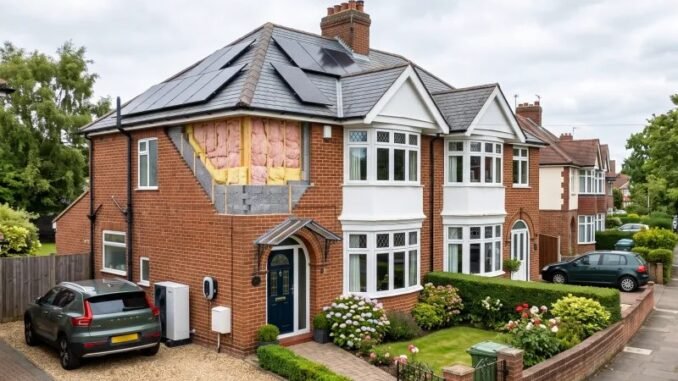
Older homes are beautiful and thermally atrocious. The best energy-efficient upgrades for an older home aren’t the flashy ones (looking at you, $25,000 solar arrays) — they’re the unsexy envelope fixes that pay back fastest. I cut my 1950s ranch’s energy bills 35% with $2,800 in upgrades, and the house is dramatically more comfortable. Here’s the priority order, ranked by bang for buck, with real costs and payback periods.
Tier 1: Do These First (Payback Under 2 Years)
1. Air sealing ($200–$500 DIY, $500–$1,500 pro)
The #1 energy upgrade per the Department of Energy. Old homes leak air like sieves — around windows, doors, attic hatches, plumbing penetrations, recessed lights. Caulk, weatherstripping, and Great Stuff foam ($6/can) in the attic and basement rim joists. Savings: 10–20% of heating/cooling bills. A $300–$500 energy audit with blower-door test finds every leak — many utilities subsidize audits to $50–$100.
2. Attic insulation top-up ($1,000–$2,500)
If you can see joists, you’re under-insulated. Blown-in cellulose to R-49 (~14 inches) is the best value in insulation. Often DIY-able with a free blower rental from Home Depot (with 10+ bag purchase, ~$400–$600 in material). Payback: 2–5 years.
3. Smart thermostat ($130–$250)
10–15% heating/cooling savings for 30 minutes of install. The Ecobee and Nest both qualify for $50–$100 utility rebates in many areas — check the ENERGY STAR rebate finder.
Tier 2: High Impact (Payback 3–7 Years)
4. Duct sealing and insulation ($500–$2,000)
Leaky ducts in unconditioned attics/crawlspaces waste 20–30% of conditioned air. Mastic sealant ($20/tub) on every joint + duct insulation wrap. A pro duct-blaster test quantifies the waste.
5. Heat pump water heater ($1,500–$2,500 installed, after rebates)
Uses 60–70% less energy than a standard electric water heater. The federal tax credit (25C) covers 30% up to $2,000, and many utilities add rebates. Needs a space that stays above ~40°F (garage, basement).
6. LED conversion (whole house, $50–$150)
If you still have incandescents or CFLs anywhere, swap them. LEDs use 75% less energy and the $2–$5/bulb cost pays back in months. Start with the most-used fixtures.
Tier 3: Major Investments (Payback 7–15 Years, But Transformative)
7. Cold-climate heat pump ($8,000–$18,000 installed)
Replaces furnace + AC with one system at 200–300% efficiency (moves heat instead of making it). Federal credits + state rebates can cut $2,000–$8,000+ off. Best when your furnace is dying anyway — don’t replace a working 5-year-old furnace early.
8. Window replacement ($5,000–$15,000)
Comfort upgrade more than a financial one — payback is 15+ years on energy alone. Do it for drafts, noise, and failed seals, not for bill savings. (Storm windows at $100–$200/window get you 70% of the benefit for 20% of the cost.)
9. Solar panels ($15,000–$25,000 after credits)
The 30% federal tax credit (through 2032) plus net metering makes solar pay back in 7–12 years in most states. But do Tiers 1–2 first — every dollar of efficiency reduces the solar system size you need.
What Are the Best Energy-Efficient Upgrades for an Older Home? The Strategy
Order matters: seal and insulate before sizing new HVAC — a tighter house needs a smaller (cheaper) system. And always start with the energy audit — guessing wastes money, measuring doesn’t. Between federal tax credits (25C for efficiency, 25D for solar/geothermal), utility rebates, and state programs, the DSIRE database (dsireusa.org) lists every incentive by zip code — check it before spending a dollar. My $2,800 in Tier 1–2 upgrades cut bills 35% and made the house feel like it was built this century. Start with caulk and a blower-door test; the unsexy stuff wins.
Energy Upgrade Mistakes to Avoid
- Buying solar before sealing and insulating: every dollar of efficiency reduces the solar system size you need. A leaky house with solar is like heating with the windows open — fix the envelope first (Tiers 1–2), then size solar for the smaller load.
- Replacing windows for “energy savings”: the payback is 15+ years on energy alone — windows are a comfort upgrade (drafts, noise, failed seals), not a financial one. Air sealing + attic insulation deliver 5x the savings per dollar.
- Oversizing new HVAC: contractors routinely oversize (“bigger is better” — it’s not). An oversized system short-cycles: poor dehumidification, uneven temps, shorter equipment life. Insist on a Manual J load calculation — it’s the professional standard.
- Ignoring incentives: federal tax credits (25C/25D), utility rebates, and state programs can cut $2,000–$8,000+ off major upgrades. Check DSIRE (dsireusa.org) by zip code before spending — free money is the best ROI.
Energy-Efficient Upgrade FAQs
What’s the best first energy upgrade for an old house?
Air sealing — $200–$500 DIY, 10–20% heating/cooling savings, payback under 2 years. Start with a $300–$500 energy audit with blower-door test (often subsidized to $50–$100 by utilities) to find every leak. The DOE calls it the #1 upgrade for a reason.
How much can I realistically save?
Tier 1 alone (seal + insulate + smart thermostat): 20–35% off heating/cooling bills for $1,500–$3,000. Full Tier 1–2: 35–50%. My 1950s ranch: 35% reduction for $2,800 — plus dramatically better comfort (no more drafty rooms).
Are heat pumps worth it in cold climates?
Modern cold-climate heat pumps work efficiently down to -15°F — a different species from old heat pumps that quit at 35°F. At 200–300% efficiency they slash heating costs vs. electric or propane. Best value when your furnace is dying anyway — don’t replace working equipment early.
What incentives are available in 2026?
FAQs
What’s the single best upgrade for an older home?
Air sealing plus attic insulation — it’s not glamorous, but it delivers the biggest bang for the buck in most older homes. Houses built before modern energy codes leak air like sieves, and heating or cooling that escapes through the attic is money spent for nothing. Many homeowners see 15–25% energy savings from this combo alone. A home energy audit, often subsidized by your utility, will pinpoint exactly where your house is losing the most.
Should I replace my old windows or is there a cheaper fix?
Full window replacement is expensive and the payback period can stretch past a decade. Before going there, try the cheaper fixes: weatherstripping, caulking, and interior storm window inserts can cut drafts dramatically for a fraction of the cost. Replace windows when they’re failing — rotting frames, broken seals, condensation between panes — not just for efficiency. New windows are a comfort and resale upgrade; they’re rarely an efficiency bargain on their own.
Are there rebates or tax credits for these upgrades?
Yes, and they’re worth checking before you spend a dime. Federal tax credits cover a percentage of heat pumps, insulation, and energy audits, and many utilities offer additional rebates for smart thermostats, appliance upgrades, and insulation. Programs change year to year, so check the current offerings on the DOE’s website and your utility’s site. Some homeowners stack federal credits with utility rebates and cut their project cost by a third or more.
Is a heat pump worth it in a cold climate?
Modern cold-climate heat pumps work well down to temperatures that would have stumped older models — many now perform efficiently below zero. They’re especially attractive if you’re replacing both a furnace and an air conditioner, since one unit does both jobs. The math is best where electricity is reasonably priced and you’re switching from oil or electric resistance heat. Get quotes from installers experienced with cold-climate models; sizing and installation quality make or break the results.
Federal 25C credit: 30% up to $2,000/year for heat pumps, insulation, electrical upgrades. Federal 25D: 30% for solar/geothermal (through 2032). Plus utility rebates ($50–$500+ per measure) and state programs. DSIRE (dsireusa.org) lists everything by zip code — check before you buy.
Leave a Reply