
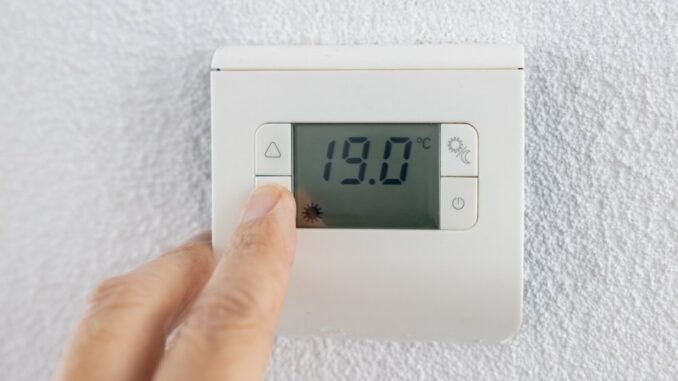
Your thermostat is the most powerful money lever in your house — heating is typically 40–50% of a home’s energy bill, and small setting changes compound into real savings. The best thermostat setting to save money in winter isn’t a single magic number, though — it’s a strategy: the right occupied temperature, aggressive setbacks when you’re away or asleep, and the discipline to actually use them. The Department of Energy’s data is clear on what works. Here’s the playbook.
The Magic Number: 68°F
The Department of Energy recommends 68°F while you’re home and awake — and the math backs it up: you save roughly 1–3% on heating costs for every degree you lower the thermostat over an 8-hour period. Dropping from 72°F to 68°F around the clock saves 4–12% — on a $200/month winter heating bill, that’s $8–$24/month for putting on a sweater.
Can you go lower? 65°F is comfortable for many people with warm clothing and is perfectly safe. Below 65°F gets uncomfortable for sedentary activities (desk work, TV), and never go below 55°F — pipes can freeze, especially in exterior walls.
The Real Savings: Setbacks
Here’s where the big money is. The DOE recommends setting back 7–10°F for 8 hours daily (while sleeping or at work), which saves up to 10% annually on heating:
- Sleeping: 60–62°F. Most people sleep better in cooler rooms (65°F is the sleep-science sweet spot — the Sleep Foundation recommends 65–68°F for sleep), and a warm comforter handles the rest.
- Away at work (8+ hours): 60–62°F. The house recovers in 30–60 minutes — program the thermostat to start warming 30 minutes before you arrive.
- Away for days: 55°F — the pipe-safety floor. Have someone check in during extreme cold snaps.
The myth to kill: “it takes more energy to reheat than to maintain.” False — furnaces don’t work “harder” reheating; the house simply loses heat slower when it’s cooler inside (smaller indoor-outdoor temperature difference = slower heat loss). Setbacks always save. Physics guarantees it.
What Is the Best Thermostat Setting to Save Money in Winter? By Heating System
- Gas furnace / boiler: aggressive setbacks work great — 68°F occupied, 60–62°F setback. These systems recover quickly.
- Heat pump: be careful with deep setbacks. Dropping more than 2–3°F can trigger auxiliary/emergency heat strips (expensive electric resistance heat) during recovery — wiping out savings. Use modest setbacks (2–4°F) or a thermostat with smart recovery that ramps up gradually without aux heat.
- Electric baseboard: setbacks work, but recovery is slow — start warming 1–2 hours before needed. Consider smart thermostats per zone (Mysa, $100–$140 each) — baseboard zones are perfect for room-by-room control.
- Radiant floor: minimal setbacks (1–2°F) — the thermal mass responds too slowly for deep setbacks to pay off.
Make It Automatic (The Discipline Problem)
Manual setbacks fail because humans forget. Programmable or smart thermostats don’t:
- Basic programmable ($25–$50): 7-day schedules, set-and-forget. Covers 90% of the savings.
- Smart thermostat (Ecobee, Nest — $130–$250, often $50–$100 after utility rebates): learns your schedule, adjusts for weather, lets you tweak from your phone, and provides energy reports showing exactly what you saved. The geofencing feature (auto-setback when everyone leaves) is the killer app.
Sample winter schedule: 68°F 6:00–8:30 a.m. → 62°F 8:30 a.m.–5:00 p.m. → 68°F 5:00–10:30 p.m. → 61°F overnight. On a $200/month bill, this schedule vs. a constant 72°F saves roughly $30–$45/month — $150–$225 per heating season, every year, for pressing buttons once. Add a sweater, seal the drafts, and let the thermostat do the disciplined thing you’d never do manually.
Thermostat Mistakes That Waste Money
- Believing the “reheating costs more” myth: furnaces don’t work “harder” reheating — the house loses heat slower when cooler inside. Setbacks always save; physics guarantees it. This myth costs believers ~10% annually.
- Deep setbacks with a heat pump: dropping 8°F can trigger auxiliary heat strips (expensive electric resistance) during recovery — wiping out savings. Heat pumps want modest 2–4°F setbacks or smart recovery.
- Heating empty rooms to 72°F: zone control (smart vents, per-room thermostats like Mysa for baseboard) stops paying to heat the guest room nobody uses. The DOE estimates proper zoning saves 10–15%.
- Manual setbacks you forget: humans don’t adjust thermostats consistently — programmable or smart thermostats do. The $25 programmable captures 90% of the savings; the $150 smart (often $50–$100 after rebates) adds geofencing and reports.
Winter Thermostat FAQs
What temperature should I set the thermostat in winter?
68°F while home and awake (DOE recommendation), 60–62°F sleeping or away 8+ hours, 55°F minimum ever (pipes). Each degree lowered over 8 hours saves 1–3% — the full setback strategy saves ~10% annually.
Is it cheaper to leave the heat on all day?
No — this is the persistent myth. A cooler house loses heat more slowly (smaller indoor-outdoor difference), so maintaining 72°F all day always uses more energy than setback + recovery. Set it back when sleeping or away.
Why is my heating bill so high?
Usual suspects in order: thermostat set too high (72°F+ around the clock), air leaks (the DOE’s #1 energy waster — caulk and weatherstrip), under-insulated attic (see joists = under-insulated), dirty furnace filter (replace monthly), old equipment (15+ year furnaces are 20–30% less efficient than modern).
Do smart thermostats really save money?
FAQs
Is it cheaper to keep the heat at one temperature all day?
No — that’s one of the most persistent heating myths. Your furnace works harder the bigger the gap between indoor and outdoor temperature, so letting the house cool down while you’re away or asleep genuinely saves energy. The “recovery” energy to warm back up is less than what you’d have spent maintaining the higher temperature all day. Setbacks of 7–10 degrees for 8+ hours can cut heating costs by around 10%, according to the Department of Energy.
Will lowering the thermostat damage my pipes?
Not at any reasonable setback. Pipes freeze when indoor temperatures drop into the 40s or below for extended periods — a setback to 62 or even 60 degrees is perfectly safe. The risk comes from vacations: if you’re gone for days in a cold snap, keep the thermostat at 55 minimum and open cabinet doors under sinks on exterior walls. A frozen burst pipe costs thousands; the tiny savings from going below 55 while away aren’t worth the gamble.
Does a smart thermostat actually pay for itself?
For most households, yes — typically within a year. The savings don’t come from magic; they come from setbacks and schedules you’d never maintain manually. Geofencing that drops the temperature when the last person leaves, learning algorithms that pre-heat before you wake — these small automations add up to 10–15% on heating and cooling. At $100–$250 (often less after utility rebates), the math works for almost anyone with a reasonably sized home.
What’s the best nighttime temperature for sleep and savings?
Sleep experts recommend 65–68 degrees for the bedroom, which conveniently doubles as an energy-saving setback. Most people sleep better slightly cool — your body temperature naturally drops as you fall asleep, and a cooler room supports that. If 65 feels chilly, add blankets rather than raising the thermostat; you’ll sleep better and save money. A programmable schedule that drops the temperature an hour before bed and warms up before your alarm is the sweet spot.
Should I close vents in unused rooms to save money?
Surprisingly, no — closing vents usually backfires. Modern HVAC systems are balanced for your whole house, and closing vents increases pressure in the ducts, which can cause leaks and make your system work harder. It can also create moisture and comfort problems in the closed-off rooms. If you have rooms you truly don’t use, you’re better off addressing it at the system level — zoned systems or ductless mini-splits — rather than fighting the ductwork you have.
Yes — 10–15% on heating/cooling per DOE and manufacturer studies, mostly via setbacks you’d never do manually (geofencing, learning schedules). At $50–$100 after utility rebates, payback is typically under a year.
Leave a Reply