
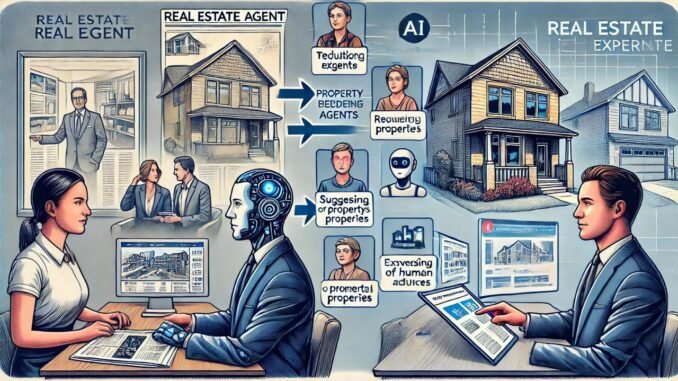
Zillow can estimate your home’s value in seconds. AI can write listing descriptions, stage photos virtually, and even negotiate initial offers. With commission lawsuits reshaping the industry and technology eating every routine task, it’s a fair question: will AI change how real estate agents do their jobs? Having watched this industry’s tech disruptions for years (remember when Zillow was supposed to kill agents in 2010?), here’s my honest take: AI will eliminate a type of agent — but make the remaining ones more valuable. The distinction matters whether you’re buying, selling, or considering the career.
Let’s ground this in what actually happened with past “disruptions.” Online listings were supposed to kill agents; instead, agent numbers grew. Discount brokerages were supposed to kill commissions; full-service agents still dominate. The pattern: technology commoditizes information (which agents used to gatekeep) but can’t commoditize judgment, negotiation, and trust in the largest financial transaction of most people’s lives. AI is the most powerful version of this pattern yet — so let’s be precise about what it takes and what it doesn’t.
Will AI Change How Real Estate Agents Do Their Jobs? What AI Already Does Better
- Valuation estimates: AVMs (automated valuation models) from Zillow, Redfin, and others process millions of data points instantly. For standard homes in subdivisions with lots of comps, they’re often within a few percent. (For unique homes, they struggle — more below.)
- Listing marketing: AI writes compelling descriptions, generates virtual staging, enhances photos, creates video tours from stills, and optimizes listing timing and pricing strategy from market data.
- Lead handling: AI chatbots respond to inquiries instantly at 2am, qualify buyers, schedule showings, and nurture leads — the follow-up work agents historically neglected.
- Document processing: AI reviews contracts for missing fields, flags unusual clauses, tracks contingency deadlines, and manages transaction checklists. Fewer dropped balls.
- Market analysis: Instant CMA-style reports, neighborhood trend analysis, investment property cash-flow modeling — analysis that took agents hours now takes seconds.
The through-line: AI dominates information processing tasks. Every agent task that’s fundamentally about data, documents, or routine communication is being automated — and that’s a large share of what mediocre agents actually did all day.
What AI Can’t Replace (The Human Core)
- Negotiation with emotional intelligence. Real estate negotiation isn’t math — it’s reading people. Knowing when to push and when to concede, managing a seller’s emotional attachment to their home, navigating the buyer’s cold feet at 11pm before closing. AI can suggest strategies; it can’t sit at the table sensing the room.
- Trust in high-stakes decisions. People making the biggest purchase of their lives want a human who answers for the advice. “The AI said it was a good deal” doesn’t comfort anyone at closing — or in court if things go wrong.
- Local tacit knowledge. AI knows the data; agents know that the “quiet street” floods in heavy rain, that the school boundary might change, that the neighbor’s fence dispute affects the lot. Hyper-local lived knowledge resists datafication.
- Problem-solving when deals wobble. Inspections reveal foundation issues. Appraisals come in low. Buyers lose jobs mid-escrow. Saving a dying deal requires creativity, relationships (with the other agent, lenders, contractors), and judgment under pressure — deeply human work.
- Physical presence. Someone has to walk the property, notice the smell in the basement, check the water pressure, and attend the closing. The physical world remains stubbornly physical.
The Agents Who Disappear vs. The Agents Who Thrive
This is the real story — not replacement, but bifurcation:
- Disappearing: Agents whose value was information access (“I’ll email you new listings!”) and order-taking. AI does this free, instantly, 24/7. Part-time agents doing a few deals a year on the side face the most pressure — and indeed, agent counts are already contracting from their peaks.
- Thriving: Agents who are genuine local experts, skilled negotiators, and trusted advisors. AI makes them more productive (handling the paperwork and marketing while they focus on clients) and more differentiated (their human judgment stands out against automated alternatives). Top producers using AI tools are pulling further ahead, not being replaced.
The recent commission-structure lawsuits accelerate this: when buyers negotiate agent compensation directly, they’re asking “what am I paying for?” — and “I’ll send you listings” is no longer a $15,000 answer. “I’ll negotiate $25,000 off the price and save this deal when the inspection goes sideways” is. The National Association of Realtors tracks these industry shifts for anyone following the structural changes.
What This Means for Buyers and Sellers
- Use AI tools yourself. Check Zillow/Redfin estimates, browse AI-written market analyses, use virtual staging visualizers. Be an informed consumer — the information asymmetry that agents once exploited is gone.
- Hire for judgment, not information. Interview agents on: “Tell me about a deal you saved that was falling apart.” “How do you handle bidding wars?” “What’s your negotiation philosophy?” Their answers reveal the human value you’re paying for.
- Negotiate the commission. The market is shifting; flat fees, hourly consulting, and à la carte services are growing. Know your options.
- Consider hybrid models. For straightforward transactions, tech-enabled brokerages (Redfin, discount brokers) offer real savings. For complex, emotional, or high-stakes deals, full-service expertise earns its fee.
What This Means for Aspiring Agents
Don’t enter the industry to be a listings portal — enter to be an advisor. Master AI tools (they’re your leverage, not your enemy), specialize deeply in a neighborhood or niche, build genuine negotiation skill, and cultivate the relationships that save deals. The bar is rising, which is bad for dabblers and great for professionals. Our AI-resistant careers analysis puts this in the broader employment context — and if you’re pivoting into the field, our AI interview preparation guide helps you land the role.
The bottom line: AI is absorbing the informational and routine half of real estate — valuations, marketing, paperwork, lead follow-up — which eliminates agents whose value was access and administration. But the judgment half — negotiation, trust, local wisdom, deal-saving creativity — remains deeply human and, if anything, more valuable as the routine work gets cheaper. The future isn’t “no agents”; it’s fewer, better, AI-powered agents earning their commissions through expertise rather than information gatekeeping.
Leave a Reply