
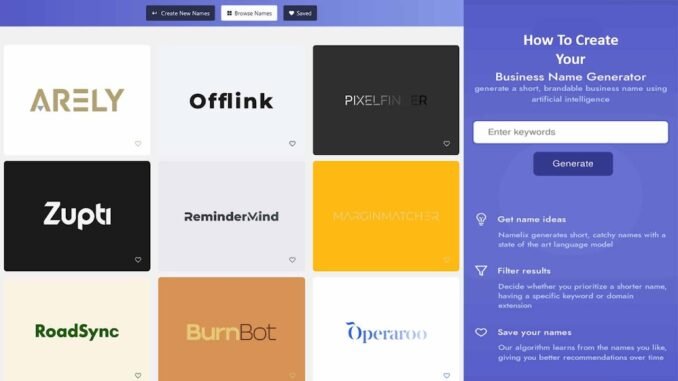
You’ve got the business figured out — the product, the customers, the plan. But every name you think of is either taken, boring, or sounds like a prescription drug. Naming feels disproportionately hard because it is disproportionately important: your name is the first impression, the domain, the brand. If you’re asking how do I use AI to brainstorm names for my business, here’s the method that works: AI as a tireless brainstorming partner generating hundreds of options across naming styles — while you apply the human judgment about what actually fits. The AI supplies quantity and variety; you supply taste.
A quick truth about naming: there are no perfect names, only names that grow on people. Google sounded silly. Spotify meant nothing. The name matters less than what you build behind it — but a good name (memorable, spellable, available) removes friction from everything: word-of-mouth, searchability, branding. AI helps you find one faster.
How Do I Use AI To Brainstorm Names For My Business? The Brainstorming System
Step 1: Brief the AI on your brand
Don’t just ask for “business name ideas.” Give it the strategic context:
“I’m naming a [business type] in [city/market]. Target customers: [who]. Brand personality: [playful / premium / trustworthy / bold — pick 2-3]. The name should feel [modern / classic / friendly / edgy]. Avoid: [anything — puns? foreign words? long names?]. Generate 30 names across different styles: invented words, compound words, descriptive names, and evocative/abstract names.”
The “across different styles” instruction is key — it forces variety instead of 30 slight variations of the same idea.
Step 2: Explore naming styles systematically
Ask for batches by style to cover the full creative range:
- Invented/coined: “Generate 20 invented brandable words (like Spotify, Etsy) for a [business]. 2-3 syllables, easy to pronounce, no existing meaning.”
- Compound: “Combine relevant words into compound names (like Facebook, SnapChat) for [business]. 20 options.”
- Descriptive with a twist: “Names that hint at what we do but aren’t generic — for a [business]. Avoid clichés like ‘pro,’ ‘plus,’ ‘solutions.'”
- Evocative/metaphorical: “Names evoking [feeling: speed, trust, warmth, adventure] without literally describing [business]. Think Apple, Nike — suggestive, not descriptive.”
- Founder/personal: “Ideas incorporating [name/place/story] into a brandable business name.”
Step 3: Refine the shortlist
Pick your 10 favorites and stress-test them with AI:
- “For each of these 10 names, list: potential mispronunciations, unintended meanings or associations, and how memorable it is (1-10).”
- “Which 3 of these would work best for [target customer]? Rank them and explain.”
- “Generate 5 tagline options for [top choice] that clarify what the business does.”
The Availability Checks (Non-Negotiable)
A name you can’t own is a name you can’t use. For each finalist, check:
- Domain: Is the .com available (or an acceptable alternative like .co)? Check registrars like Namecheap or Cloudflare. Exact-match .com still matters for credibility.
- Social handles: Consistent handles across Instagram, TikTok, X, Facebook. Use a handle-checker to verify all at once.
- Trademark: Search the USPTO trademark database (free). A name that’s trademarked in your industry is a lawsuit waiting to happen — this check is the most-skipped and most-important.
- Search test: Google the name in quotes. If a competitor or something embarrassing dominates, move on.
- Say it out loud: “Welcome to [name]!” — if you cringe, or if people can’t spell it after hearing it once, keep looking. The radio test (can someone spell it after hearing it?) eliminates many clever-but-impractical options.
Naming Mistakes AI Can Help You Avoid
- Too generic: “Quality Plumbing Services” is unmemorable and un-ownable. Ask AI: “These are my competitors’ names: [list]. Generate options that stand apart from all of them.”
- Too clever: Puns and obscure references confuse more than they delight. The test: explain it to a 12-year-old. If it needs explaining, it’s too clever.
- Limiting growth: “Austin Dog Walking” traps you if you expand to cats or Dallas. Ask: “Will this name still work if I expand into [adjacent offerings]?”
- Hard to spell/pronounce: Every confused spelling is a lost customer. Favor phonetic clarity.
- Trend-chasing: Names with “AI,” “crypto,” or current slang date fast. Ask: “Will this name sound dated in 10 years?”
Beyond the Name: Quick Brand Foundations
Once you’ve chosen, AI accelerates the next steps: generate tagline options, draft a one-paragraph brand story, brainstorm logo concepts (then see our budget logo guide for execution), and check name pronunciation across languages if you plan to expand. For the full launch plan, our AI business plan guide picks up where naming leaves off — and protecting your business idea covers the legal side.
Quick Answers: AI Business Naming
How many name ideas should I generate before choosing?
More than feels reasonable — aim for 100+. The first 20 ideas are the obvious ones your competitors already considered. The interesting options live in ideas 40–100, where the AI’s combinations get weird enough to be distinctive. Generate in volume, then filter ruthlessly.
Can I just use the first good name the AI suggests?
Don’t. The first appealing name still needs the availability gauntlet: domain, social handles, trademark search, the “say it out loud” test. Roughly 8 out of 10 promising names die at one of these checks. Shortlist 5–10 finalists and run every one through all four before committing.
Should the name describe what the business does?
Not necessarily — and often not. Descriptive names (Austin Plumbing Pros) are clear but forgettable and hard to trademark; suggestive or invented names (Nike, Etsy) are ownable and memorable but need marketing to explain. For local service businesses, descriptive helps with search; for brands with ambition, distinctive wins long-term.
The bottom line: brief AI on your brand strategy, generate across all five naming styles in volume (100+ options isn’t excessive), refine the shortlist with brutal honesty testing, then run the non-negotiable availability checks — domain, social handles, USPTO trademark search. The AI gives you options you’d never have thought of; your judgment picks the winner. Expect the process to take a focused afternoon, not weeks of agonizing — and remember, the business makes the name, not the other way around.
Leave a Reply