
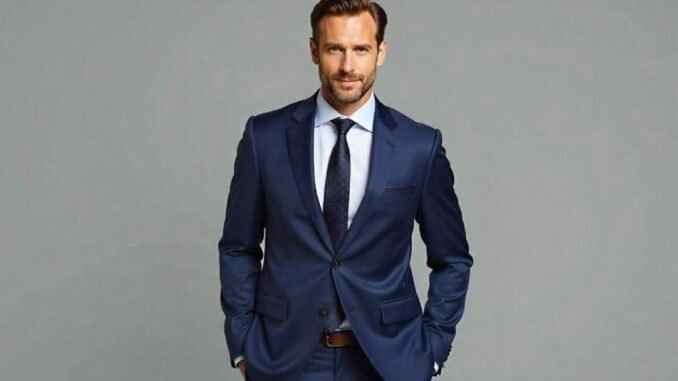
New job, first interview round, promotion into a client-facing role — and your wardrobe is jeans and hoodies. How can I dress professionally without spending a lot of money? Here’s what nobody tells you: looking professional has almost nothing to do with how much you spend and almost everything to do with fit, grooming, and coordination. I’ve seen people in $2,000 suits look sloppy and people in $150 thrifted outfits look like executives. The difference is never the price tag — it’s the strategy.
Here’s the complete budget professional wardrobe plan: what to buy, where to buy it, and the cheap tricks that make inexpensive clothes look expensive.
How Can I Dress Professionally Without Spending a Lot of Money? The $300 Starter Kit
Yes, really — a functional professional wardrobe for under $300. The key is buying fewer, better-chosen pieces:
The Core Pieces (Women)
- 1 blazer (navy or black) — thrifted, $15–$25
- 2 blouses or shell tops (white + one color) — $12 each at H&M/Old Navy
- 1 pair dark trousers — $25 at Old Navy/Target
- 1 pencil skirt or sheath dress — thrifted, $10–$15
- 1 cardigan — $20
- 1 pair closed-toe flats or low heels — $30 (Target, DSW clearance)
- 1 structured tote — thrifted leather, $15–$20
The Core Pieces (Men)
- 1 navy blazer — thrifted, $20–$30
- 3 dress shirts (white, light blue, one pattern) — $15 each at Uniqlo/H&M
- 2 chinos or dress pants (navy, gray) — $25 each
- 1 pair brown or black dress shoes — $40–$60 (DSW clearance, or thrifted leather + $10 polish)
- 1 belt matching shoes — $15
- Ties (2–3) — thrifted, $3 each
That’s 7–10 pieces generating 15+ outfits through mixing and matching — the capsule wardrobe principle applied to workwear. Add pieces gradually as paychecks come in.
Where the Deals Actually Are
- Thrift stores (the #1 source): blazers, wool trousers, silk blouses, leather bags, and dress shoes are thrift gold — these are expensive new and nearly indestructible used. Shop in affluent neighborhoods for the best donations. Always check thrift store strategies before a big trip.
- Clearance racks at mid-tier stores: Banana Republic, J.Crew, and Ann Taylor clearance (in-store and online) regularly hits 60–70% off — $30 for a $120 blazer.
- Off-price retailers: Nordstrom Rack, TJ Maxx, Marshalls — especially good for shoes and bags.
- Poshmark/ThredUp/eBay: search specific brands in your size; “new with tags” professional pieces go for 50–70% off retail.
- End-of-season sales: buy winter suiting in March, summer pieces in September.
- Uniform-adjacent basics: Uniqlo’s shirts, Target’s A New Day line, Old Navy’s Pixie pants — designed to look more expensive than they are.
The Cheap Tricks That Make Clothes Look Expensive
This is the real secret — a $20 outfit with these details beats a $200 outfit without them:
- Tailoring. The single highest-ROI fashion spend. Hemming pants ($12), taking in a blazer waist ($25), tapering sleeves — thrifted clothes fitted to your body look custom. Budget $50 for alterations on your starter kit and watch everything transform.
- Iron or steam. Wrinkles are the #1 thing that makes cheap clothes look cheap. A $25 handheld steamer is the best $25 in fashion.
- Shoes and bag. People judge outfits by shoes and bags disproportionately. One decent pair of polished shoes and one structured bag upgrades the whole outfit. Keep shoes polished and heels repaired.
- Grooming. Clean nails, neat hair, ironed clothes — free, and worth more than any brand name.
- Fit over brand. A $25 shirt that fits perfectly beats a $150 shirt that billows. Learn your measurements and check size charts; vanity sizing means the number on the tag is meaningless.
- Neutral palette. Navy, black, gray, white, beige — everything matches, everything looks intentional, and neutrals read as more expensive than busy prints.
- Minimal, classic accessories. A simple watch, stud earrings, a leather belt — timeless pieces that never look cheap.
Dress Codes Decoded
Match your effort to the actual environment — overdressing can be as awkward as underdressing:
- Business formal (law, finance, interviews): suit or blazer + dress pants/skirt, dress shirt/blouse, closed-toe dress shoes. When in doubt for an interview, go one notch above the company’s daily dress.
- Business casual: skip the tie/jacket; chinos or dress pants, button-down or blouse, loafers or flats. Learn the difference between business casual and smart casual — it trips up more people than any other dress code.
- Creative professional: the rules relax — dark jeans with a blazer, interesting textures, personality pieces. Polish still matters; conformity doesn’t.
When starting a new job, observe for a week before buying much — then fill the specific gaps. And remember that building a professional wardrobe from scratch is a longer project; this $300 kit is the launchpad, not the destination.
For ongoing inspiration on a budget, The Budget Fashionista and Corporette (for professional women) specialize in exactly this — looking polished without the designer budget.
The First-Week Observation Strategy
Starting a new job with this starter kit? Spend week one observing before buying anything else. Note what your manager wears, what the successful peers wear, what clients see. Is it suits daily or jeans Friday? Are people polished or relaxed? Then calibrate: match the office’s level plus about 10% — enough to signal ambition, not enough to look like you’re interviewing elsewhere. Fill gaps in week two based on real data, not anxiety. Most new hires overdress week one (fine — it signals respect) and then relax into the culture. The goal was never a perfect wardrobe on day one; it’s a functional foundation that adapts as you learn the terrain. Within a month, you’ll know exactly which three pieces to add next — and they’ll be the right ones because you waited for evidence.
Building Your Work Shoe Rotation
One pair of work shoes worn daily dies fast and looks tired by month three. Two pairs in rotation — say, black flats and nude heels, or brown oxfords and black derbies — last three times longer combined and always look fresh. The rotation rule applies to everything you wear hard: shoes need 24 hours to dry out and decompress between wears. For women, a pointed flat (daily workhorse) plus a low block heel (meetings, events) covers 95% of professional life. For men, one black and one brown dress shoe handle every suit combination. Buy the second pair in month two, once the paychecks start — your feet, your shoes, and your budget will all thank you.
The practical takeaway: $300, 7–10 versatile pieces, thrift stores for blazers and leather goods, clearance for the rest, $50 in tailoring, a $25 steamer, polished shoes, and impeccable grooming. Nobody will ever know what you spent — they’ll just know you look like you belong in the room.
Leave a Reply