
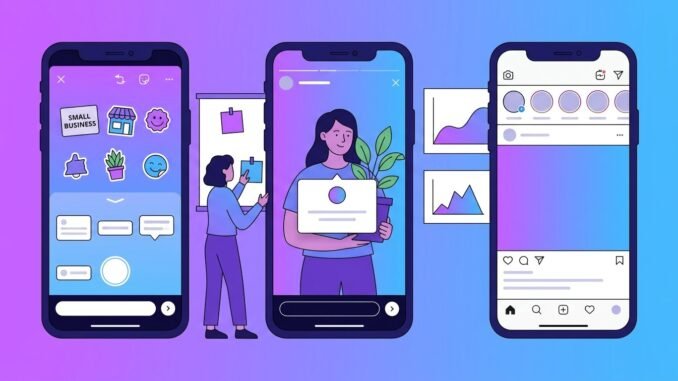
Asking what is the best way to market a small business on a tight budget puts you in good company: most successful small businesses were built on sweat equity, not ad spend. I have watched local businesses thrive spending almost nothing on marketing while competitors burned thousands on ads that brought nobody. The secret is not spending more; it is spending effort where customers actually pay attention.
What Is the Best Way to Market a Small Business on a Tight Budget? Ranked by ROI
1. Google Business Profile (free, highest ROI for local)
If you serve local customers, this is your number one marketing asset, and it costs nothing. Claim and complete your Google Business Profile: accurate hours, services, photos of your actual work, and a complete description. Businesses with complete profiles get dramatically more calls. Then ask every happy customer for a Google review. Reviews are the currency of local search; the business with 80 reviews beats the one with 8 every time, regardless of ad spend.
2. Referrals and word of mouth (free)
Referred customers convert at the highest rate and cost nothing. Make referrals systematic, not accidental: ask directly (“Who do you know who might need this?”), offer a simple referral incentive (10% off for both parties), and follow up after great service when goodwill is highest. A simple “refer a friend” card with every order works for product businesses.
3. Short-form video (free, highest reach)
TikTok, Instagram Reels, and YouTube Shorts remain the cheapest reach in marketing history. Post behind-the-scenes content: your process, before-and-afters, customer reactions, day-in-the-life. Authentic phone-shot video outperforms polished ads for small businesses. Post 3-5 times weekly for 90 days before judging results; consistency is the algorithm’s love language.
4. Email list (free to start)
Social followers are rented; email subscribers are owned. Start collecting emails from day one with a simple incentive (10% off first order, free guide). Mailchimp and ConvertKit are free to ~500-1,000 subscribers. A monthly email to 500 engaged subscribers outperforms 5,000 disengaged followers every time.
5. Local partnerships (free)
Partner with complementary non-competing businesses: the bakery displays the florist’s cards, the gym recommends the meal-prep service. Cross-promotion to warm audiences beats cold advertising. Also: farmers markets, community events, and local Facebook groups put you in front of neighbors for free or nearly free.
6. Content that answers customer questions (free)
Write or film answers to the exact questions customers ask you. “How much does X cost?” “How long does Y take?” This content ranks on Google, builds trust, and pre-sells. One genuinely helpful article or video per week compounds into a serious asset within a year.
Cheap Paid Options That Actually Work
- Google Local Services Ads: Pay per lead, not per click, and you only pay for genuine inquiries. Excellent for service businesses (plumbers, cleaners, lawyers).
- Facebook/Instagram ads, hyperlocal: $5-$10/day targeted to a 10-mile radius can work for local businesses. Start tiny, test one offer, scale only what converts.
- Nextdoor ads: Underused and effective for neighborhood services. Your neighbors are literally the audience.
- Retargeting: A $50/month retargeting campaign reminding website visitors you exist is the highest-ROI paid tactic for most small businesses.
What NOT to Waste Money On
- Expensive branding before revenue. A $2,000 logo does not bring customers. A clear offer does.
- Print ads, Yellow Pages, billboards (for most small businesses in 2026). The ROI math rarely works anymore.
- Buying followers or email lists. Fake audiences never buy anything.
- Marketing agencies on retainer before you have product-market fit. Learn the basics yourself first so you can judge their work later.
- Discounts as a strategy. Occasional promotions are fine; training customers to wait for sales destroys margins permanently.
The $100/Month Marketing Plan
- Google Business Profile optimized + review requests: $0.
- 3-5 short videos weekly on TikTok/Reels/Shorts: $0.
- Email capture + monthly newsletter: $0 (free tier).
- One local partnership or community event monthly: $0-$25.
- Hyperlocal Facebook/Instagram test ads: $75/month.
- Total: ~$100/month for a complete marketing system. Time investment: 5-8 hours weekly.
The SBA’s marketing resources and your local SBDC offer free guidance on building these systems, including free workshops in most areas.
The Bottom Line
The best way to market a small business on a tight budget is: a complete Google Business Profile with relentless review collection, systematic referrals, consistent short-form video, an email list you own, and local partnerships, all free. Add small, tested paid spend ($5-$10/day hyperlocal ads, retargeting) only after the free engines run. Marketing on a budget is not about spending less; it is about spending effort where attention actually lives.
Quick Answers to Common Questions
How much should a small business spend on marketing?
The SBA suggests 7-8% of gross revenue for established businesses, but early-stage businesses on tight budgets routinely spend less in cash and more in time. A $100,000-revenue business might spend $5,000-$8,000 yearly. The real rule: spend until the marginal return drops, track what each channel produces, and never spend what you cannot afford to lose while testing. Time-rich, cash-poor founders substitute sweat for spend.
What is the single most effective free marketing tactic?
For local businesses: Google Business Profile optimization plus systematic review collection. For online businesses: consistent short-form video content. Both are free, both compound over time, and both outperform paid advertising dollar-for-dollar in the early stages. Pick the one matching your business type and execute relentlessly for 90 days before judging.
Should I hire a marketing agency?
Not until you have product-market fit and understand the basics yourself. Agencies work best amplifying proven offers, not discovering them, and founders who cannot evaluate agency work get burned. Learn enough to run small campaigns yourself first ($500-$1,000 in test spend teaches more than any course), then hire specialists for specific channels once you know what good looks like.
How long does content marketing take to work?
Typically 6-12 months of consistent effort before significant results. Search content compounds slowly then suddenly; social content can spike faster but fades without consistency. This timeline is why most businesses quit too early. Commit to a sustainable pace (one quality piece weekly beats five rushed ones) and measure leading indicators (traffic, engagement) while waiting for lagging ones (sales).
Leave a Reply