
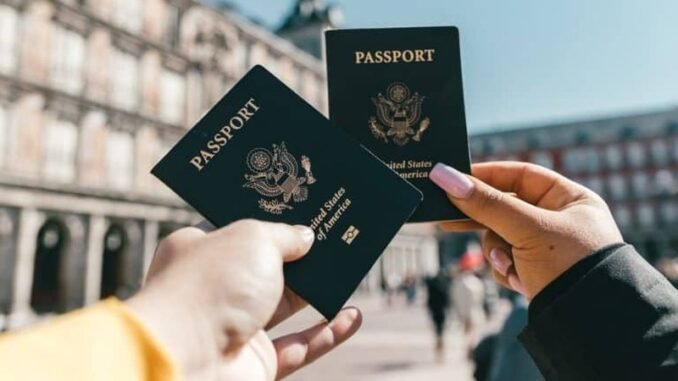
The best way to handle a lost passport while abroad is to have a plan before it happens — because at the moment you realize it’s gone, your brain will not be doing its best work. Take a breath: this happens to thousands of Americans every year, US embassies deal with it daily, and you will get home. I watched a friend go through this in Barcelona and she was on a plane 72 hours later. Here’s the exact sequence.
Step 1: Retrace and Report (First Hour)
Before assuming the worst, retrace your steps — hotel safe, daypack pockets, jacket linings, the “secure” hostel locker. Passports turn up in absurd places. If it’s genuinely gone:
- File a police report at the nearest station. You may need the report number for the embassy and for travel insurance claims. In tourist areas, many stations have English-speaking officers or tourist-police units.
- Call your travel insurance if you have it — many policies cover emergency document replacement costs and can advise you.
- Cancel nothing yet — don’t rebook flights until you know your document timeline.
Step 2: Get to the Nearest US Embassy or Consulate
This is the core of the process. The embassy’s American Citizen Services unit exists for exactly this. What to bring:
- A copy of your lost passport (this is why you email yourself a scan before every trip — do it now if you haven’t)
- Another photo ID if you have one (driver’s license — carry it separately from your passport, always)
- Passport photos if you have spares (many embassies can take them on-site)
- The police report number
- Proof of travel plans (return flight booking)
The embassy will issue an emergency limited-validity passport — usually same-day or next-day, valid for one year (sometimes just for direct return to the US). Fees run about $165 for the emergency passport. If you need to continue traveling rather than go straight home, say so — they’ll advise on options, though some countries’ visas get complicated.
Find the nearest embassy anytime at the State Department’s travel site, and save the address in your phone before each trip. Also enroll in the STEP program (Smart Traveler Enrollment Program) — it’s free, takes five minutes, and means the embassy can reach you in emergencies.
Step 3: Protect Yourself From Identity Theft
A lost passport is an identity-theft risk. Take these steps:
- When you report to the embassy, the lost passport is flagged in the system — it can’t be used for travel even if someone finds it.
- Monitor your credit (a Credit Karma or bank alert is free) for the next few months.
- If other documents were stolen too (wallet, cards), call your banks’ international collect numbers immediately — save these in your phone before traveling.
Step 4: Get Home
Airlines accept the emergency passport for boarding — it’s a fully valid travel document. You may get extra questions at check-in or immigration; allow extra time at the airport and carry the embassy’s paperwork. Once home, apply for a full replacement passport through the normal process (the emergency one gets surrendered).
The 10-Minute Prevention Kit (Do This Before Every Trip)
The best way to handle a lost passport while abroad is making it a minor inconvenience instead of a crisis:
- Email yourself a scan/photo of your passport data page.
- Carry a photocopy in your daypack; leave the real passport in the hotel safe.
- Carry your driver’s license separately — backup ID is gold at the embassy.
- Save embassy addresses and your bank’s international phone numbers in your phone.
- Enroll in STEP at step.state.gov.
- Photograph your luggage and bag contents — helps with police reports and insurance.
Losing a passport abroad feels catastrophic for about an hour. Then the system kicks in — police report, embassy visit, emergency passport, flight home — and it becomes a story you tell at dinner parties. Prepare the prevention kit, and it’ll be a short story.
Lost Passport Mistakes to Avoid
- Carrying the passport everywhere: the #1 cause of lost passports is unnecessary carrying. Leave it in the hotel safe; carry a photocopy for daily ID needs. Most situations that “require” your passport accept a copy.
- No backup copies: travelers who emailed themselves a scan before the trip resolve the embassy visit in one trip; those without spend days proving identity. The 2-minute email is the highest-value travel prep there is.
- Keeping your driver’s license with your passport: if both are stolen together, you have zero ID at the embassy. Carry them separately — always.
- Not knowing where the embassy is: save the nearest US embassy address in your phone before every trip, and enroll in STEP (Smart Traveler Enrollment Program) — free, 5 minutes, lets the embassy reach you.
Lost Passport FAQs
How fast can I get an emergency passport?
Often same-day or next-day at the embassy’s American Citizen Services unit. Bring a passport copy, backup photo ID, passport photos (or they take them), the police report number, and ~$165 in fees. It’s typically valid one year or for direct return travel.
Can I still fly home with an emergency passport?
Yes — it’s a fully valid travel document. Allow extra time at the airport (check-in agents may need to verify it), and carry the embassy paperwork. Some connecting countries’ transit rules get complicated — ask the embassy if you’re not flying direct.
What if my wallet was stolen too?
Call your banks’ international collect numbers immediately (save these in your phone before traveling). The embassy can also help contact family for emergency funds wiring if you’re stranded without money.
Does travel insurance cover this?
Many policies cover emergency document replacement costs and trip-delay expenses from lost passports. Check your policy before the trip — and keep the insurer’s 24-hour assistance number in your phone alongside the embassy address.
Leave a Reply