
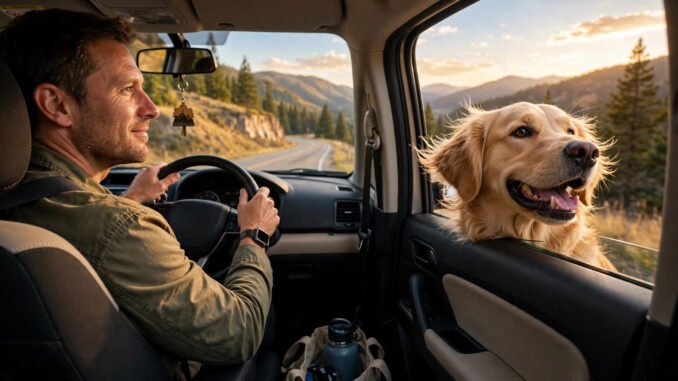
The Instagram version of traveling with your dog: golden retriever ears flapping in the breeze, pup cups at every drive-through, a snoozing co-pilot in the passenger seat. The reality, for a beginner, includes a few more variables — bathroom logistics, hotel pet fees, the dog who barks at every hallway noise at 2 AM. So is traveling with your dog actually worth it for a beginner? Yes — with honest expectations and basic preparation, it’s one of the most rewarding ways to travel. But “worth it” depends on your dog, your trip style, and knowing the real costs and rules before you go. Here’s the full beginner’s assessment.
The Case For: Why It’s Genuinely Worth It
The companionship dividend is real. Dogs make travel better in ways that are hard to quantify until you’ve experienced them: forced outdoor time (you’ll explore parks and trails you’d have driven past), social lubrication (dogs start conversations with strangers everywhere), routine and comfort in unfamiliar places, and security — a dog’s presence deters most casual trouble.
It’s cheaper than you think (compared to the alternative). Boarding runs $40–$80+ per night; a week of boarding ($300–$560) often exceeds the total pet fees of bringing the dog along. Pet sitters run $50–$100+ per day. When you price the alternative honestly, traveling together frequently wins on cost.
Some dogs are born travelers. Calm, adaptable, car-comfortable dogs often genuinely enjoy trips — new smells are enrichment, new trails are joy, and being with their person in a novel place is, for many dogs, the best possible day repeated. You’ll know within one or two short trips whether your dog is one of these.
The memories are disproportionate. Ask anyone who’s done it: the dog-at-the-Grand-Canyon photo, the beach zoomies, the pup asleep in a strange hotel bed — these become the trip’s defining memories. There’s a reason the Instagram version exists; it’s just edited.
The Honest Costs and Hassles (Beginner’s Reality Check)
Pet fees add up. Hotels typically charge $25–$75+ per night in pet fees (sometimes per stay, sometimes per pet); some luxury properties charge $150+. Vacation rentals vary wildly. Budget $50/night average as a planning figure. The good news: finding pet-friendly hotels when road tripping covers how to locate genuinely welcoming properties (not just tolerant ones) and avoid the fee traps.
Your itinerary bends around the dog. National parks? Mostly no — the National Park Service’s pet policies restrict dogs to developed areas (campgrounds, parking lots, paved roads) in the vast majority of parks, not trails. Restaurants? Patio-only in most states, weather permitting. Museums, most attractions, many beaches (seasonal restrictions)? Off-limits. Dog-inclusive travel means building the trip around dog-friendly activities: state parks (often more lenient than national parks), dog beaches, pet-friendly patios, hiking trails on pet-welcome public lands.
Logistics multiply. Potty breaks every 2–3 hours on driving days. Never leaving the dog in the car (temperatures kill — even 70°F outside becomes deadly inside within minutes). Packing: food, water, bowls, leash, long line, poop bags, bed/blanket, medications, vaccination records, a pet first-aid kit. Hotel etiquette: crate or confine when you leave the room, manage barking, clean up. It’s a second packing list and a second set of responsibilities.
Some dogs hate it. Anxious travelers, car-sick dogs, reactive dogs, and dogs with separation anxiety can make trips miserable for everyone. A dog that panics in the car isn’t having an adventure — they’re enduring one. Know your dog honestly.
The Beginner’s Preparation Checklist
1. Vet check before you go. Confirm vaccinations are current — the AKC’s dog travel guidance has the full checklist — refill medications with a buffer, get a health certificate if crossing state lines or flying (airlines require them, typically within 10 days of travel), and discuss motion sickness or anxiety options if relevant.
2. Car training first. Don’t make the big trip the first long drive. Build up: short happy trips with treats, then progressively longer drives. Secure the dog properly — a crash-tested harness, secured crate, or back-seat barrier. An unrestrained 50-lb dog becomes a 50-lb projectile in a sudden stop; this is a safety issue, not a preference.
3. Book pet-friendly lodging deliberately. “Pet-friendly” ranges from “dogs genuinely welcome with treats and a dog menu” to “we’ll tolerate one dog under 25 lbs for $100/night and judge you.” Read recent reviews from pet owners specifically, confirm weight limits and fees directly, and ask about the relief areas. The dedicated guide linked above covers the search strategy in detail.
4. Plan dog-compatible activities. Research before you go: which trails allow dogs, which beaches have off-leash hours, which restaurants have patios, whether your destination has dog daycare for the one museum day. The trip is dramatically better when the dog has things to do, not just places to wait.
5. Pack the go-bag. Food (plus 2 days extra), water from home for the first day (new water can upset stomachs), bowls, leash + backup, long line for safe sniffing freedom, poop bags, bed/blanket that smells like home, favorite toys/chews, medications, vaccination records, pet first-aid kit, towel (mud happens), and your vet’s number plus an emergency vet at the destination.
6. ID and backup. Collar with ID tags (your cell number, “reward” note), microchip with current registration, a recent photo on your phone. Dogs get lost most often in unfamiliar places — this is the cheapest insurance in existence.
Road Trips vs. Flying: The Beginner’s Verdict
Road trips win for beginners, decisively. You control the schedule, the environment, the breaks, and the temperature. The dog stays with you the entire time. Planning a road trip across the US with stops pairs naturally with dog travel — the stop cadence dogs need (every 2–3 hours) matches the stop cadence humans enjoy.
Flying with dogs is a different sport: in-cabin is limited to small dogs in carriers that fit under seats ($95–$150+ each way); cargo-hold travel carries genuine risks (temperature, stress, handling) and most vets advise against it for snub-nosed breeds, anxious dogs, or any dog that doesn’t strictly need to fly. For beginners: drive if you possibly can.
When to Leave the Dog Home (Honest Exceptions)
Traveling together isn’t always the answer. Leave the dog with a trusted sitter when: the itinerary is dog-incompatible (weddings, conferences, city museum marathons), the dog is anxious/reactive/sick, the destination’s heat makes car logistics dangerous, or the trip is short enough that the dog’s stress exceeds the separation stress. A great pet sitter or small-scale boarder is a gift — and planning a relaxing, affordable beach vacation starts with sorting pet care early, using reviews, references, and trial runs.
Conclusion
Is traveling with your dog actually worth it for a beginner? Yes — if your dog is reasonably adaptable, you road-trip rather than fly, you book genuinely pet-welcome lodging, and you build the itinerary around dog-compatible activities instead of fighting the restrictions. The costs (pet fees, logistics, itinerary limits) are real but usually smaller than boarding, and the payoff — a travel companion who makes every stop better — is the reason people become lifelong dog-travel converts after one good trip. Start with a short weekend trip, not a two-week expedition. Pack the go-bag, secure the dog properly in the car, confirm the vaccinations, and go. The Instagram version is edited, but the underlying experience is real — and it’s worth having.
Frequently Asked Questions
Is it better to travel with my dog or board them?
Depends on the dog and the trip. Calm, adaptable dogs on road trips with pet-friendly lodging: bring them — it’s often cheaper than boarding ($40–$80+/night) and more fun. Anxious, reactive, or car-sick dogs, or dog-incompatible itineraries: a trusted sitter is kinder and easier.
How much extra does traveling with a dog cost?
Budget roughly $50/night average for hotel pet fees (range $25–$150+), plus food, any needed gear, and occasional activity fees. Against boarding at $40–$80+/night or sitters at $50–$100+/day, bringing the dog is frequently the cheaper option for trips over a few days.
Can I take my dog into national parks?
Mostly no — the National Park Service restricts dogs to developed areas (campgrounds, parking lots, paved roads) in most parks, not trails or backcountry. State parks, national forests, and BLM land are generally more dog-friendly. Always check the specific park’s pet policy before planning around it.
How do I keep my dog safe in the car on a road trip?
Use a crash-tested harness, secured crate, or back-seat barrier — unrestrained dogs become projectiles in sudden stops. Stop every 2–3 hours for potty and water. Never leave the dog in a parked car — interior temperatures become lethal within minutes even on mild days.
What paperwork do I need to travel with my dog?
Vaccination records (especially rabies certificate) — required by many hotels, kennels, and daycares. A health certificate from your vet (usually within 10 days) for flights and some state crossings. Keep digital and paper copies, plus your vet’s number and an emergency vet contact at your destination.
Leave a Reply