
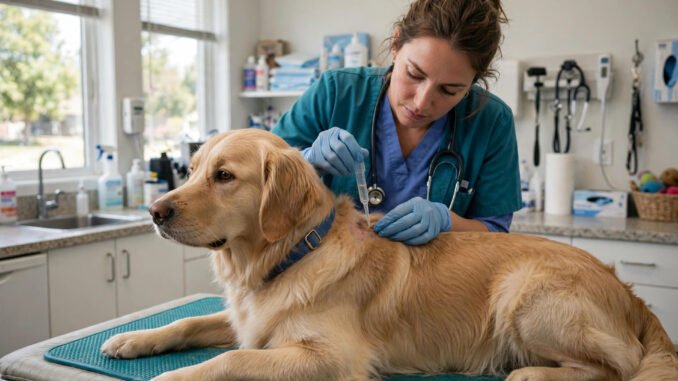
Walk into any pet store and the flea treatment aisle presents a paralyzing wall of options: topical spot-ons, oral chews, collars, shampoos, sprays, “natural” remedies — ranging from $10 to $80+, each claiming to be the answer. What is choosing flea treatment, and how does it actually work? At its core, it’s matching the right active ingredient and delivery method to your pet, your household, and your region’s flea pressure — then applying it correctly and consistently. Get it right and fleas become a non-issue; get it wrong and you’re fighting an infestation for months. Here’s the complete guide.
Understanding the Enemy: The Flea Life Cycle
You can’t choose treatment intelligently without understanding what you’re fighting. The fleas you see on your pet — the tiny dark adults — represent only about 5% of the total flea population. The other 95% is invisible: eggs, larvae, and pupae living in your carpets, bedding, cracks in hardwood floors, and yard.
The cycle: adult fleas feed on your pet and lay eggs (up to 50 per day per female) that fall off into the environment. Eggs hatch into larvae in 2–14 days; larvae feed on organic debris for 5–20 days, then spin cocoons and become pupae. Pupae are nearly indestructible — resistant to insecticides, able to survive months waiting for vibration and warmth (a returning pet, a footstep) to trigger emergence. This is why infestations “come back” weeks after you thought you’d won: pupae were waiting out the treatment.
The strategic implication: effective flea control must break the cycle at multiple points simultaneously — kill adults on the pet and prevent the environmental stages from maturing. Single-tactic approaches fail against the pupal reservoir.
The Treatment Types, Honestly Compared
Topical spot-ons (e.g., fipronil, selamectin, imidacloprid-based products)
Applied to the skin between the shoulder blades monthly. The active ingredient spreads through the skin’s oils and kills fleas on contact or when they bite. Pros: long track record, no pill to force down, many also cover ticks and mites. Cons: the pet can’t be bathed 48 hours before/after application, some pets dislike the sensation, efficacy can vary with very frequent bathing. Cost: roughly $10–$20/month per pet for vet-quality brands.
Oral chews (e.g., fluralaner, sarolaner, afoxolaner-based products)
Monthly or quarterly flavored chews; the drug circulates in the bloodstream and kills fleas when they bite. Pros: no topical residue, no bathing restrictions, can’t be washed off, excellent efficacy — the current veterinary gold standard for most pets. Cons: requires the pet to actually eat the chew (most do — they’re flavored), prescription required for the best ones, slightly pricier. Cost: roughly $15–$25/month. The 12-week options (fluralaner) reduce dosing hassle significantly.
Seresto-style collars (imidacloprid + flumethrin)
Slow-release collars providing ~8 months of protection. Pros: set-and-forget convenience, good efficacy when genuine. Cons: must be genuine product (counterfeits are a real problem — buy from vet or reputable retailer), some pets irritate under collars, must stay in continuous skin contact to work. Cost: roughly $60–$70 for 8 months — economical per month.
Shampoos, sprays, and “natural” remedies
Flea shampoos kill adults currently on the pet but offer zero residual protection — the pet can be reinfested the same day. Useful as a first knockdown in a heavy infestation, not as a prevention strategy.
How to Choose: The Decision Framework
Start with your veterinarian. This isn’t a dodge — regional flea populations develop resistance to specific ingredients, and your vet knows what’s currently working locally. They’ll also match the product to your pet’s species (critical: many dog flea products are lethally toxic to cats — permethrin is the notorious one), weight, age, health status, and lifestyle.
Indoor vs. outdoor matters enormously. Strictly indoor pets in low-flea regions may do fine with seasonal or basic prevention; outdoor pets, multi-pet households, and pets in warm humid climates (the Southeast, Gulf Coast) need year-round robust prevention. Fleas don’t take winter off in heated homes — indoor infestations happen in January.
Multi-pet households: treat everyone. The untreated cat is the flea reservoir that reinfests the treated dog, forever. All dogs and cats in the home need simultaneous prevention — this is the most common reason “the treatment isn’t working.”
Tick coverage: if you’re in tick country (Northeast, Upper Midwest, expanding ranges), choose a product covering both — many orals and topicals do. Lyme disease and other tick-borne illnesses make this a health decision, not just a comfort one.
Budget reality: vet-quality prevention ($120–$300/year per pet) is dramatically cheaper than treating an established infestation ($300–$1,000+ for professional extermination plus vet visits for flea allergy dermatitis, tapeworms from ingested fleas, or anemia in small pets). Prevention isn’t the expensive option — infestation is.
Treating an Active Infestation: The Full Protocol
If fleas are already established, pet treatment alone won’t do it — remember the 95%. The protocol:
1. Treat all pets with a fast-acting adulticide (oral fluralaner/sarolaner products start killing within hours; Capstar/nitenpyram kills adults within 30 minutes but lasts only 24 hours — good for immediate relief while longer-acting prevention kicks in).
2. Attack the environment. Wash all pet bedding in hot water weekly. Vacuum thoroughly and frequently — vacuuming physically removes eggs, larvae, and pupae, and the vibration stimulates pupae to emerge into a treated environment. Dispose of the vacuum bag/empty the canister outside immediately.
3. Consider an insect growth regulator (IGR). Products containing methoprene or pyriproxyfen prevent eggs and larvae from maturing — they break the cycle at the environmental stage. Available as home sprays and in some pet products, IGRs break the cycle at the environmental stage.
4. Sustain for 3+ months. The pupal reservoir means you must maintain pet treatment, vacuuming, and IGR use through at least two full life cycles — including yard attention if pets go outside (focus on shaded, moist areas where fleas thrive). Stopping at week three when you stop seeing fleas is how infestations “come back.”
Flea dirt in carpets is a strong argument for flooring options for homes with pets — hard floors with washable rugs are dramatically easier to de-flea than wall-to-wall carpet, a factor worth weighing in flea-prone regions.
Safety Notes Beginners Must Know
Never use dog products on cats. Permethrin-containing dog products can kill cats — this is a genuine veterinary emergency seen regularly. Read labels; keep species separate.
Weight and age minimums are real. Dosing a 5-lb puppy with a 50-lb dog’s product is dangerous. Buy the correct size; don’t split doses between pets.
Buy from reputable sources. Counterfeit flea products are a documented problem on third-party marketplaces — ineffective at best, contaminated at worst. Vet clinics, Chewy, and manufacturer-authorized retailers are safe bets.
Report adverse reactions. The EPA and FDA track flea product safety; if your pet reacts badly (excessive drooling, tremors, lethargy after application), contact your vet immediately and report to the manufacturer.
The FDA’s pet flea and tick product guidance and the AVMA’s parasite resources are the authoritative references for product safety.
For the bigger ownership picture, low-maintenance pets for apartment living ranks species partly by exactly these kinds of ongoing care demands — parasite prevention is part of every pet’s true cost.
Conclusion
Choosing flea treatment comes down to understanding the life cycle (you’re fighting the invisible 95%, not just the visible 5%), picking a vet-recommended product matched to your pet’s species, weight, and lifestyle — oral chews being the current gold standard for most pets — treating every animal in the household simultaneously, and sustaining the protocol for months, not weeks. Prevention at $10–$25 a month beats infestation treatment at ten times the price, every time. The aisle of options stops being paralyzing once you know the framework: kill the adults on the pet, break the cycle in the environment with IGRs and vacuuming, and never, ever use dog products on cats. Do that, and fleas become something that happens to other people’s pets.
Frequently Asked Questions
What’s the best flea treatment for dogs and cats?
Veterinarians currently favor oral chews (fluralaner, sarolaner, afoxolaner-based) as the gold standard for most pets — excellent efficacy, no bathing restrictions, no residue. Topical spot-ons remain solid alternatives. The best choice for your specific pet and region is your vet’s recommendation, as local resistance patterns vary.
How long does it take to get rid of a flea infestation?
Minimum 3 months of sustained treatment. Adult fleas die quickly with good products, but pupae in the environment are insecticide-resistant and emerge over weeks — the protocol must outlast at least two full life cycles. Stopping early is why infestations “come back.”
Can I use dog flea treatment on my cat?
Absolutely not — many dog flea products contain permethrin, which is lethally toxic to cats. This is a common and tragic veterinary emergency. Always use species-specific products and keep treated dogs separated from cats until dry if using topicals.
Leave a Reply